My column last week delved into how our government departments have gotten together to facilitate the application of hydrogen to our daily lives.
Not only have they drafted new codes for the use of hydrogen in vehicles and for hydrogen filling stations, they have also encouraged public and private organizations to complete a comprehensive production and application chain using hydrogen as a new energy carrier.
This covers the continuous supply of hydrogen from sources here, such as by extraction from Towngas supplies through its existing network of pipelines, or in the Greater Bay Area, in which case its transportation here can be through tube-trailers.
Users can then obtain hydrogen through filling stations for dedicated supply to franchise buses and heavy duty vehicles servicing Hong Kong and cross-border routes.
There will also be a need to build up a large team of technicians specially trained to ensure safe operation of hydrogen vehicles and associated systems. For the latter, we already have experience with LPG vehicles.
Let me cite a few examples of these applications undergoing testing in Hong Kong, by both government departments, and commercial operators, to prove the reliability of the pioneering systems.
Many of us would have seen, or even rode on, the hydrogen-powered Citybus double-decker.
This experimental bus services three routes, covering many parts of our city to test its suitability on a variety of routes, including steep gradients and various terrains.
Citybus will invest in four more buses for more extensive tests with an eye on future operations.
The hydrogen is supplied by tube-trailers to a filling station in an open depot in West Kowloon, but plans are already in place at Towngas to extract hydrogen for another filling station to be located at the multistory Chai Wan depot of Citybus to serve its buses running on the Island routes.
Sinopec is retrofitting one of its stations in Au Tau, Yuen Long, to enable hydrogen filling.
It will obtain hydrogen from Guangzhou for the time being and supplement it through a plant that extracts hydrogen from LPG in future.
This will be ready in the second half of 2024, serving a whole range of hydrogen fuel cell vehicles.
The existing station next to it will also continue to supply LPG, petrol and diesel.
Towngas will also step up its production of hydrogen through extraction from its network to power EV charging site, supplementing those using the existing electricity supply network.
MTR Corp has leased a hydrogen-powered light rail vehicle three-car set for a trial run along a new route in Tuen Mun.
This will greatly enhance the reliability of the light rain train operation if it proves viable, as it could potentially enable the removal of existing overhead lines, which require intensive maintenance and are vulnerable to damage with tall vehicles.
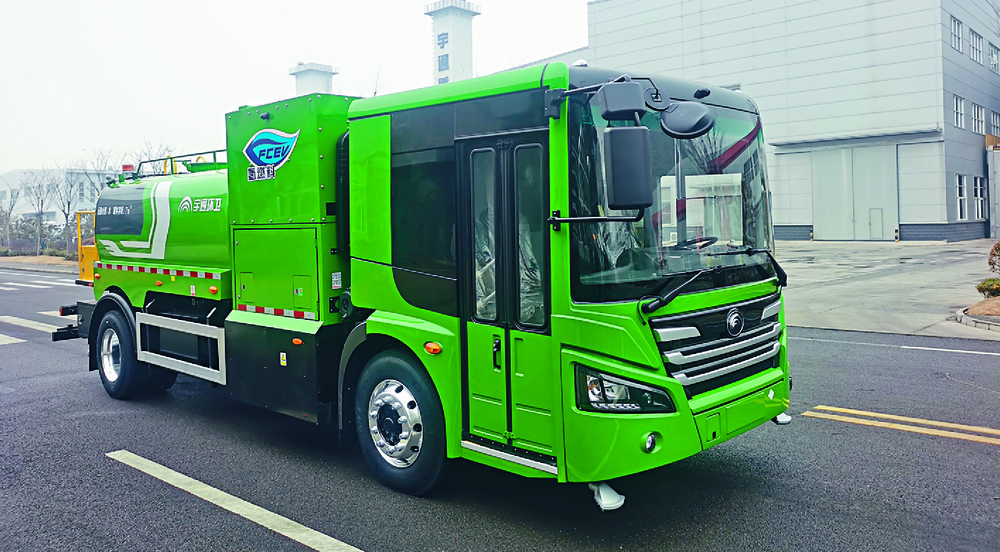
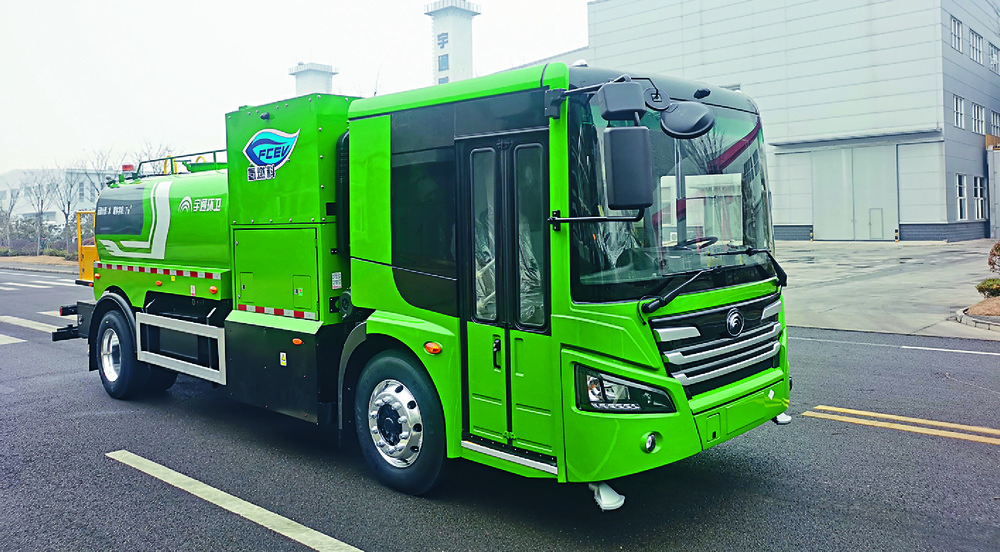
The Food and Environmental Hygiene Department has leased three hydrogen-powered street washing vehicles.
Their use will help to reduce carbon and noise emissions while servicing our busy streets in the city center at night.
At the site of the South East New Territories landfill, French concessionaire Veolia is trying out a steam methane reforming plant, converting the gas released from the landfill to hydrogen for use in its hydrogen fuel cell vehicles at the site.
China State Construction, a leading Chinese construction contractor, is trialling hydrogen-powered machinery at its building sites.
This includes forklifts, static power supply units and others.
They are much quieter and obviously a lot cleaner than equipment powered by conventional diesel engines.
The Hong Kong Airport Authority is trying out a high temperature reforming plant to convert rubbish and waste to hydrogen.
This is an innovative system to cut down on waste output and turn it into a useful fuel carrier. The hydrogen produced will be used on vehicles serving the airport complex.
As we can see, many of these projects are already in operation this year, showing the suitability and reliability of hydrogen applications. The improvement to our environment in not using fossil fuel will be clear to one and all,
As the hydrogen economy develops at a steady momentum, we can see a much wider application of hydrogen fuel-cell vehicles and other equipment flourishing, making our goal of becoming carbon neutral on or before 2050 an achievable target.
Through joint efforts, we can become one of the leading cities in the hydrogen economy ecosphere.
All we need now is a steady supply of hydrogen at commercially acceptable prices, and I would bet that will soon be on the horizon.
Veteran engineer Edmund Leung Kwong-ho casts an expert eye over features of modern life
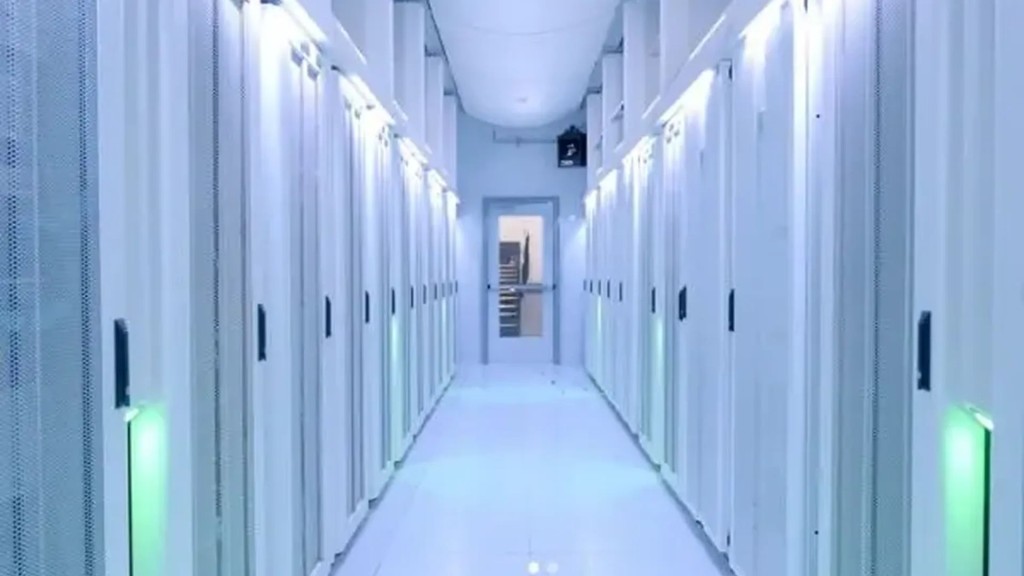
The increasing use of hydrogen flows, clockwise from top left, from storage facilities; to such filling stations as the one Sinopec is retrofitting in Yuen Long; to vehicles such as light rail trains; and street cleaners.