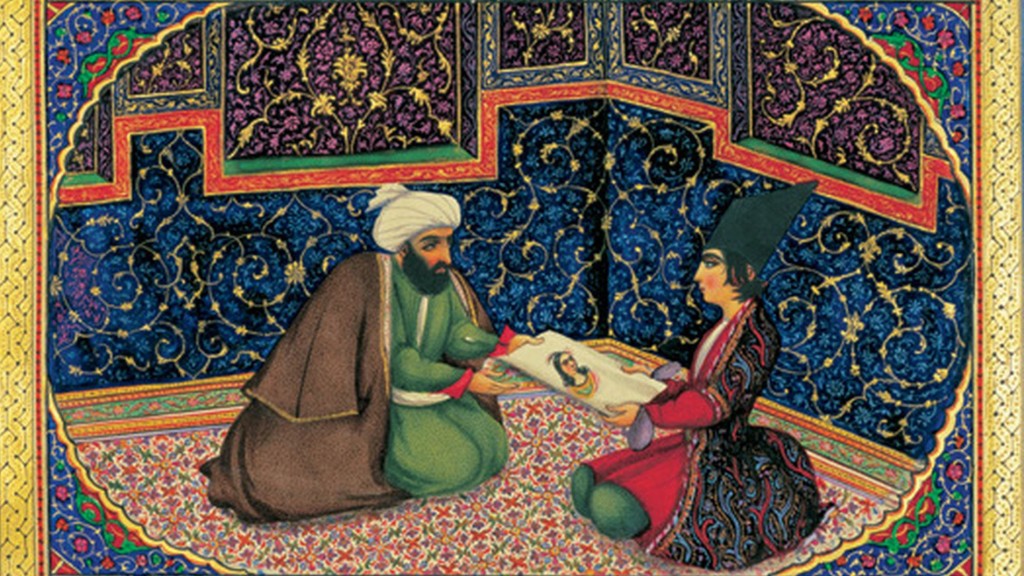
Last week, we explored the enchanting Arabian Nights, believed to be penned during the 10th century – the golden zenith of Arab cultural brilliance. Its vibrant tales were harvested from ancient lore echoing across Arabia, Persia, India, and Sindh.
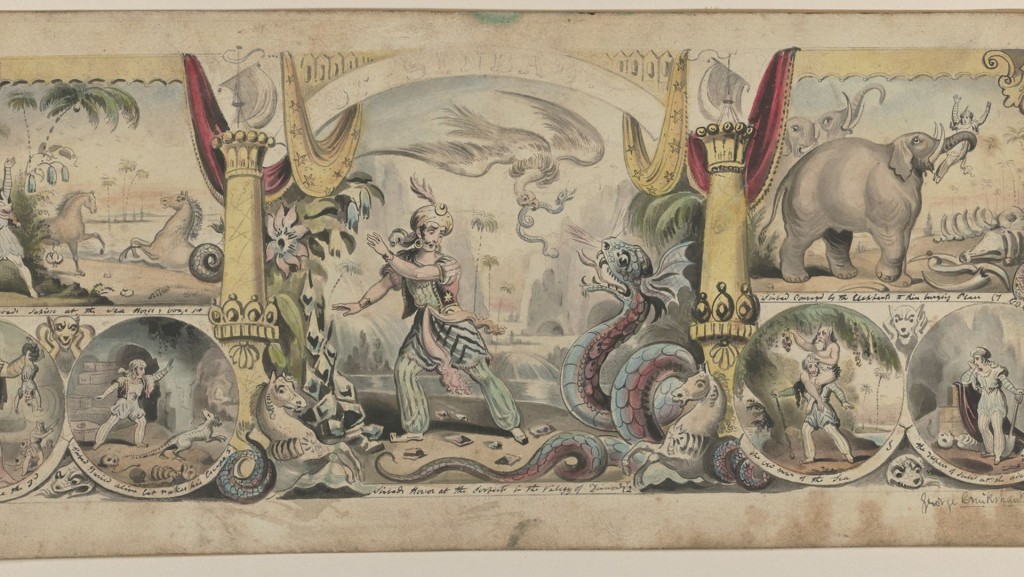
Among its most captivating gems are the Voyages of Sindbad. Surprisingly, this epic was a very late addition. Entirely absent from 14th-century manuscripts, it surfaced as an independent tale between the 17th and 18th centuries.
It likely debuted globally through Antoine Galland’s French translation. Legend whispers that Galland heard it orally from a Syrian storyteller. Despite being a later “intruder,” it seamlessly intertwined with the original text to become one of its most legendary sagas.
Set during Caliph Harun al-Rashid’s reign, the tale awakens on the 558th night. Over seven nights, it chronicles seven voyages of Sindbad, the daring Baghdadi adventurer.
Setting sail from Basra, he braved the high seas to discover uncharted islands, witness bizarre marvels, and confront magnificent mythical beasts. Traversing the vast Indian Ocean, his journeys stretched to the distant shores of East Africa and South Asia.
Scholars constantly seek the mortal flesh behind the myth. Some trace Sindbad to Suleiman al-Sirafi, a ninth-century Persian adventurer who reshaped Silk Road commerce en route to China. Others point to the renowned 15th-century Omani navigator Ahmad ibn Majid, the master mariner who allegedly guided Vasco da Gama to India.
Yet, the closest historical mirror to Sindbad is arguably Zheng He, a Chinese Muslim explorer from 14th-century Yunnan. Commissioned by Yongle Emperor “Zhu Di,” Zheng He commanded exactly seven global expeditions – a striking numerical parallel.
Their noble spirits also align in their final reflections. Sindbad ultimately mused: “I found a man can perform deeds satisfying his soul, while benefiting his kin and homeland.” Echoing this devotion, Zheng He declared: “To forge friendly ties between China and these nations, I do not even fear death.”
Amjad Refai is the director of the Arabic Programme at the University of Hong Kong.