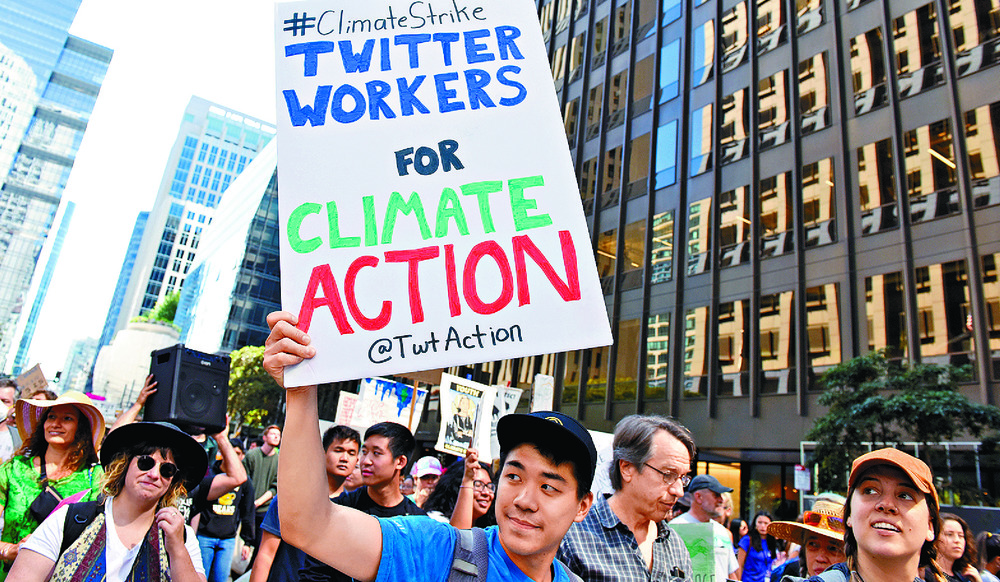
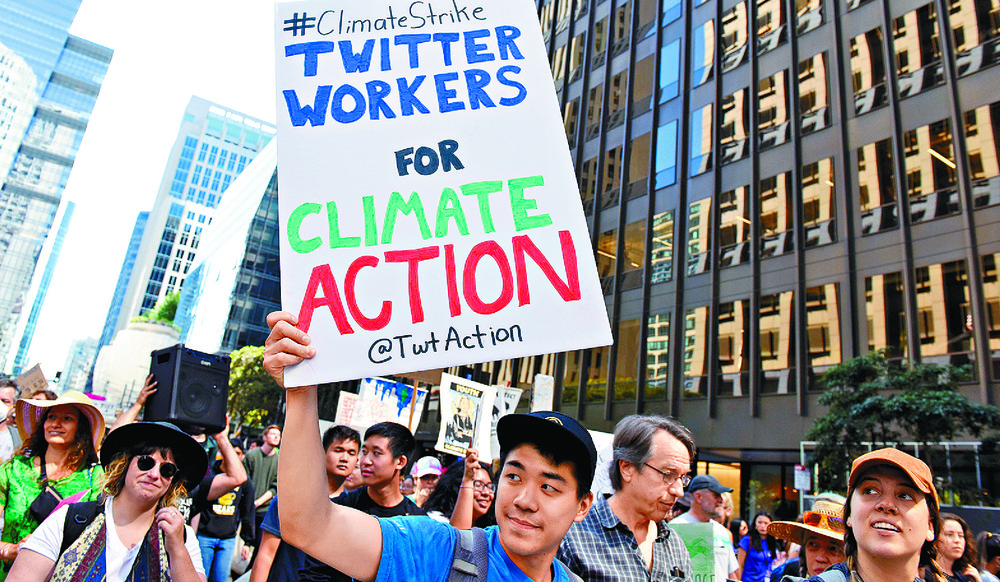
Scientists suffering insults and mass spamming are abandoning Twitter for alternative networks as hostile climate-change denialism surges on the platform following Elon Musk's takeover.
Researchers have documented an explosion of hate and misinformation on Twitter since the Tesla billionaire took over in October - and now experts say communicating about climate science on a network on which many rely is getting harder.
Policies aimed at curbing the deadly effects of climate change are accelerating, prompting a rise in what experts identify as organized resistance by opponents of climate reform.
Peter Gleick, a climate and water specialist with nearly 99,000 followers, announced on May 21 he would no longer post on the platform as it was amplifying racism and sexism.
While he is accustomed to "offensive, personal, ad hominem attacks up to and including direct physical threats," he says, "in the past few months - since the takeover and changes at Twitter - the amount, vituperativeness and intensity of abuse has skyrocketed."
Robert Rohde, a physicist and lead scientist at the non-profit environmental data analysis group Berkeley Earth, analyzed activity on hundreds of accounts of widely followed specialists posting about climate science before and after the takeover.
He found climate scientists' tweets were losing impact. The average number of likes they received was down 38 percent and average retweets fell 40 percent.
Twitter has not commented directly about what changes it has made to the algorithms that drive traffic and visibility.
But in a tweet seen as an acknowledgement of a deliberate change, Musk wrote in January: "People on the right should see more 'left-wing' stuff and people on the left should see more 'right-wing' stuff. But you can just block it if you want to stay in an echo chamber."
In another analysis, prominent climatologist Katharine Hayhoe monitored responses to a tweet on climate change that she published twice as an experiment on separate dates before and after the Musk takeover.
She counted the hostile comments and examined them for signs they came from bots - automated accounts that researchers say are pushing mass misinformation. Inauthentic accounts can be identified by analytical tools such as Bot Sentinel.
Replies from apparent trolls or bots increased 15 to 30 times over a two-month period compared to the previous two years, Hayhoe tweeted in January,
"Before October my account was growing steadily at a rate of at least several thousand new followers a month," she says. "Since then it has not changed."
Andrew Dessler, professor of atmospheric sciences at Texas A&M University, says he's moving most of his climate communication to Substack, a newsletter platform.
"Climate communications on Twitter are less useful given that I can see that my tweets are getting less engagement," he says. "In response to almost any tweet concerning climate change I find my notifications inundated with replies from verified accounts making misleading or misguided claims."
Others have abandoned Twitter altogether.
Hayhoe said that of a Twitter list of 3,000 climate scientists that she keeps 100 disappeared after the takeover.
Glaciologist Ruth Mottram had more than 10,000 followers on Twitter but left in February and joined an alternative scientists' forum powered by Mastodon - a crowdfunded, decentralized grouping of social networks founded in 2016.
"It's really been a revelation in many ways," she says. "It's a much quieter and more thoughtful platform. I haven't had any abuse at all or even people questioning climate change."
Michael Mann, a prominent climate scientist at the University of Pennsylvania and a regular target for abuse by deniers of change, believes the rise in misinformation was "organized and orchestrated" by opponents of climate reforms.
"I've seen a huge rise in trolls and bots," he says. "Many target tweets of mine for attack."
Mann's 2021 book The New Climate War documented action by oil producers to sow climate denialism on social media.
"The professional trolls manipulate the online environment with strategic posts that generate conflict and division, leading to a feeding frenzy," he says.