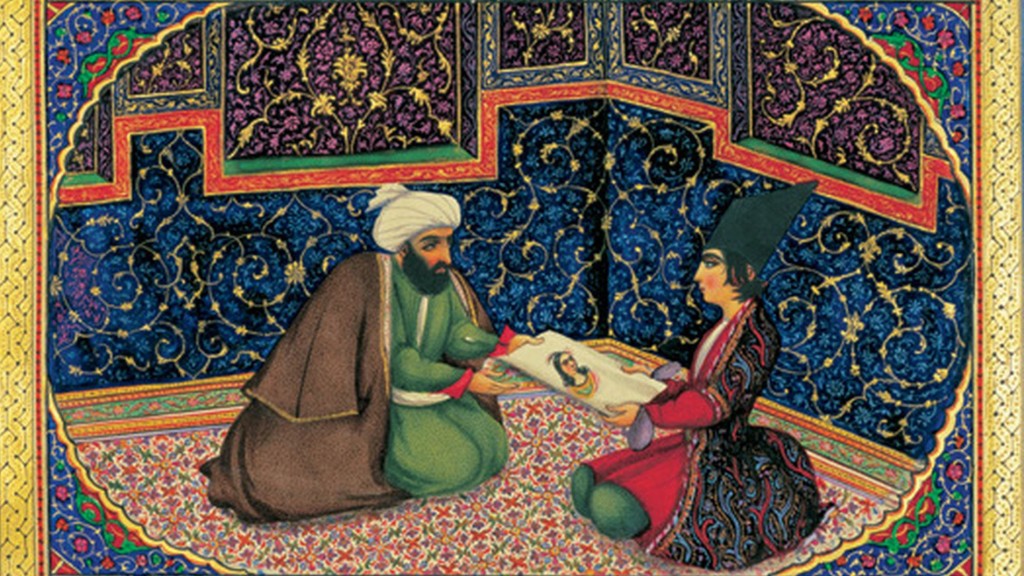
One Thousand and One Nights has captivated generations in the East and West, claiming its cherished place in world literature as an immortal masterpiece. Known westward as The Arabian Nights, its traditional subtitle promises a melody “of wondrous events, strange tales, nights of romance and passion, humorous anecdotes, and exquisite literary pleasantries.”
Yet, its creator remains a phantom. We know not if it was penned by one or a chorus of writers, as centuries of editing reshaped it. Its exact era is a mystery, unfolding across diverse epochs and distant lands. Though crowned as classical Arabic literature, its true origins, whether Arabic, or a woven tapestry of Persian and Indian lore, remain debated. It playfully confounds us with purely Persian names, namely its protagonists Scheherazade and Shahryar, and settings thousands of miles from the Arab world.
Translated and studied since the seventeenth century, its multiple manuscripts vary greatly in their tales and details. Today’s definitive edition was carefully born from harmonizing these surviving texts.
The saga begins when beloved King Shahryar discovers his wife’s infidelity while consoling his equally betrayed brother. Convinced all women are unfaithful, he decrees a grim tradition: marrying a virgin nightly, only to execute her at dawn. When Scheherazade – the vizier’s daughter – becomes the last eligible maiden, she survives by weaving enchanting, cliffhanger tales. Using a masterful story-within-a-story technique, her tales never truly end. The eager king spares her night after night until the thousandth night, when his heart softens and his views change forever.
This masterpiece profoundly catalyzed global imagination, bridging East and West through its rich cultural heritage and unveiling the Orient’s enigmatic magic. Today, it still inspires authors and filmmakers, shimmering on screen via Disney. Children everywhere adore Aladdin and Sindbad. Sindbad’s own fascinating tale is intricately tied to China, but that is a story for another time…
Amjad Refai is the director of the Arabic Programme at the University of Hong Kong