With its melodic flow and vibrancy, Italian is widely considered one of the most beautiful spoken languages. Most Italian words are spelled exactly as they are pronounced, with a vast percentage of words that end in vowels, contributing to the language’s smooth and rhythmic quality.
At the same time, Italian names and terminologies can be confusing, and sometimes they can even spark ongoing debates. Such is the case for “arancino” vs “arancina,” where the famous Sicilian deep-fried rice ball is called differently in the eastern and western parts of Italy’s largest island.
When it comes to wines and grape varieties, the puzzle goes beyond the complications of grammatical gender. Here are a few Italian terms that could jazz up your next wine trivia night, and cases where one alphabet letter makes all the difference.
Is it Durella or Durello? Vespaiola or Vespaiolo?
Durella and Vespaiola are both white grape varieties in Veneto. Changing the ending of each word from -a to -o and you’d get the names of an exquisite sparkling wine and a pleasing sweet wine, respectively.
Where things are not quite black and white
Bombino Bianco and Bombino Nero: “Bombino” translates to “infant” but no, these two are not twins. In fact they are not even genetically related. The black grape variety is the backbone of the high quality Castel del Monte Bombino Nero DOCG in Puglia. Bombino Bianco, on the other hand, can be found in both Puglia and Lazio, and is known to produce outstanding sparkling wines such as the ones by D’Arapri.
Verdea vs Verdeca
Verdea is a white grape variety found in Lombardy and central Italy that can be made as a dry or sweet wine. Adding a letter “c” towards the end of the name and it’d become a completely different white grape variety that generates wines with delicate herbal and green apple flavors in Puglia.
Greco and Greco Bianco
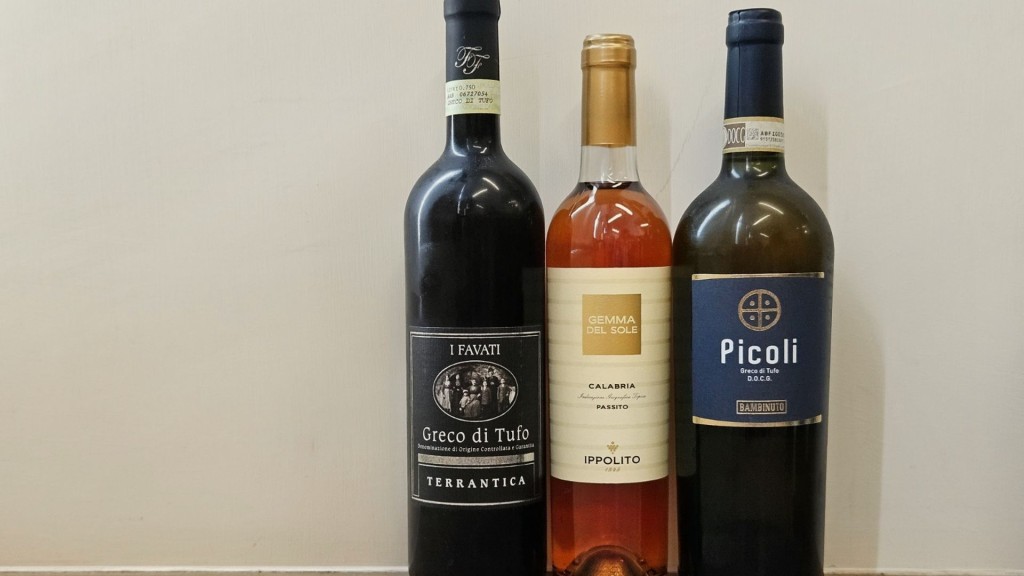
Greco is a white variety, so many thought that Greco Bianco is just its synonym. Incorrect! Greco and Greco Bianco are really two distinct grape varieties. Greco is used in the famous Greco di Tufo in Campania, with Mastroberardino making the most classic example showing elegance and long aging potential. Greco Bianco is mostly seen in Calabria, and is in fact identical to another grape variety called Malvasia di Lipari in Sicily. To make things even more interesting, there is also a Greco Nero!
So what’s in a name, as long as the wine is delicious?
Alice Wong is a certified wine educator based in Hong Kong