I am delighted to learn of the recent news about autonomous vehicles being introduced at airports in various countries with the technology and operational know-how shared by Hong Kong International Airport. It brings to mind the journey this cutting-edge technological application has gone through to evolve over the years, with Hong Kong's airport being the first among its global peers to pioneer its use at scale seven years ago.
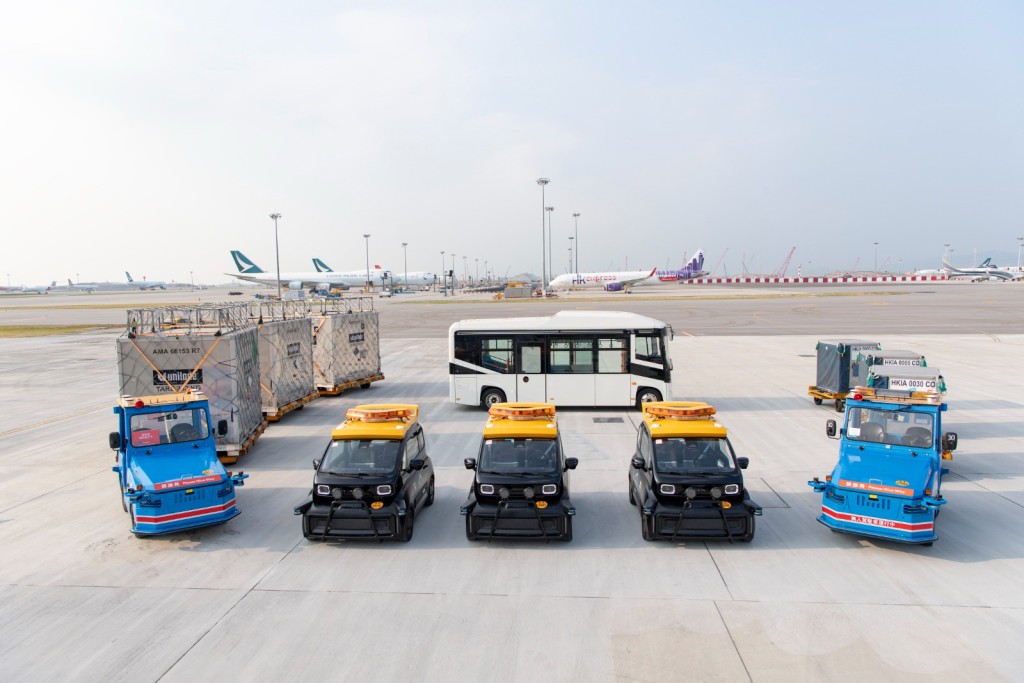
This journey began in 2019, when HKIA started using autonomous tractors to handle baggage delivery. These vehicles were designed to tow multiple baggage dollies along preset routes. Equipped with smart devices, the tractors can smartly avoid obstacles and detect overloads. They can switch between fast and slow lanes within tunnels or on specified roadways, ensuring minimal disruption during temporary lane closures. After completing tasks, they return independently to a designated handover area, ready for their next assignment. Recently, these tractors have been further enhanced to enable automated charging.
The use of autonomous vehicles at HKIA extends well beyond just tractors. The airport now operates over 70 driverless vehicles, including more than 56 autonomous electric tractors, eight patrol cars, and six staff shuttle buses – the first and largest fleet of autonomous vehicles in the world operating on the airport apron. These vehicles have covered more than 3 million kilometers at HKIA, the equivalent of circling the globe 76 times. It is gratifying to see HKIA sharing this pioneering system with airports such as those in Dubai and Singapore. As an example, Singapore handled 374,000 aircraft movements in 2025, comparable to but still slightly below Hong Kong's 394,730. The system developed in Hong Kong is therefore well suited for their adoption.
HKIA is the first airport to equip its entire fleet of autonomous vehicles with Level 4 autonomous technology. This advancement means the vehicles can now operate entirely without human intervention within designated areas – an upgrade from Level 3 which would requires human oversight.
In another pioneering move, this year they are expanding the use of autonomous vehicles from restricted areas to public roads, enabling them to transport passengers from the airport to designated nearby locations outside the airport island. A regular shuttle service between the Hong Kong Port of the Hong Kong-Zhuhai-Macao Bridge and HKIA's new Terminal 2 has been planned to start service this year. It can carry up to 2,000 people in each direction per hour. In the next phase of development, targeted to start in 2029, the service will be extended to shuttle passengers between the airport and Tung Chung Town Centre.
This novel technology, supplied by a mainland company, was tuned and integrated with the airport's systems and hardware throughout meticulous engineering and operational planning at HKIA. Once uniquely developed for Hong Kong airport application, it is now being adopted elsewhere.
This amazing story of driverless vehicles at our airport highlights the expertise and can-do spirit of our engineers and the aviation professionals. I am so glad to see the vision and plan successfully executed to reach strategic new frontiers on our path toward becoming a truly smart city.
Veteran engineer Edmund Leung Kwong-ho casts an expert eye over features of modern life