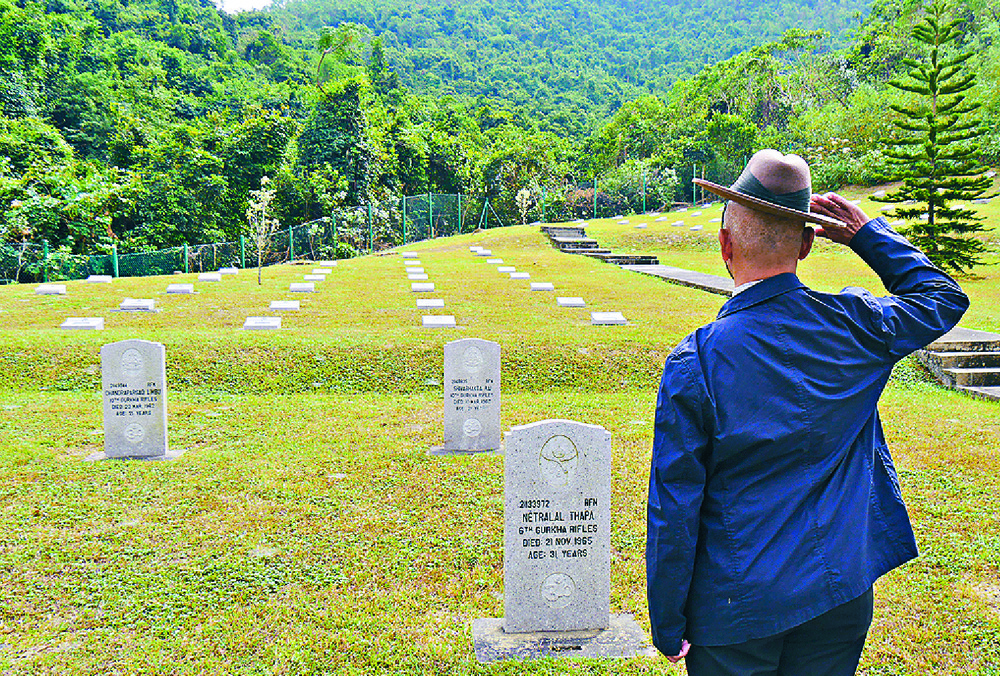
When former Gurkha soldier Ratna Bahadur Khimding recalls the 1997 handover of Hong Kong he thinks of the uncertainty many Hongkongers faced. "I lived in Shek Kong where the Gurkhas used to train," he said, "and I saw people in the market who were confused and unhappy."
Some Hongkongers had rushed to leave the territory, the ex-10th Gurkha Rifleman and Gurkha Cemetery Trust president added, while others celebrated by hoisting the "Chinese flag from the top of a building. I'd seldom seen a Chinese flag before."
Before the handover, Khimding, like many from Nepal, gained permanent residency. But now, despite more than 20 years in Hong Kong, Nepalese struggle to access public resources, including key barriers in education.
Amod Rai, an online education consultant and also a Nepalese resident, believes the education policy for ethnic minorities needs more focus on helping them realize their potential.
"I can say the Hong Kong education system is not providing quality education to ethnic minority children," he said. What he does see is a policy that emphasizes learning Chinese.
Rai explained that Nepal's civil war running from 1996 to 2006 saw Hong Kong's Nepalese residents bringing their families to the territory rather than sending money back as they had done before.
Many children experienced an intense "culture shock" and educational "discontinuity" as they went from schools in Nepal to Hong Kong's intense curriculum, Rai said. "The curriculum is not able to include their identity, their culture, their sense of belonging and history."
On that, an education bureau official stressed it is "important for non-Chinese-speaking students to strive toward proficiency in Chinese for further studies and career pursuits with a view to integrating into the local community." And such measures take time and are based on factors such as "students' learning attitudes, parents' expectations and cooperation."
An Equal Opportunities Commission study that came out in June found that 60 percent of ethnic minority parents did not speak Cantonese on a daily basis and could not help their children with studies.
It also noted that increased exposure to education and career information for ethnic minority youngsters helped them form their career paths. But students suffered poor "career exposure" due to their limited Cantonese as well as career event staff's "limited oral English skills or readiness to communicate in English."
Another issue affecting access to public resources has been poor quality translations of information into Nepalese.
At present, support from the home affairs department includes commissioning the Hong Kong Nepalese Federation to run the Nepalese Community Support Team to assist with access to community services, providing it with the resources to employ a full-time program officer and three part-time assistants.
"Some of the translations are okay, but the majority are bad and are Google-translated most of the time," said Marina Rai, a producer for RTHK's Community Involvement Broadcasting Service.
She explained that while verbal translation services are adequate, many of the government's written translations lack an understanding of Nepalese grammar. The latter tend to "combine difficult words with very common forms of spoken Nepalese," she said. "It's not understandable, especially for elderly people or those with very low education."
Ineffective translations have also limited awareness and accessibility to resources such as the HK$10,000 handout scheme and housing subsidies, Rai said.
But administrative guidelines currently require government agencies to handle translations of information individually. Agencies must also self-assess cultural and language barriers that "may impede equal access to existing public services."
The Equal Opportunities Commission professes itself to be "very concerned" about the quality of translations for ethnic minorities when it comes to providing public services. So it plans to work with the University of Hong Kong on research to ensure a consistent standard of interpretation and translation services.
But from Khimding's perspective, recognition of Hong Kong's diverse heritage will not happen overnight, though he will always consider the SAR his home.
"Our families, our children are born here, grow up here, study and work," he said. "When you live a long period of time in one place you tell yourself: 'This is home.'"
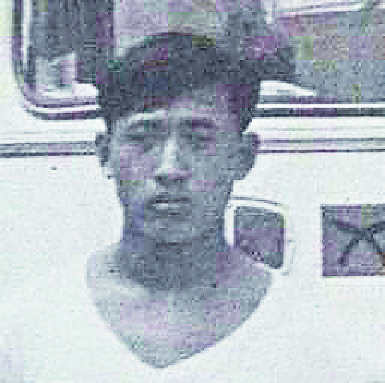
Ratna Bahadur Kimding pays his respects to fallen Gurkhas. Above, Kimding pictured during his early days in the service.