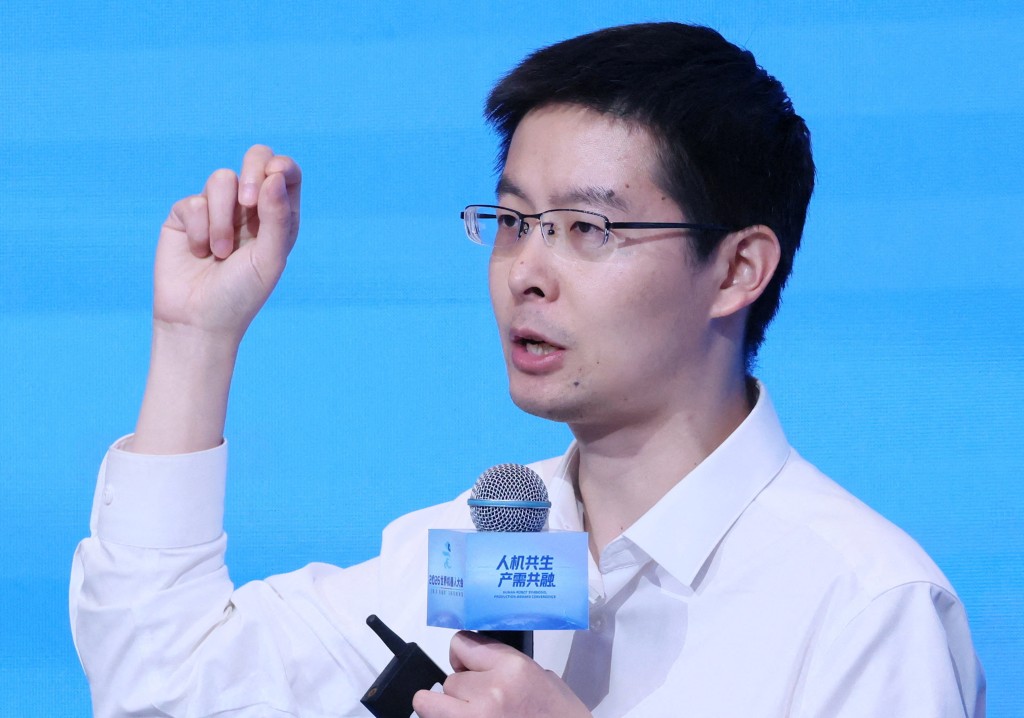
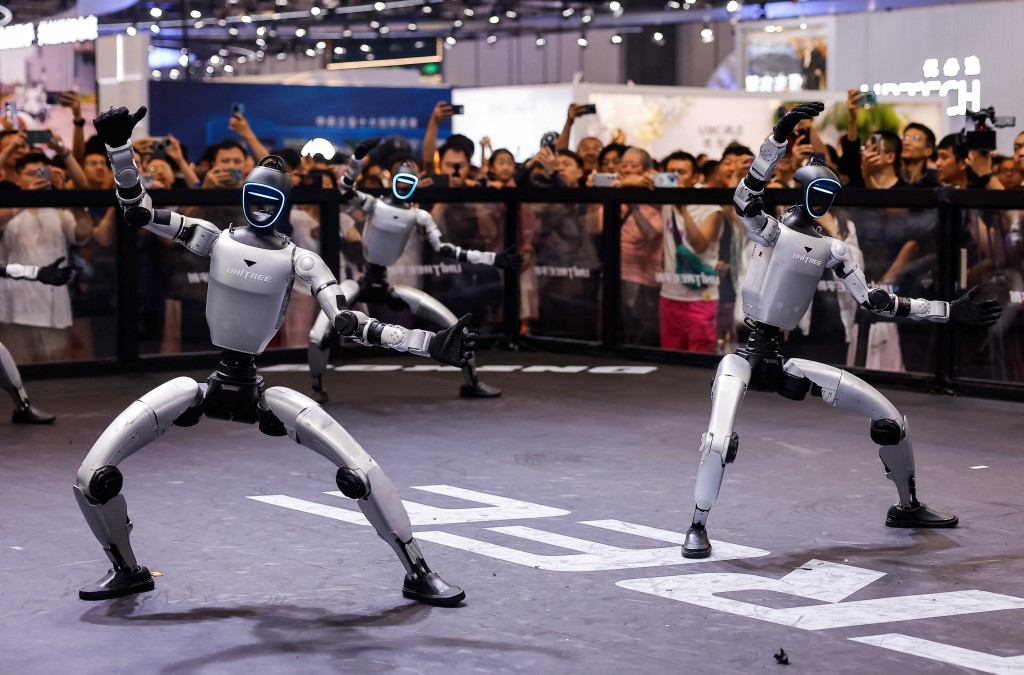
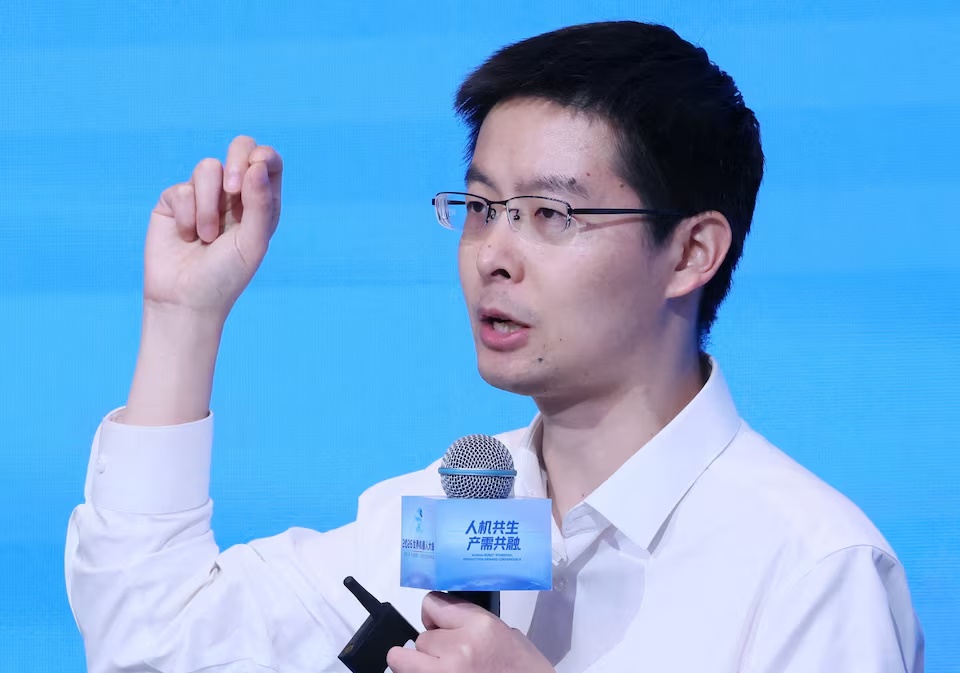
Chinese robotics company Unitree Robotics founder and chief executive Wang Xingxing expects the tipping point for large-scale commercial adoption of embodied intelligent robots within one to two years.
Next year's GPT-7 is set to overcome current technical bottlenecks with global AI seeing major updates every one to two months, he said at the 26th China International Industry Fair (CIIF) in Shanghai on Monday.
As global AI sees major updates every one to two months, next year's GPT-7 will likely break through current technical bottlenecks in embodied intelligence, granting robots sufficient generalization capabilities and commercial viability to integrate deeply into factories and daily service settings.
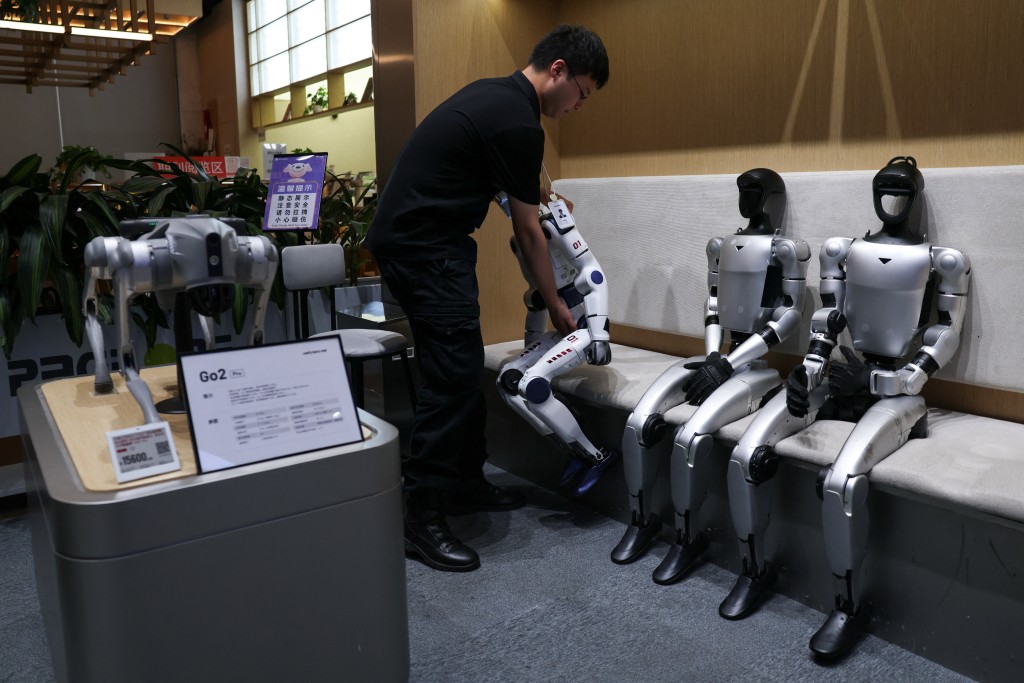
Many robot models now are still in a rudimentary phase, dependent on developers' manual programming, training and feedback, leaving workflow efficiency to be boosted.
He revealed that Unitree is trialling internally a self-evolving physical AI system, a self-loop pipeline combining coding, training, deployment, testing and feedback to expand AI’s role in development and evaluation. Human checks on motion and task performance remain necessary for now, but human involvement will gradually decline with growing data and experience.
On deployment scenarios and rollout timelines, Wang said Unitree had launched pilot deployments across multiple sites including auto factories back in 2024, though full large-scale rollout still takes time, adding that commercial B2B use cases may see faster, more mature adoption than industrial settings, and both will progress ahead of household applications.
"The biggest mistake I have made over the past decade is not believing enough in AI," he said.
Frank Feng