





Read More

Night Recap - April 3, 2026
1 hour ago
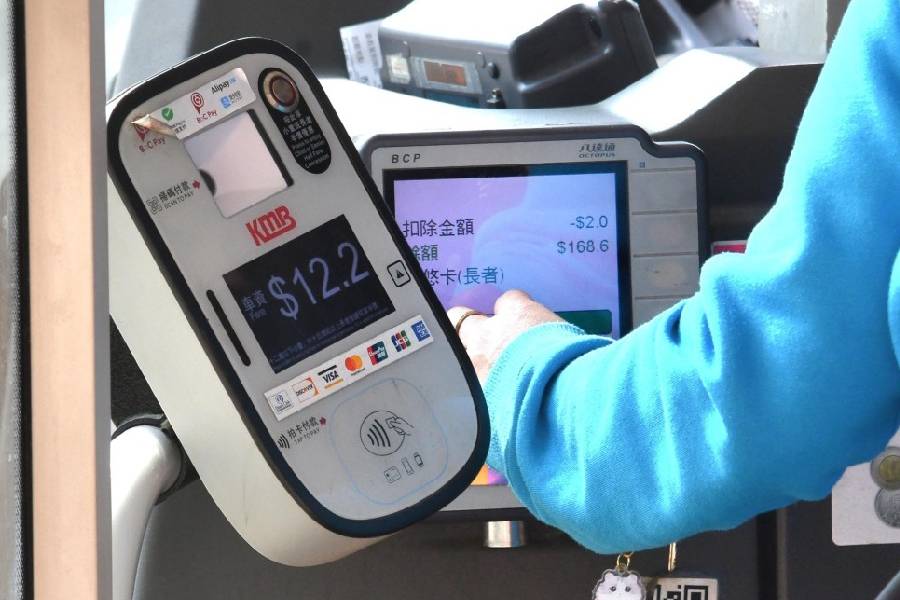
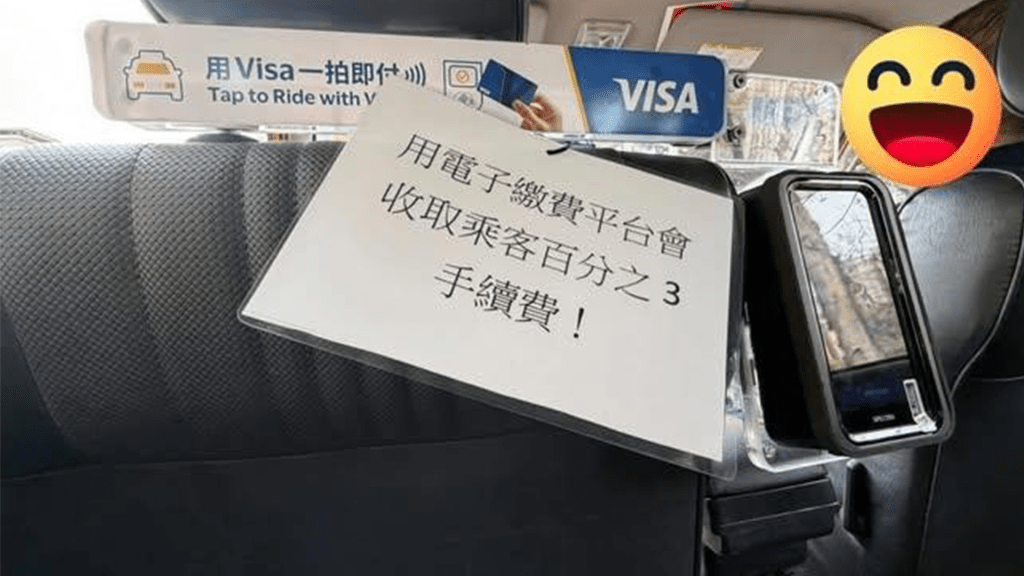
Taxi e-payment ‘3pc fee’ notices spark debate on rollout day
02-04-2026 12:42 HKT
For Zao Wou-ki, printmaking represents half a century of dedicated pursuit – a fertile ground for cultivating his unique artistic language. At the cultural crossroads of East and West, within the dialogue between imagery and text, printmaking quietly settles his integration of diverse aesthetics while reflecting the ripples of his life and inner world.
He described printmaking as "almost like a game," with an unpredictable nature aligning with his desire to break free from the late Qing dynasty's tradition of imitating the past. After absorbing influences from Western modernism and cubism, he experimented with incorporating oracle bone characters into his prints, gradually making abstract expression his artistic language. He replaced figurative scenes with bold, saturated patches of color, employing brushstrokes as dynamic as cursive script. He further infused his prints with the Taoist concepts of emptiness and negative space. This marked the recurring influence of ink painting and calligraphy traditions he had studied in China during his youth, which then resonated throughout his printmaking career.
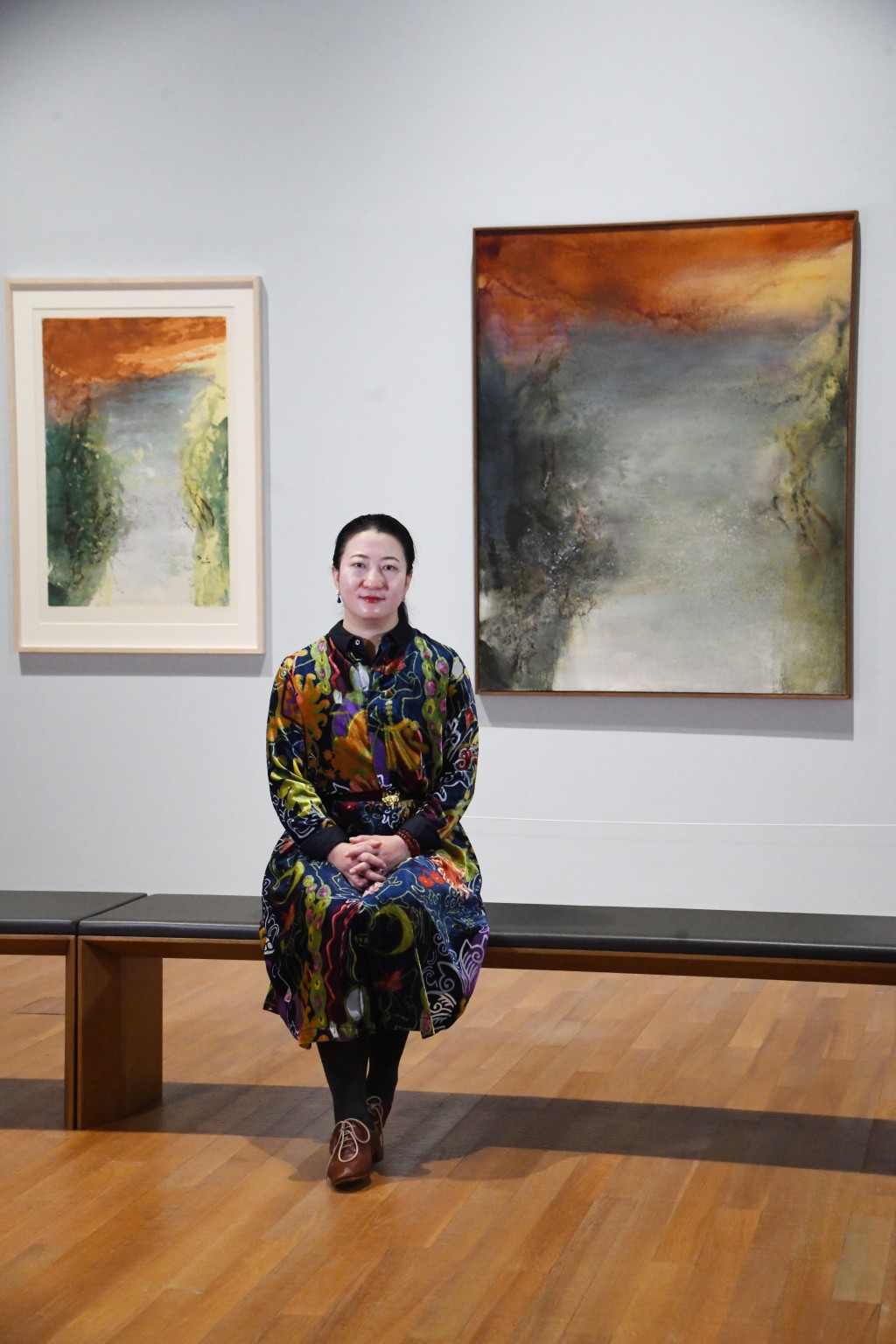
The M+ museum presents the first comprehensive overview of Zao's printmaking practice in Asia with the "Zao Wou-ki: Master Printmaker" exhibition.
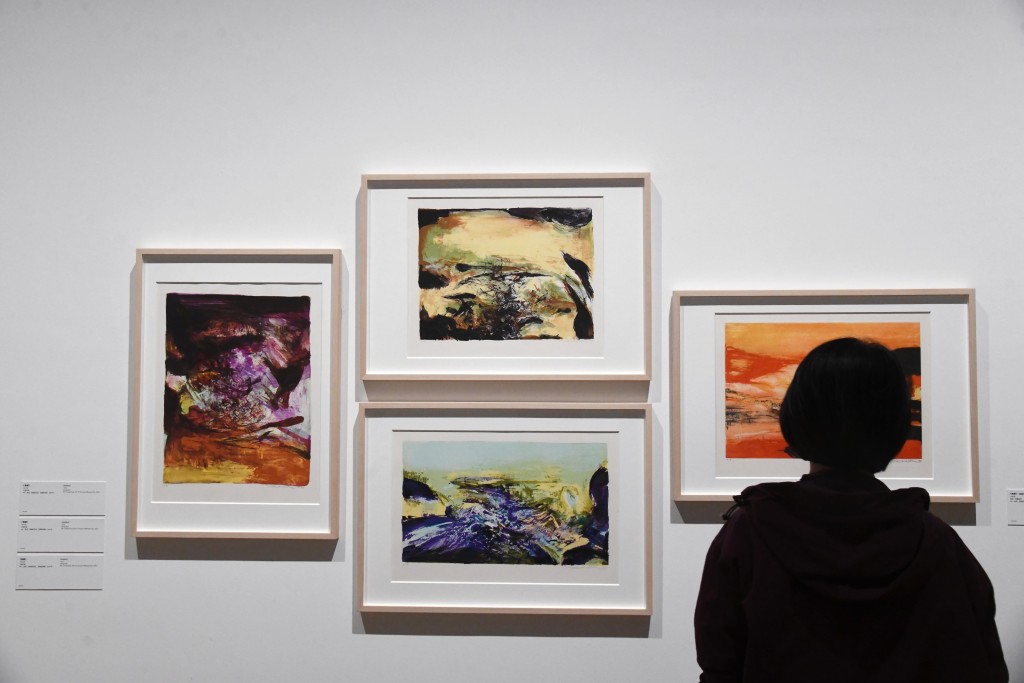
The M+ museum is hosting the "Zao Wou-ki: Master Printmaker" exhibition until May 3, where visitors can revisit Zao Wou-ki's remarkable journey through his printmaking works.
When the artist arrived in Paris in 1948, he quickly became captivated by printmaking – an art form rich in experimentation. For him, the endless possibilities created by mixing chemicals, using various tools to make print marks, and layering different colors are far more compelling than oil painting.
When he continued to explore printmaking, he gradually felt "all that the external world offered could no longer satisfy me." He then turned to visual language to depict nature and his inner emotions, marking his focus on uncovering poetic and philosophical meanings within images. From 1957, he almost entirely ceased naming his works, hoping others will break free from imagery predetermined by text.
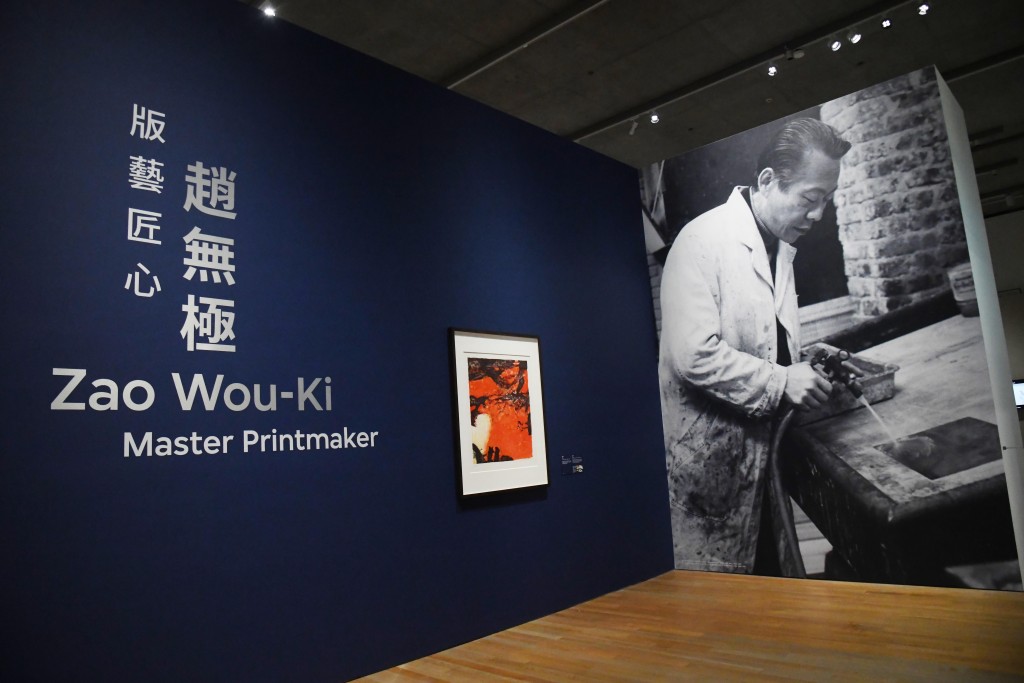
Wu Mo, co-curator of the exhibition, highlighted a rare large-scale print in the exhibition – over one meter long, with up to 14 colors overprinted in layers. When the print is juxtaposed with the oil painting of the same composition, a distinctive style is revealed where the print's tones are brighter.
Wu said, "Zao Wou-ki never regarded printmaking as a subsidiary medium to oil painting. For him, printmaking was a realm where innovation could flourish and original ideas could be fully explored." Since the late 1970s, Zao continually pushed the boundaries of printmaking, blending traditional techniques from Chinese and European art to express the harmony, balance, and nature of Taoist philosophy. His poetic compositions grew increasingly diverse and rich, while his use of color became more vivid.
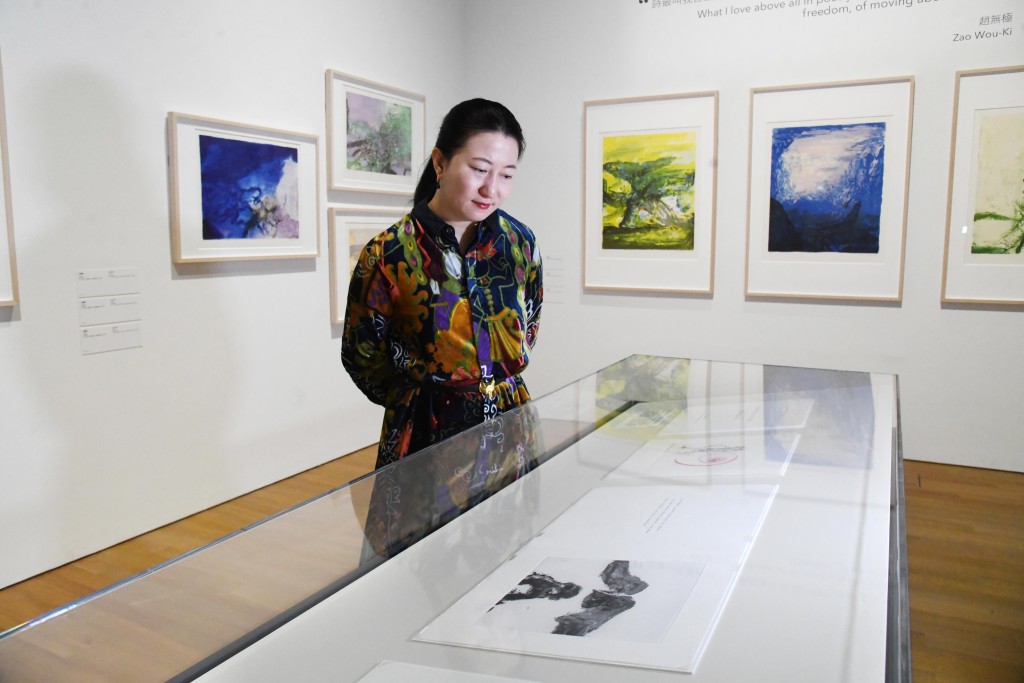
In Zao's artistic universe, prints also serve as bridges connecting creative souls and inspiring boundless imaginations. The print illustrations he created for poetry collections and books were never mere appendages to text, but rather forms of liberated poetry and profound intertextual nourishment – encountering one another in blank spaces, jointly expanding the frontiers of imagination.
Tsang Lai-wa, associate curator of learning and interpretation at M+, notes that this cross-disciplinary collaboration embodies Zao's integration of Eastern and Western ideals – in Chinese tradition, there is a concept of "shi shu hua yin," meaning poetry, calligraphy, painting, and seal carving are unified as one; the West lacks an identical term, but literature and art remain closely intertwined.
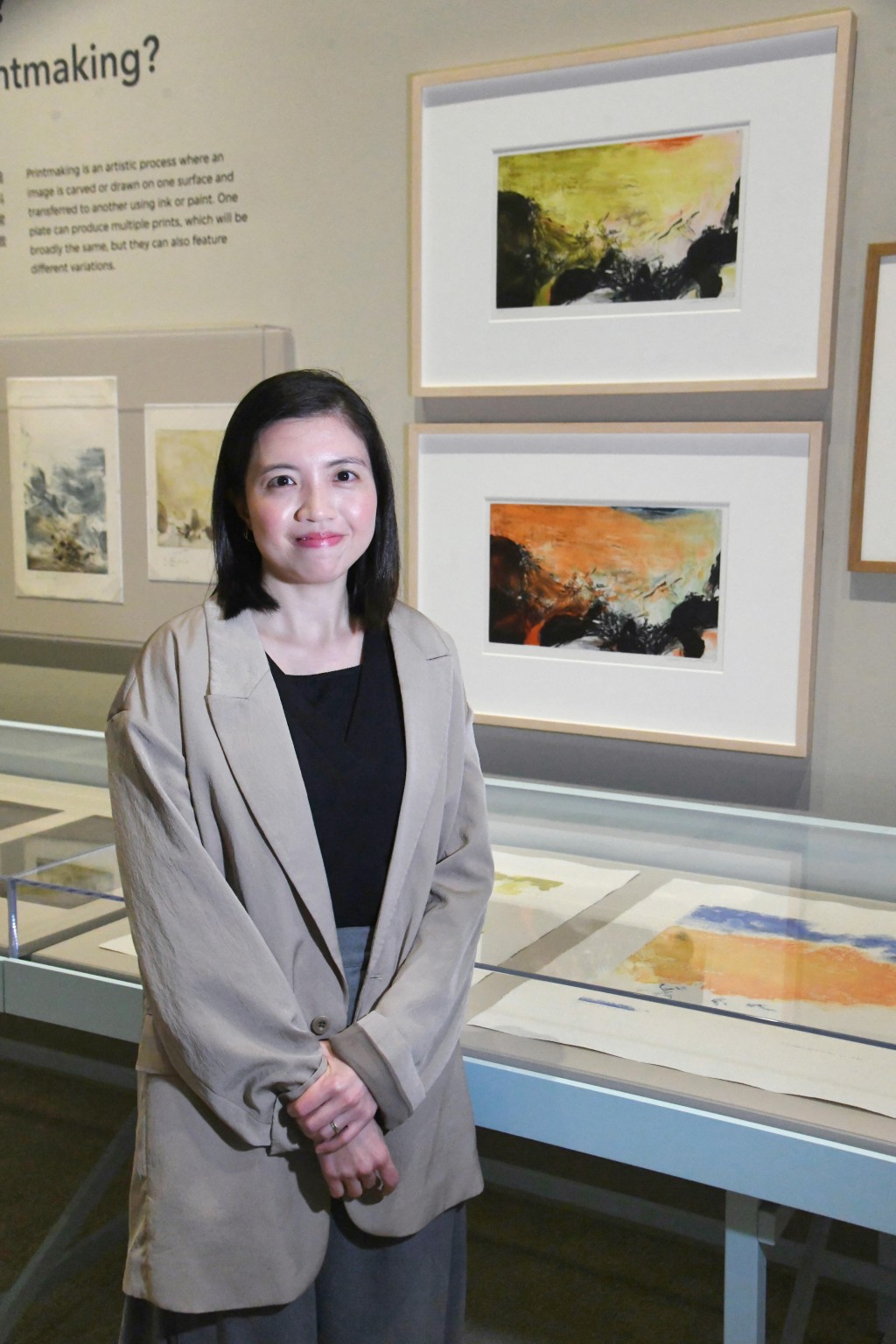
From January 31 onwards, M+ will launch a printmaking studio during the exhibition, inviting visitors to experience printmaking firsthand. Tsang noted that the team has designed three themes – Seasonal Patterns, Travel Symbols, and Sounds of Home – inspired by Zao's travels in search of artistic nourishment from diverse cultures and art forms; participants can conceptualize their designs based on these themes, then create patterns using leaves and ribbons on gelatin-based printing boards.
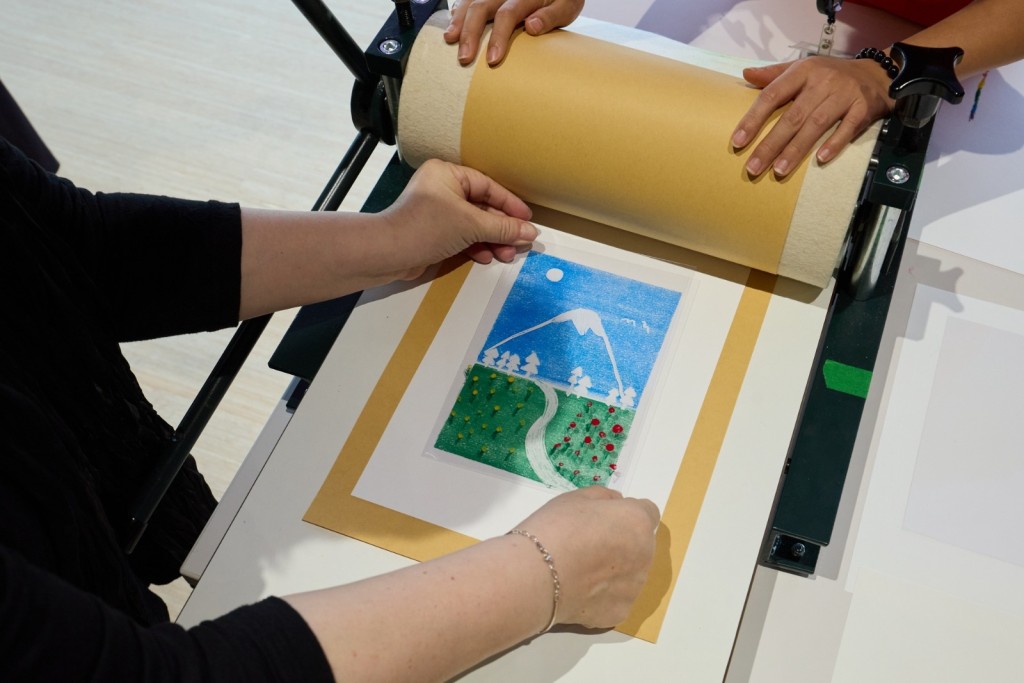
For some participants, facing a blank sheet of paper can be daunting, especially when ideas may not easily translate through a brush. Yet printmaking overcomes this challenge, allowing artistic creation to return to its playful nature of ink and color.