Read More










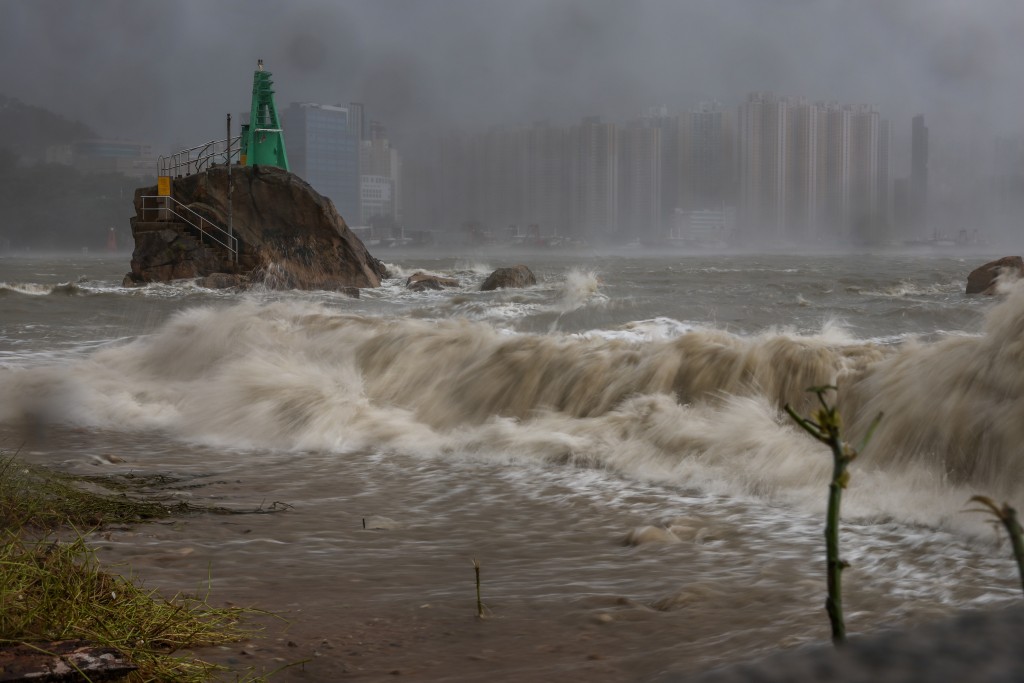
Super Typhoon Ragasa made meteorological history as it became the first typhoon on record to trigger a No. 10 Hurricane Signal without passing within 100 kilometers of Hong Kong, demonstrating that direct hits are not necessary for extreme impacts.
The Hong Kong Observatory hoisted the No. 10 signal at 2.40am on Wednesday as Ragasa’s expansive wind field brought hurricane-force winds to the territory, despite the storm’s center remaining approximately 120 kilometers away at its closest approach.
The signal remained in effect for 10 hours and 40 minutes—the second-longest duration since 1945, only surpassed by Typhoon York in 1999 (11 hours).
Ragasa’s path shifted westward as it approached the Pearl River Estuary, skirting Hong Kong rather than making a direct landfall as initially forecast.
Former Observatory chief Shun Chi-ming described the city as having "dodged a bullet again," noting that the typhoon’s massive wind field merely grazed the territory.

While typhoons like Vicente (2012) and Mangkhut (2018) came within 100 kilometers when the No. 10 signal was active, Ragasa set a new benchmark: it was approximately 130 kilometers away when the highest signal was issued, though Mangkhut was slightly farther (150 kilometers) at the time its No. 10 signal was raised.
The event underscores how storm intensity and wind field size—not just proximity—are critical factors in determining impacts.
Ragasa’s ability to generate destructive winds from such a distance signals a potential trend toward larger, more powerful typhoons influenced by warmer seas and changing climate conditions.
With Ragasa, Hong Kong has now experienced two No. 10 signals in a single year for only the second time since World War II. The previous occurrence was in 1964, when Typhoons Ruby and Dot prompted the highest warning on September 5 and October 13 respectively.
Earlier this year, Typhoon Wipha led to a No. 10 signal that lasted 6 hours and 50 minutes on July 20. Ragasa's impact now equals the 61-year-old record, highlighting an unusually active typhoon season for the city.
The No. 10 signal was lowered to a No. 8 Southeast Gale or Storm Signal at 1.20pm as Ragasa moved steadily toward the western coast of Guangdong.
(Marco Lam)