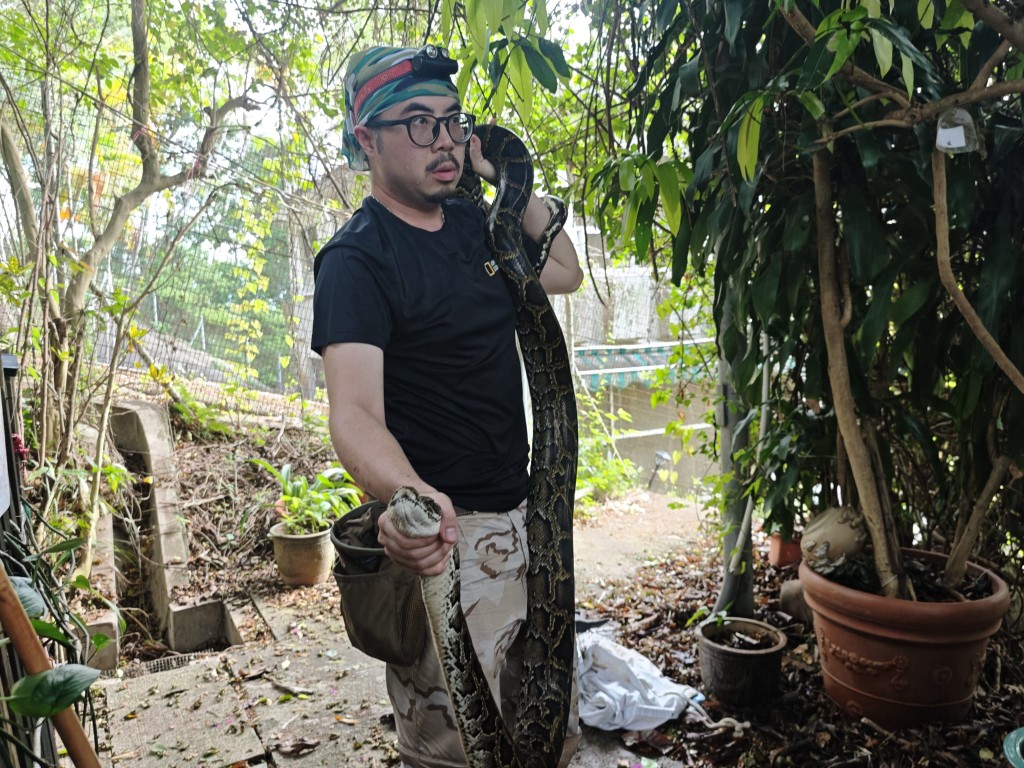
A shocking incident unfolded in Ma Liu Shui on Saturday morning when a massive Burmese python was caught devouring a stray cat outside a village house.
At around 6am, a female resident of House No. 91 in Chek Nai Ping Tsuen discovered the large snake coiled around the feline and immediately called the police for help.
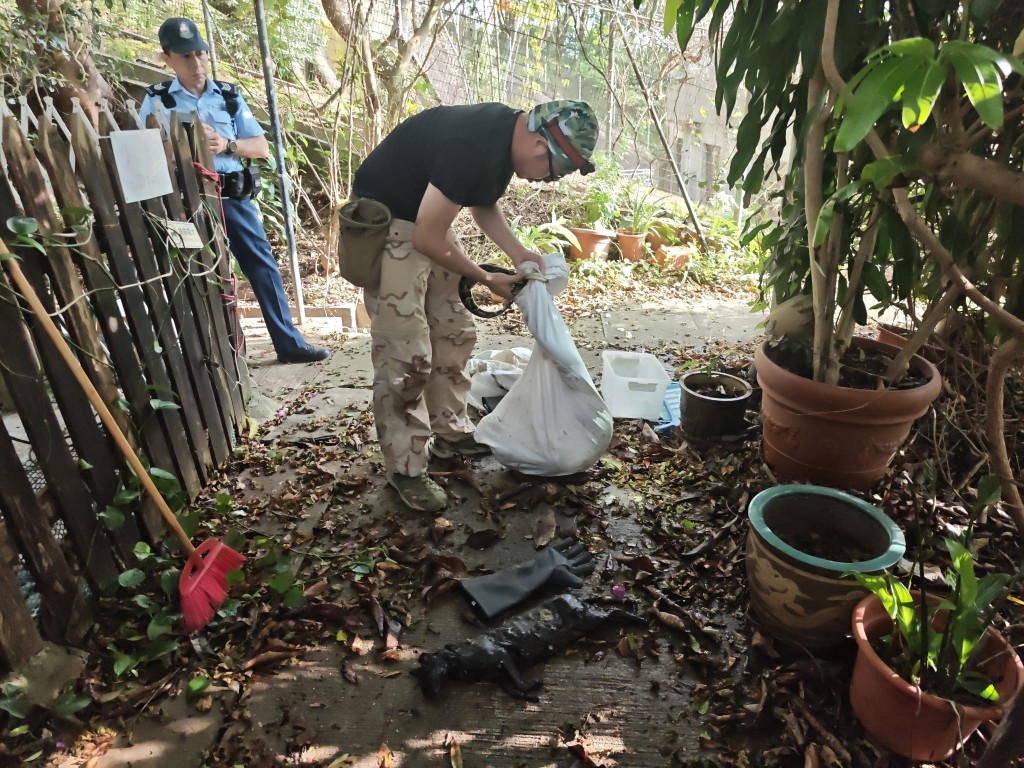
Authorities summoned Ivan, a licensed snake handler and nature educator, to the scene.
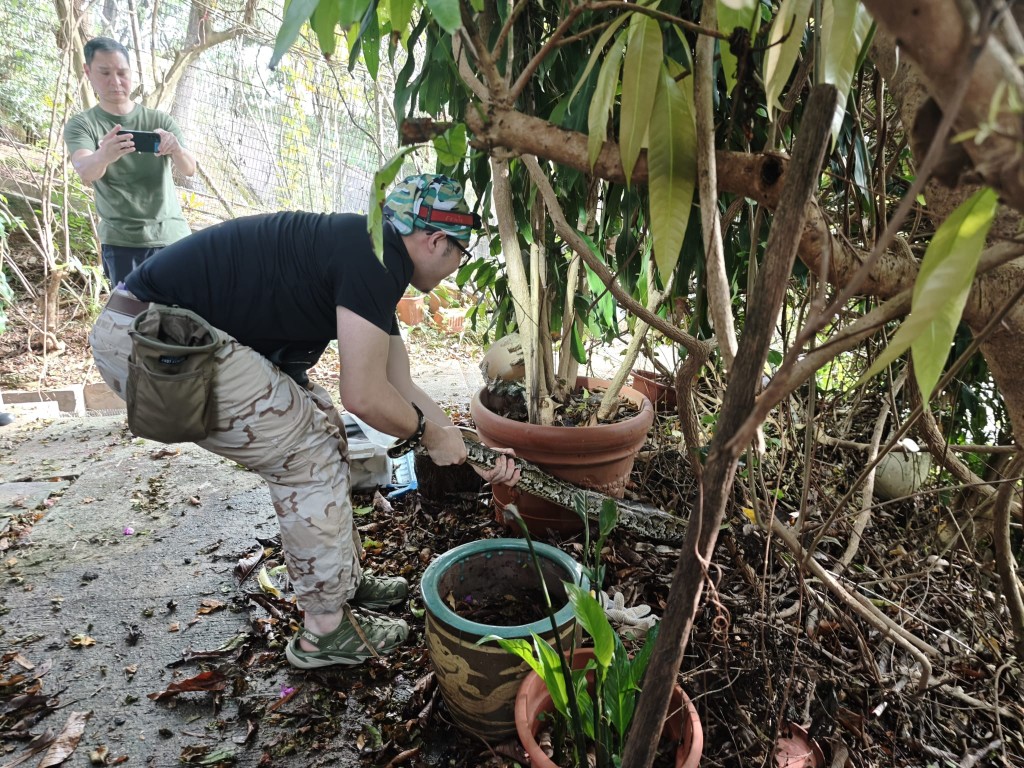
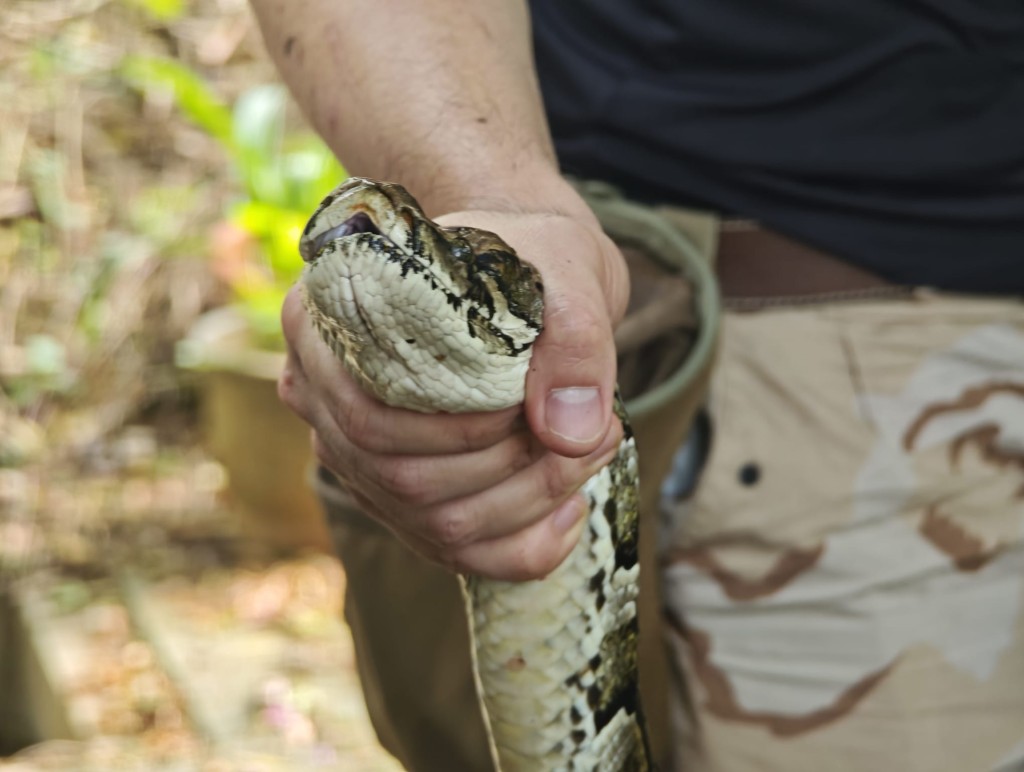
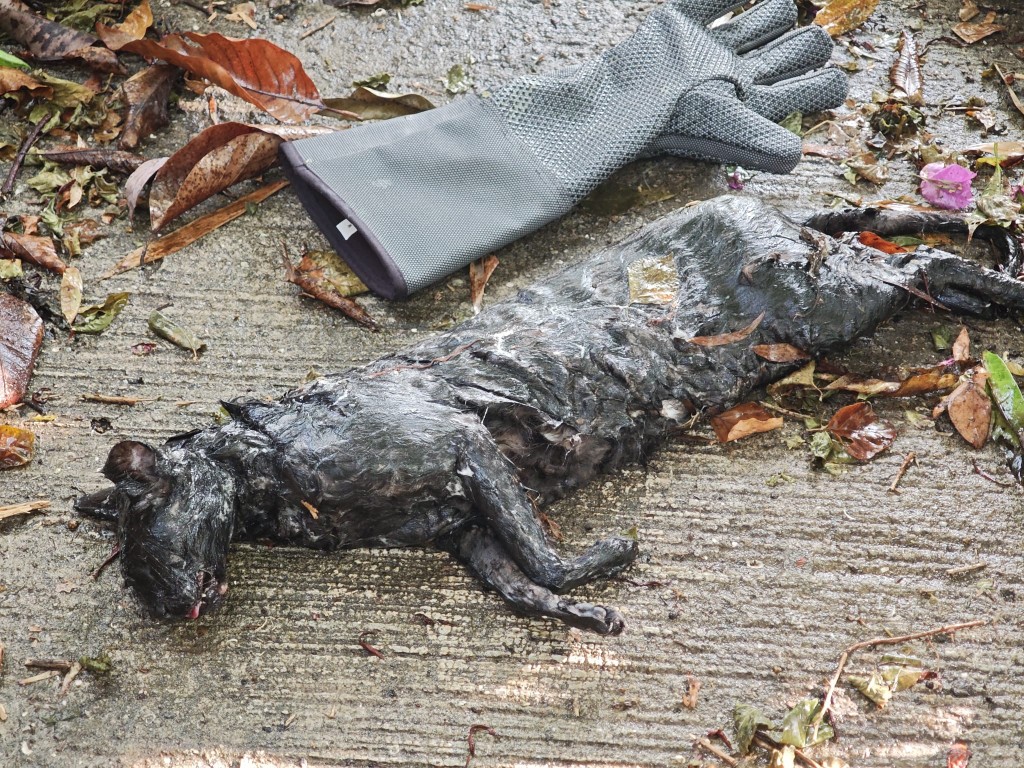
The python, which had already swallowed the cat and had a visibly swollen belly, was slowly slithering toward a slope when Ivan located it in the bushes. After a brief struggle, the professional snake catcher managed to grab the snake by its tail and pull it out. During the capture, the startled python regurgitated the cat’s lifeless body.
Ivan, who obtained his snake-handling license two years ago, explained that Burmese pythons are among the largest python species and are protected in Hong Kong, meaning citizens cannot release them back into the wild on their own.
He described the capture as challenging due to the snake’s size and the slippery slope, admitting that the process may have been "a bit rough" but hoping the reptile was unharmed. The python was later handed over to Ma On Shan Police Station for proper handling.
Ivan noted that Hong Kong is home to over 50 snake species, but habitat destruction has forced pythons to venture into residential areas in search of food.
"Why would a python come down to eat a cat? It’s likely because it couldn’t find prey in the wild or was attracted by the scent of stray animals," he said.
He also highlighted the growing conflict between stray cats, dogs, and wildlife. "Smaller snakes may be killed by cats, while medium-sized ones might eat the cats—it’s a vicious cycle that harms the ecosystem," he added.
Burmese pythons, which can give birth to dozens of offspring at once, play a crucial role in controlling wild boar populations, even capable of swallowing piglets or small calves. These snakes typically live for 20 to 30 years.