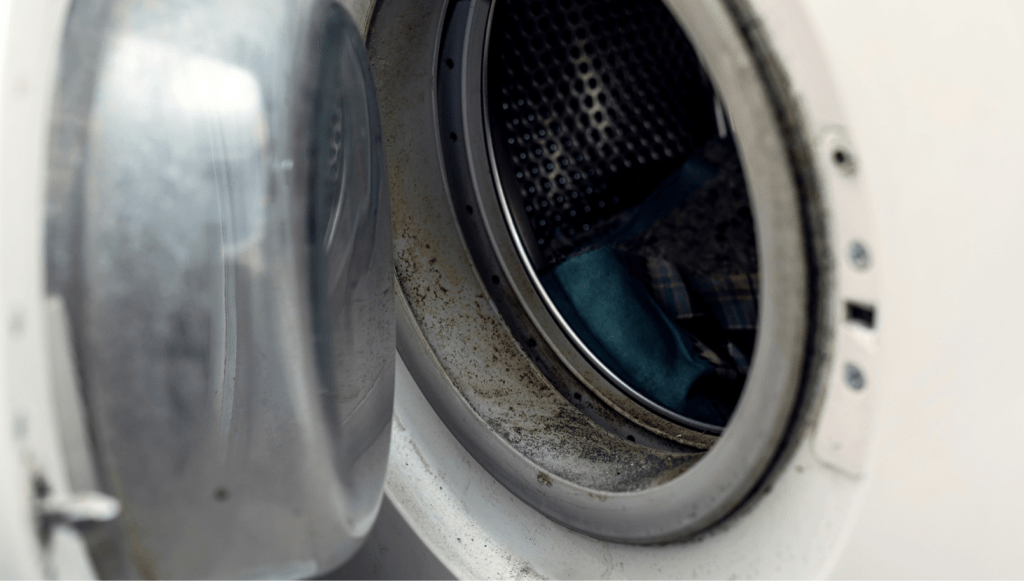
With the Lunar New Year approaching, it's time for the annual spring cleaning! Areas like washing machines, deep corners of kitchen cabinets, and bathroom tile grout may have already become hotspots for mold growth. Experts point out that damp environments easily breed mold, which can hide carcinogenic risks. What are some quick and effective ways to remove mold and prevent its regrowth?
Mold Risks – Hidden Mold in Bathrooms and Washing Machines May "Eat" the Brain and Cause Cancer
The World Health Organization classifies certain molds as Group 1 carcinogens, placing them in the same category as asbestos, formaldehyde, and tobacco—meaning they are confirmed to be carcinogenic to humans. According to comprehensive reports from mainland media, a recent case involved a 6-year-old girl who was sent to Zhengzhou University's First Affiliated Hospital for emergency treatment after inhaling mold. She had a persistent fever for 17 days and became unconscious. Medical examinations revealed more than ten holes of varying sizes in her brain, as if it had been "eaten away" by mold, which was shocking.
Doctors extracted fluid from the holes for testing and identified the "brain-eating" culprit as Aspergillus fumigatus. They stated that if treatment had been delayed a few more days, her brain might have been completely eroded.
Dr. Huo Yufeng, deputy director of the Pediatric Intensive Care Unit at the hospital, noted that Aspergillus fumigatus often hides in damp environments. If children play in such areas, they may inhale mold spores through the respiratory tract, which can enter the bloodstream and subsequently invade the brain.
Mold Risks – How Does Mold Affect Health? It May Trigger Allergies, Damage Lungs, and Cause Cancer
Experts explain that mold is a type of fungus widely present in air, soil, water, and various organic materials, making it very common in daily life. However, since most people have normal immune systems that can defend against mold, infection doesn't occur upon mere contact. Yet, when mold proliferates heavily and the exposed individual has a weakened immune system, inhaling mold spores or coming into contact with mold can trigger various diseases.
- Respiratory System: Mold can easily invade the respiratory system through breathing, affecting the nasal passages, bronchi, lungs, etc. In severe cases, it can not only cause lung infections but also damage the central nervous system, leading to serious conditions like fungal brain abscesses and meningitis.
- Gastrointestinal Tract: If mold enters the gastrointestinal tract through drinking water or eating, it may cause acute gastroenteritis, gastric ulcers, and other diseases, with symptoms including abdominal pain, diarrhea, nausea, and vomiting. In severe cases, it may be accompanied by high fever and general weakness.
- Triggering Allergies: Some people may experience allergic reactions upon contact with mold, such as redness and itching of the eyes and skin, sneezing, nasal congestion, and runny nose. In severe cases, it may even trigger allergic asthma.
- Carcinogenic: Mold is classified as a Group 1 carcinogen by the WHO's International Agency for Research on Cancer (IARC). In nature, there are over 30,000 species of mold, of which about 200 are carcinogenic. Common ones include Aspergillus flavus and Fusarium. The aflatoxin produced by Aspergillus flavus is 68 times more toxic than arsenic.
Mold Risks – Which Household Areas Are Mold Hotbeds?
The main conditions for heavy mold growth include temperature, humidity, and food sources. Environments with temperatures between 20-35°C, humidity above 60%, and poor ventilation are particularly prone to becoming mold hotbeds. If dust, wood, food residues, etc., are present, these serve as nutrient sources for mold, providing ideal conditions for growth and reproduction. In households, the following areas are especially susceptible and can become mold disaster zones:
- Bathrooms: Mold can appear in corners, tile grout, faucets, shower curtains, bathroom sealant, etc.
- Washing Machines: Placing the machine in a poorly ventilated location, closing the lid immediately after washing, or not drying clothes promptly can all lead to mold growth inside the machine.
- Refrigerator Door Seals: To maintain good cooling efficiency, refrigerator doors are equipped with sealing gaskets. However, these plastic or latex seals can be hotspots for heavy mold growth, with Alternaria, Penicillium, Aspergillus flavus, and Aspergillus fumigatus being very common.
- Air Conditioners: If air conditioners are not cleaned regularly, their ducts and internal components can easily become mold disaster zones.
Mold Risks – Doctor Teaches 3 Methods for Quick Mold Removal and Prevention
Dr. Huang Xuan has pointed out that mold not only produces irritating odors, affecting quality of life, but can also lead to various health risks. Therefore, upon discovering mold, it should be cleaned immediately to prevent further spread. He suggests three effective cleaning methods to remove mold and prevent its regrowth using simple tools.
1. White Vinegar
White vinegar has natural antibacterial and anti-mold properties, suitable for mild mold on surfaces like wall corners, window frames, and furniture. Avoid using it on marble or stone surfaces to prevent corrosion.
Steps:
- Pour white vinegar directly into a spray bottle and spray it on the moldy area.
- Let it sit for 15 to 20 minutes, allowing the acetic acid to break down the mold.
- Wipe clean with a cloth, then dry with a dry cloth.
2. Bleach
Bleach can quickly kill mold and is suitable for severe mold infestations. However, it has a pungent smell, so use it carefully—wear a mask and gloves, and ensure good ventilation.
Steps:
- Mix bleach with water in a 1:3 ratio.
- Spray the mixture on the moldy area using a spray bottle and let it sit for 10 minutes.
- Scrub off the mold with a brush, then wipe clean with water.
3. Baking Soda and Water
Baking soda has moisture-absorbing and mold-removing effects and is environmentally friendly. It is suitable for places like walls, wardrobes, and bathroom corners.
Steps:
- Mix 2 tablespoons of baking soda with 1 cup of water and stir well.
- Spray the mixture on the moldy area using a spray bottle, let it sit for 10 minutes, then wipe clean.
- Sprinkle some dry baking soda powder in corners to prevent mold regrowth.