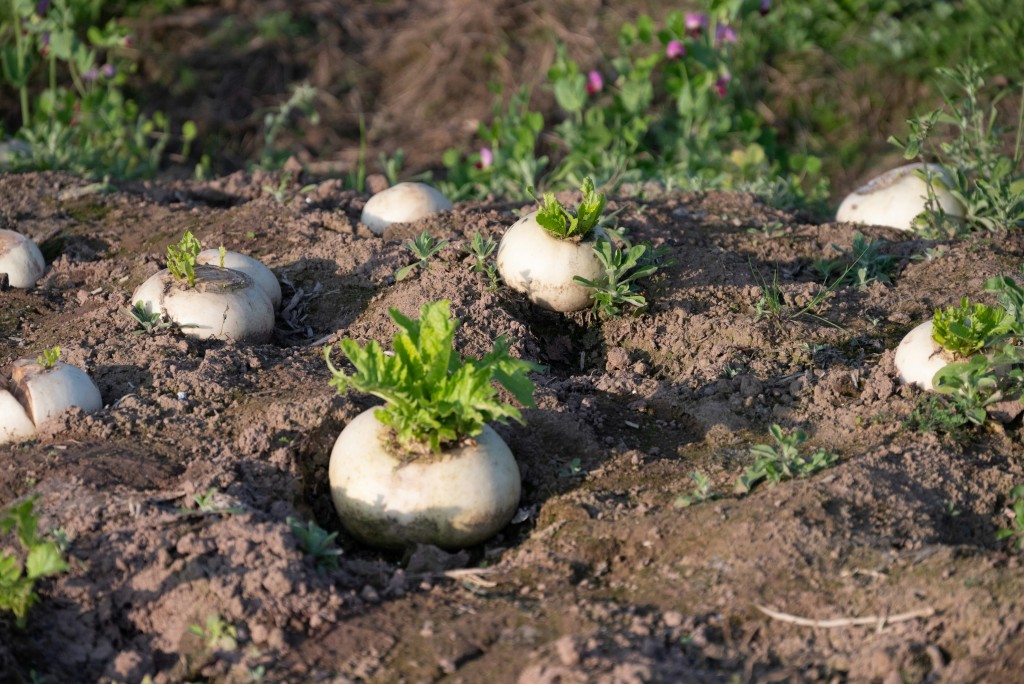
Daikon radish is known as the "commoner's ginseng," being both nutritious and health-promoting. When most people eat radish, they typically only enjoy the large, fleshy root. However, there is one part of the radish that is often thrown away, and its beta-carotene content is even over 2300 times higher than that of the white root! It can help prevent dementia, cancer, and protect the heart.
Food safety expert Wayne recently shared on his personal Facebook page that many people cut off the radish leaves after buying the vegetable. However, the nutrients in the radish leaves overwhelmingly surpass those in the white part (the root). The nutritional value of radish leaves includes:
Nutritional Value of Radish Leaves (Compared to the White Root)
- Protein: Approximately 5 times more
- Dietary Fiber: 2 times more
- Potassium: Approximately 1.5 times more
- Calcium: Approximately 7 times more
- Magnesium: Approximately 2.5 times more
- Iron: Approximately 7 times more
- Folate: Approximately 4 times more
- Vitamin C: Approximately 4 times more
- Beta-Carotene (Vitamin A): Over 2300 times more
Wayne pointed out that although radish leaves are somewhat coarse, they can become delicious with a little preparation. Everyone might try the following methods:
- Pickling with salt
- Chopping and quick stir-frying
- Using in soup
- Juicing
6 Major Health Benefits of Beta-Carotene
Nutritionist Gao Min-min has shared that carotenoids are precursors to Vitamin A and offer significant health benefits:
- Maintaining eye health: Preserving good night vision, preventing eye diseases.
- Anti-aging: Acting as a natural antioxidant, possibly preventing cognitive impairment.
- Skincare and beauty: Enhancing the skin's resistance to UV rays, maintaining mucosal health.
- Boosting immunity: Strengthening the immune system, preventing colds.
- Promoting bone and tooth development.
- Preventing cardiovascular diseases and cancer.
Beta-Carotene Ranking of 17 Foods
Gao noted that the recommended intake of beta-carotene differs by gender: men can consume 3600μg daily, and women can consume 3000μg daily. She also shared a ranking of beta-carotene content in 17 foods (ranked from low to high, per 100g):
- 17th: Broccoli (35μg)
- 16th: Taro (40μg)
- 15th: Iceberg Lettuce (64μg)
- 14th: Corn (106μg)
- 13th: Water Spinach (791μg)
- 12th: Tomato (1015μg)
- 11th: Orange Bell Pepper (1231μg)
- 10th: Rape Greens (1851μg)
- 9th: Pumpkin (1981μg)
- 8th: Garlic Chives (2633μg)
- 7th: Sweet Potato Leaves (3523μg)
- 6th: Garland Chrysanthemum (3286μg)
- 5th: Spinach (3698μg)
- 4th: Chinese Kale (4377μg)
- 3rd: Red Amaranth (4905μg)
- 2nd: Red-Fleshed Sweet Potato (6285μg)
- 1st: Carrot (11274μg)