Many people know about Grenache, but very few really understand the black grape variety.
In the late 20th century, Grenache/Garnacha was the second most planted grape variety in the world. With the European Union Vine Pull Scheme aiming to reduce wine overproduction, its ranking dropped to 7th place, according to the report by the International Organization of Vine and Wine (OIV) in 2017. Today, although it continues to be widely grown in France, Spain, Australia and California, Grenache/Garnacha has been largely underappreciated and misperceived.
Wine lovers come across Grenache/Garnacha mostly as rosé and red wines from France’s Provence and Chateauneuf-du-Pape, respectively. Because of its strong association with these two wine regions, the grape variety has been assumed by many as a French native, with its French name “Grenache” more commonly used. But in fact, the current debate of its true origin is more on France’s neighbors, Italy and Spain.
For the Italians, the grape variety is believed to have come from the island of Sardinia, where it is called Cannonau. Due to its numerous mutations spreading across multiple Italian regions such as Veneto, Liguria, Tuscany, and Umbria, Cannonau has proven its “roots” in the boot of Europe.
Interestingly in Spain, where the grape variety is commonly called Garnacha Tinta, the level of mutation has gone even further. Garnacha Blanca, one of its colored mutation, has a strong foothold in Terra Alta in Cataluña. Garnacha Gris, another colored mutation, can be found in both the northeastern area of Empordà and southwestern territory of Montsant in Cataluña. Last but not least, the black mutant Garnacha Peluda gets its nickname “Hairy Grenache” for its signature “hairy” leaves.
The broad variety of Garnacha reminds us of its popular black grape counterpart, Pinot Noir, which boasts its well-known mutations Pinot Blanc, Pinot Gris, and Pinot Meunier. Sadly, while wines made from the Pinots are highly regarded around the world, Garnacha has often been seen as making easy drinking, straightforward wines. Being a drought-resistant variety, Garnacha is well-loved in hot and dry regions, which further accentuated its sugar accumulation during its life cycle. As a result, its wines can become jammy and high in alcohol unless pruning and yield control are practiced meticulously.
Indeed, Garnacha shines in Cataluña’s Priorat, thanks to its unique reddish-black slate rock llicorella and the courageous effort by a group of talented winemakers that revolutionized the region. It is one of the two wine denominations in Spain that successfully attained the highest quality level Denominaciones de Origen Calificada (DOCa or DOQ). Priorat has taken an extra step to establish a comprehensive classification system, Els Noms de la Terra (The Names of the Land), to acknowledge the terroir, vineyard age, and identifiability of its land. The system covers five levels, from Regional Wine, Village Wine, Single Vineyard Site, up to Premier Cru and Grand Cru. The most prestigious of all is undoubtedly Alvaro Palacios L’Ermita, the only Garnacha-based wine enjoying the crown.
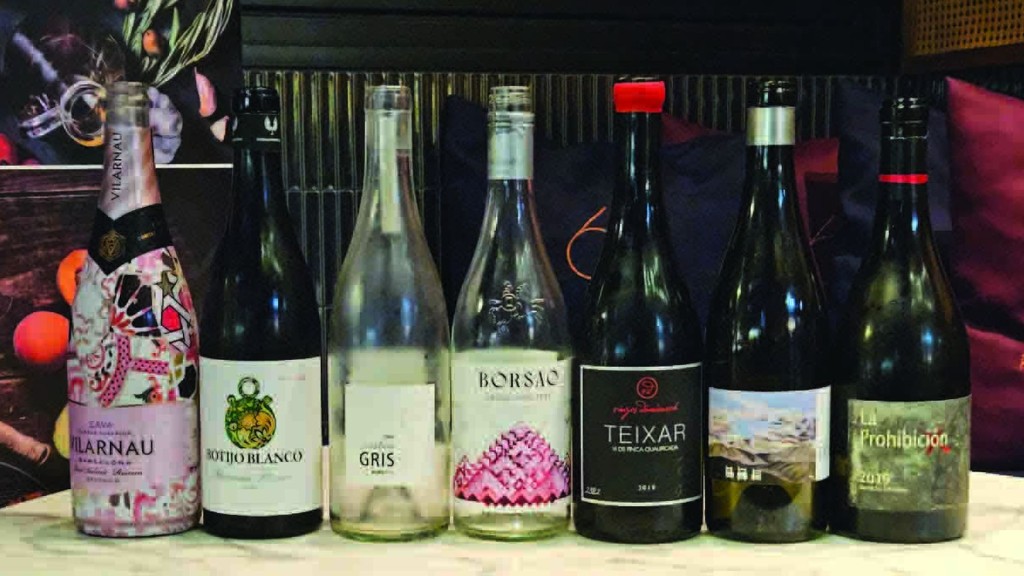
But again, don’t forget the other Garnachas! Garnacha Blanca has made a big comeback over the last decade. With the global warming phenomenon, the adaptable Garnacha Blanca has certainly proved its ability to produce high quality wines in the hot weather of Spain. Bodegas Frontonio is a biodynamic winery started by Master of Wine Fernando Mora. Its Botijo Blanco, made from 100 percent Garnacha Blanca, shows a lovely range of herbal characters with a saline finish.
For Garnacha Peluda, Vinyes Domench produces a distinctive monovarietal wine called Teixar.
Its elegant blackberries profile, delicate minty nuances, and velvety tannins had earned the wine the Vi de Finca Qualificada (VFQ), an award given by the Catalan Institute of Vine and Wine for high-quality wines according to a strict production protocol. It is the only wine in Montsant (and one of only eleven in Cataluña) to receive the honor.
So next time when you see a row of discounted Garnacha wines in the supermarket, remember the diversity and beauty of this special grape variety!
Alice Wong is a certified wine educator based in Hong Kong