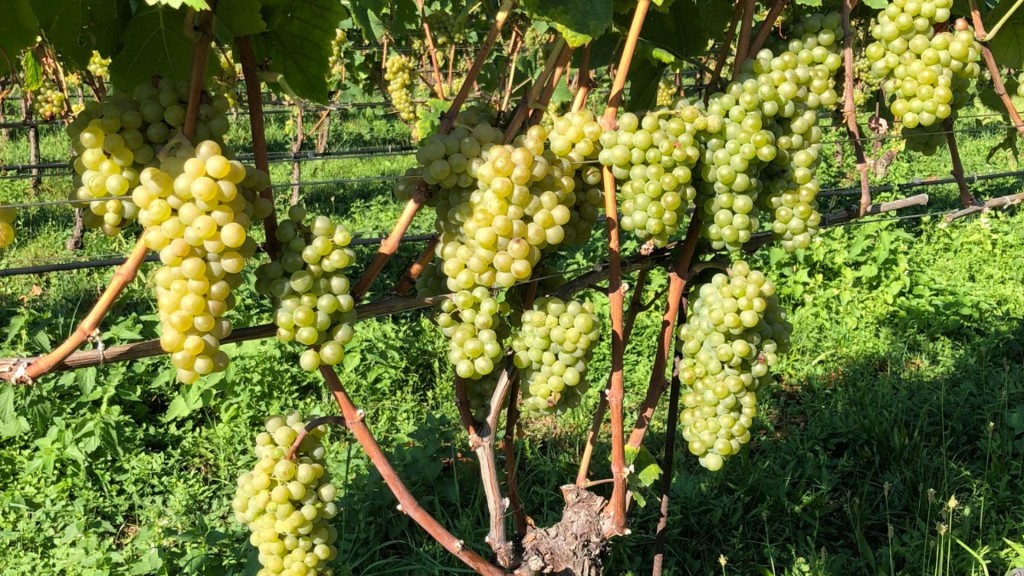
Sometimes mistaken as Chardonnay, but in reality a light-berried mutation of Pinot Noir. With such a powerful lineage, why isn’t Pinot Bianco more popular?
The world of fine wines is dominated by the Pinot and Cabernet families. Yet many members of the former clan remain in obscurity. Other than Chardonnay, who pays attention to Pinot Bianco, Pinot Grigio, Pinot Meunier, Aligote, Auxerrois, Gamay, or Melon de Bourgogne? Even though nowadays we can find more exciting monovarietal wines made from Pinot Meunier and Aligote, in general these Pinot-related grape varieties are hardly in the spotlight.
“Useful rather than exciting” was how master of wine Jancis Robinson described Pinot Bianco. Sharing a similar fate with most others in its family, Pinot Bianco is often blended – usually with each other – to generate wines with more aromatics and appeal.
But if Pinot Bianco is frequently confused with Chardonnay, it must possess some quality that can potentially lead it from good to great. What would be the secret to success?
The grape variety generally has lower levels of acid, and therefore vineyards with cooler temperature tend to preserve the grape’s acidity and give the wine finesse and elegance. At the same time, just like Chardonnay, Pinot Bianco is also considered a “neutral grape variety” – not as aromatic as Riesling or Sauvignon Blanc. Therefore, it is capable of expressing the nuances of its terroir and reflecting a sense of place. When placed in the hands of the most dedicated producers, yield would be strictly controlled, allowing Pinot Bianco to develop a robust backbone that can withstand years of aging.
Several regions such as Germany, Austria, northern Italy and Luxembourg tick all the boxes, boasting a cool climate, an interesting landscape, and a steady squad of serious winemakers that produce exceptional Pinot Biancos. Matthias Leitner in Burgenland, with its unique ripening condition, is known for making some of the finest “Weissburgunders” in Austria.
Nearby in northeast Italy, Schiopetto’s Pinot Bianco has been produced since 1967 and is regarded as one of the best representations of the hills of Collio. For the ultimate splurge, look for Alto Adige’s Cantina Terlano, whose Pinot Bianco Rarity goes through at least 10 years of lees aging and is only produced in the best years.
Why Pinot Bianco? Because the apple doesn’t fall far from the tree.
Alice Wong is a certified wine educator based in Hong Kong