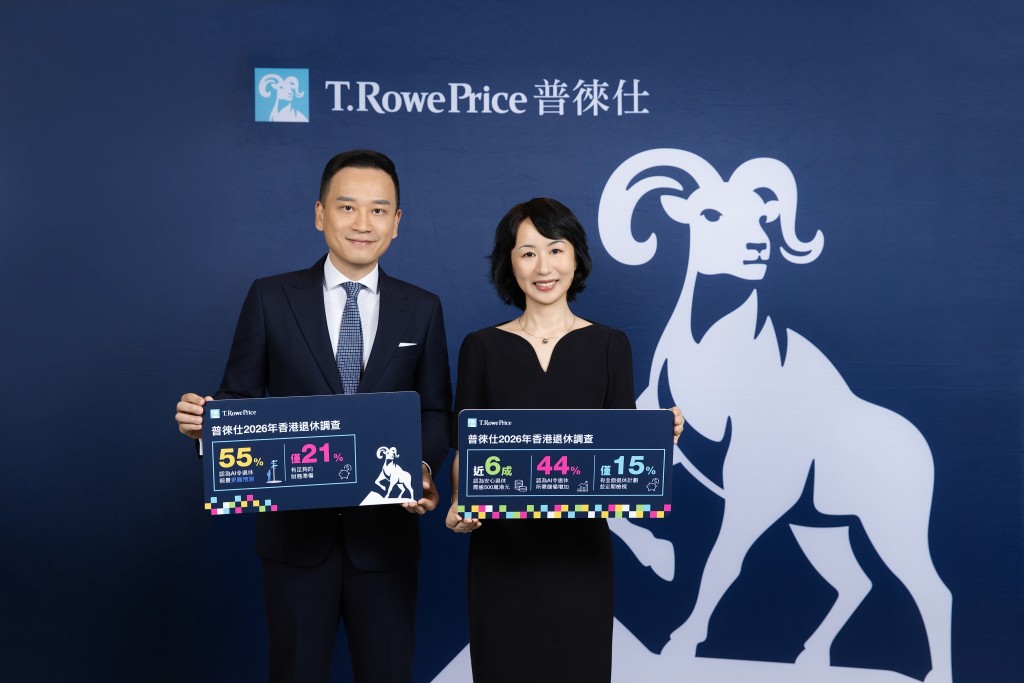
Over half of Hong Kong workers surveyed believe artificial intelligence is making retirement more unpredictable, with only one in five feeling financially prepared, global asset management firm T. Rowe Price said on Monday.
The survey was conducted in August this year among 1,004 Hong Kong residents aged 30 or above who were undertaking paid work with a monthly salary of at least HK$15,000.
Around 55 percent of respondents think AI brings their retirement paths more uncertainty than that of the previous generation, especially for those aged between 30 to 39. The traditional way of switching directly from full-time work to retirement is no longer popular, as 72 percent among those who have plans for retirement expect to retire through multiple stages, the survey found.
Raymond Chan, head of Greater China Intermediary Distribution at T. Rowe Price, said retirement is becoming less of a single point in time and more of a journey, adding that 56 percent consider AI is likely to enable more flexible ways of working, and 43 percent see the potential for new career, business or income opportunities, while 70 percent need new skills to adapt to AI-related changes, and 49 percent are worried AI would disrupt their employment or business income.
The survey also found the demand for flexible retirement arrangements is growing stronger. 72 percent plan to extend their careers with the help of AI, while 60 percent already started or would consider using AI to reduce their working hours or retire early. Nearly 70 percent have already returned or would consider returning to paid work after retiring from their main career.
Hong Kong is facing an aging population. The city's labor force aged 65 and above stands at nearly 240,000, representing a 120 percent increase over the past decade. Over the same period, the labor force participation rate for this group rose from 9.9 percent to 13.5 percent–roughly one in seven seniors is still working, according to the latest figures from the Census and Statistics Department.
To encourage elderly and middle-aged people to return to the employment market, the Labour Department introduced a 3-year Re-employment Allowance Pilot Scheme in 2024, providing eligible employers and employees aged 40 or above with different levels of allowances. As of July this year, the scheme had recorded over 53,000 placements, with around a quarter taken up by workers aged 60 and above, according to Hong Kong Chief Executive John Lee Ka-chiu's 2026 Policy Address document.
However citizens' financial flexibility has yet to keep pace. T. Rowe Price found nearly 60 percent believe they need more than HK$5 million in savings and investments to retire with peace of mind, compared with 51 percent last year. Even 22 percent of them think more than HK$10 million is enough. But only 21 percent feel financially prepared for their ideal retirement with the impact of AI. The planning gap is similarly stark: just 15 percent have a comprehensive retirement plan that they review regularly.
Average Hong Kong earners can expect about 40 percent of their pre-retirement income from pension benefits through mandatory schemes, according to the latest data from the Organization for Economic Cooperation and Development, compared with an OECD average of more than 50 percent and Singapore's roughly 63 percent.
Wenting Shen, global investment solutions strategist and portfolio manager at T. Rowe Price said beyond Mandatory Provident Fund Schemes (MPF) savings, an additional retirement investment as a supplement can bolster an investor's retirement plan and boost its flexibility to cope with disruptions stemming from career changes.
Investors should hold a disciplined investment framework that can adapt over time, gradually adjusting the balance between growth and more defensive assets without the impact of market fluctuations and emotional preferences as they move toward and through retirement, she said.
In addition, building an emergency savings buffer is a sensible way to prepare for the short-term uncertainty that workers may face in the age of Al, but retirement may last for decades, and holding too much of a long-term retirement portfolio in cash can leave purchasing power vulnerable to inflation. That matters when respondents themselves identify inflation protection and long-term growth as important retirement investment needs, she added.
Frank Feng