Artificial intelligence has sparked a growing debate over whether the technology is advancing too quickly. Some worry that increasingly powerful models could eventually become difficult to control. Others argue that slowing development would come at the cost of competitiveness.
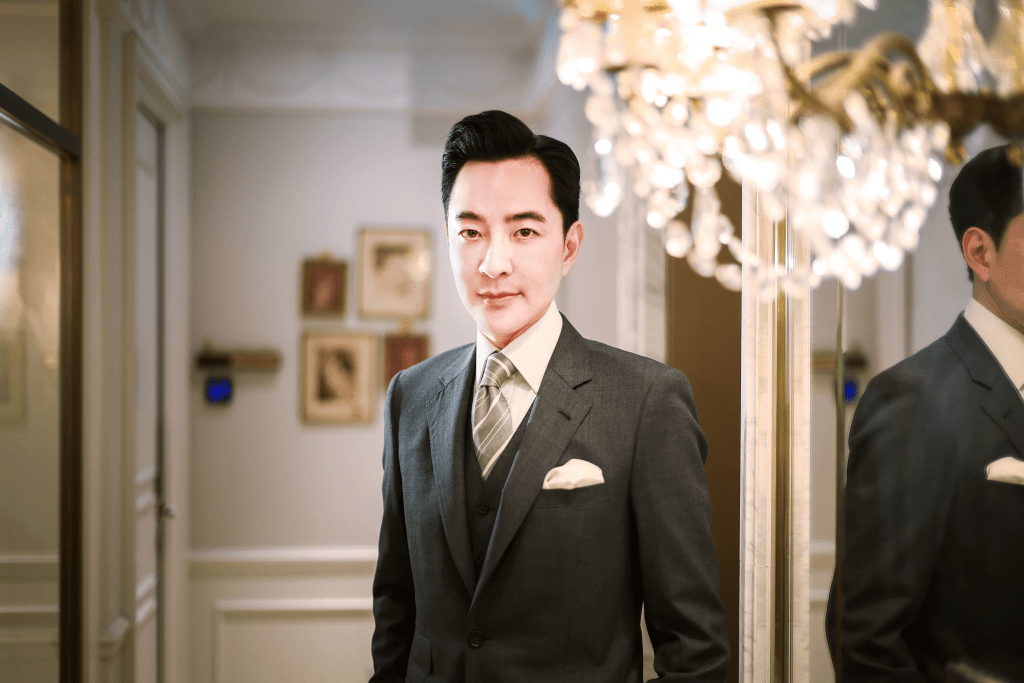
But R.E. Lee International chief executive Calvin Lo sees a different risk.
“I’m actually less worried about AI getting the answer wrong,” Lo told Sing Tao Headline, the sister publication of The Standard. “Sometimes I worry more about it getting the answer too right.”
He gave a simple example.
“Suppose you want to go out for dinner tonight. AI looks at what you normally eat, your preferences, your budget, reviews and transport, and tells you there’s a restaurant in Central that is perfect for you and still has a table tonight.”
“If AI gives that answer only to you, great. But what happens if 100,000 people get exactly the same answer at the same time?”
The restaurant would probably be fully booked almost immediately.
“Exactly,” Lo said. “Nothing about the restaurant has changed, and the AI wasn’t wrong.”
“The problem is that too many people received the same correct answer at the same time. They all act on it, and by doing so, they change the answer.”
For Lo, this is an easily overlooked consequence of AI becoming widely available.
“In the past, we worried about whether the answer was accurate. But when millions of people have access to similar analytical capabilities, I think we need to ask another question: if everyone else gets the same answer, is that answer still as valuable?”
You are not the only one doing your homework
Lo applies the same thinking to a decision familiar to many parents.
“Suppose your child is 16 and has to start thinking about what to study. As a parent, of course you want to know which industries will need more people in ten years, which degrees are likely to lead to better salaries, and which jobs are less likely to be replaced by AI.”
“In the future, AI may be able to analyse global recruitment trends, salaries, demographic changes and technological developments. It may even be able to look at what happened to people who studied the same subject before and give you a very convincing answer.”
“If you were the parent, would you look at it? Of course. I certainly would.”
“But then I would ask: how many other parents are getting the same answer?” Suppose AI predicts that there will be a major shortage of people in a particular profession ten years from now.
“You look at the analysis and it makes complete sense, so you start preparing your child to go in that direction. That is perfectly reasonable.”
“But what if families in Hong Kong, Singapore, London and New York are all seeing roughly the same thing and making the same decision?”
“Ten years later, when all those children graduate, will that profession still have the shortage everyone expected?”
Lo stressed that the original analysis does not have to be wrong.
“There may genuinely be a shortage today. The data may be completely correct. But if everybody sees the same analysis, agrees with it and moves in the same direction, then the supply ten years from now will naturally change.”
“So when you make a prediction, have you also taken into account what people will do once they see that prediction?”
“The point is: you are not the only person doing your homework.”
When everybody knows, how much of the opportunity is left?
“In investing, it’s even more obvious,” Lo said.
“Suppose tomorrow morning AI tells you a stock is trading 30 percent below fair value. There’s nothing wrong with the company, the earnings forecast makes sense and the analysis is solid. Do you buy?”
Probably.
“But what if every fund manager in the world receives the same alert at seven in the morning?”
“Everyone starts buying. The price goes up, and that 30 percent discount may quickly become 20 percent, then 10 percent, or disappear altogether.”
“The company hasn’t suddenly become worse. The analysis wasn’t wrong. But by the time you buy, the price is no longer the price the AI analysed.”
For Lo, that changes the question investors may eventually need to ask.
“In the past, we asked whether the information was correct. In the future, we may also need to ask: once everybody knows it, how much of the opportunity is left?”
“Some things don’t become more valuable because more people know about them. Sometimes the opposite is true. Once everybody knows, the most valuable part of the opportunity may already be disappearing.”
AI may start shaping the future it predicts
Lo does not see this simply as another form of herd behaviour.
“The interesting thing is that nobody is forcing you to do anything.”
“The parent makes their own choice. The investor makes their own investment decision. You can do all the research, think very carefully, and make a decision that is completely reasonable.”
“But what happens when millions of people independently make the same reasonable decision?”
For Lo, that is where AI changes the equation.
“A prediction doesn’t just tell you what might happen in the future. When enough people act on that prediction, the prediction itself starts to affect the outcome.”
“If more and more people use AI to make decisions, how big does that effect become?”
“At some point, AI may no longer just be predicting the future.”
“It may start helping to shape it.”
And none of this requires AI to go rogue.
“AI can remain completely under control. It can give you perfectly reasonable analysis every time, and you still make the final decision yourself.”
“But once everybody has made their decisions, the world that AI originally analysed may already have changed.”
AI can update. Your life cannot
What if AI simply takes the new information into account and updates its recommendation?
“Of course it can,” Lo said. “AI can recalculate. Being willing to change the answer is a good thing.”
“But how long does it take AI to change its answer?”
Seconds.
“Exactly. A few seconds.”
“But what if your child has already spent three years studying that subject?”
“AI looks at the latest employment data, recalculates everything in seconds and tells you that the degree it thought was very promising three years ago is no longer such a good choice.”
“AI can update its answer in seconds. Your child cannot get those three years back. They are already gone.”
The same applies to companies.
“The market changes today and AI can tell you immediately. But the company may already have invested a lot of money, hired a team and spent years moving in one direction.”
“You can’t necessarily turn around overnight just because the answer has changed.”
“How quickly AI can change its answer and how quickly you can change your plan are two very different things.”
Lo believes the speed of AI can create a psychological trap of its own.
“When an answer appears instantly, it’s easy to feel that the decision should also be made instantly.”
“But the speed at which you get an answer and the speed at which you should make a decision are not the same thing.”
Fast answers do not mean every decision should be fast
That does not mean Lo believes people should become more cautious about everything.
“If the world is changing quickly and your response is to become afraid of doing anything, I think that is even more dangerous.”
Instead, he thinks about decisions in terms of how difficult they are to reverse.
“If I can afford to try something, change course if it doesn’t work and absorb the cost of being wrong, I would actually move quite quickly.”
“But some decisions are not so easy to undo.”
“A degree takes years. Moving somewhere else to build a life takes time. A major investment or a decision about the direction of a company can affect you for years. Those are different.”
“I’m not saying don’t do it.”
“I’m saying that before I make a decision like that, I ask one more question: if the environment changes, how much room will I still have to adjust?”
“Life cannot be completely reversible. Business certainly cannot.”
“So how good the answer looks today is one thing. How long you have to live with the decision is another.”
“If I can afford to try something and change it later, I’ll move quickly.”
“But if a decision commits you for three years, five years or ten years, or affects the path your child will take, don’t make it in three seconds just because AI gave you the answer in three seconds.”
What should we really leave the next generation?
For Lo, the same thinking extends beyond AI to parenting, wealth and succession.
“As parents, of course we want to use what we know and what we have to help our children avoid unnecessary mistakes. I’m the same.”
“If there is useful data and analysis, of course I’ll look at it. Knowing more is better than knowing less.”
“But what I believe is the best choice today may not still be the best choice ten years from now.”
That has also shaped the way Lo thinks about succession.
“When I think about what to leave the next generation, I’m not only thinking about how much wealth to leave them.”
“I ask myself something else: are the arrangements I make for them today giving them more choices in the future, or are they locking them into the choices I make today?”
“I don’t think succession is simply about leaving them what I believe is right.”
“What matters more to me is whether they will still have room to make their own judgement and choose differently when the world changes.”
“I may be confident about something today. That doesn’t mean I will always be right.”
“So what I want to leave the next generation is not only what I believe is the best answer today.”
“If one day I turn out to be wrong, I want them to still have a choice and still have room to change.”