According to the Environmental Protection Department's statistics unit, Hong Kong sends an average of 392 tonnes - or 130 pickup trucks' worth - of textile waste per day into landfill. Half of this is clothing. This shows how reducing textile waste is a pressing issue.
Redress, a local charity that aims to reduce clothing waste in the city, has been holding its Redress Design Awards since 2011. Targeting emerging designers with less than four years' professional experience, it is now the world's largest sustainable fashion design competition.
This year, more than 450 designers from 27 regions around the world applied. Thirty semifinalists were selected and their numbers whittled down to nine finalists.
Some of these finalists participated in Icebreaker's Move to Natural challenge in September (Icebreaker comes under the umbrella of award sponsor VF Corp, whose other brands include Vans, The North Face and Timberland).
The challenge is aimed at inspiring emerging designers to think outside the box and follow the Icebreaker motto of leading a more natural way of living and reducing reliance on synthetics.
This year, the challenge was extended to eight fashion and textile students from The Hong Kong Polytechnic University, specially selected to work with the finalists to realize their ideas.
Divided into four teams, each comprising of one or two Redress Design Awards finalists, they were tasked with coming up with a 100-percent-natural fiber hoodie that reused or minimized textile waste from the factory floor of the merino wool outdoor clothing brand.
Everything was held online and teams were given three hours to come up with a solution from scratch. By brainstorming among themselves and feasibility verifying with the judges, they came up with such items as backpacks and outerwear using waste materials. The designs were then pitched to the judges as the last step of the challenge.
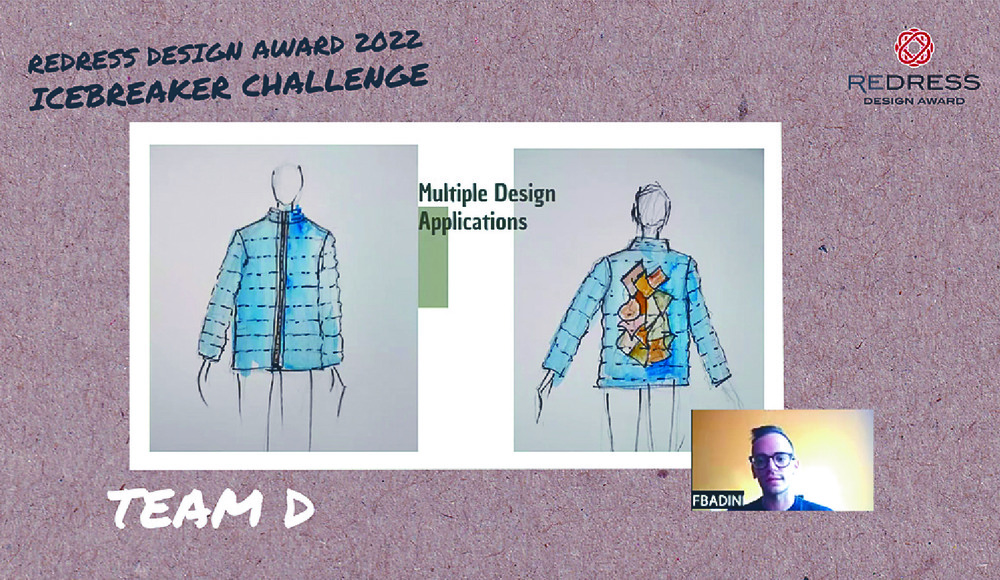
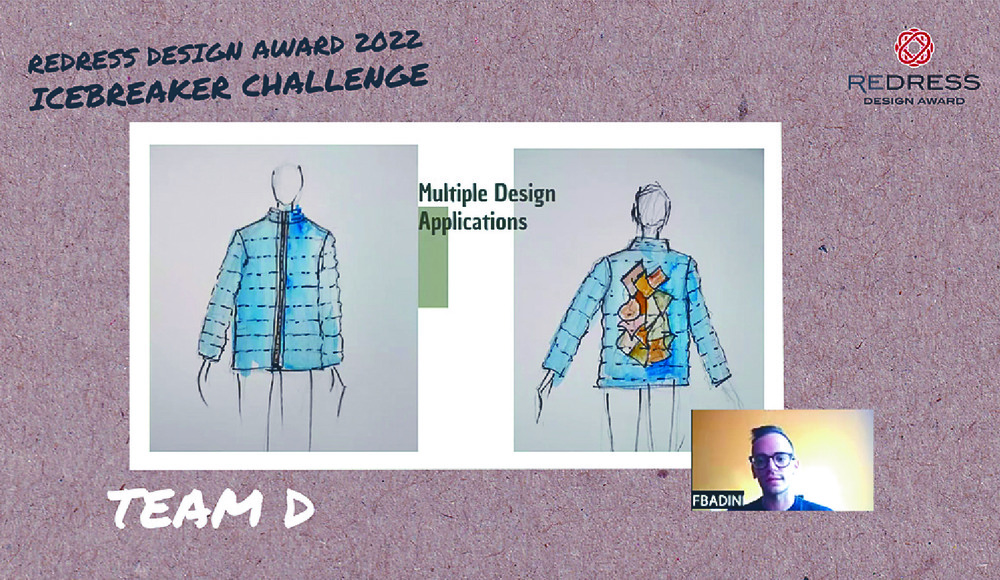
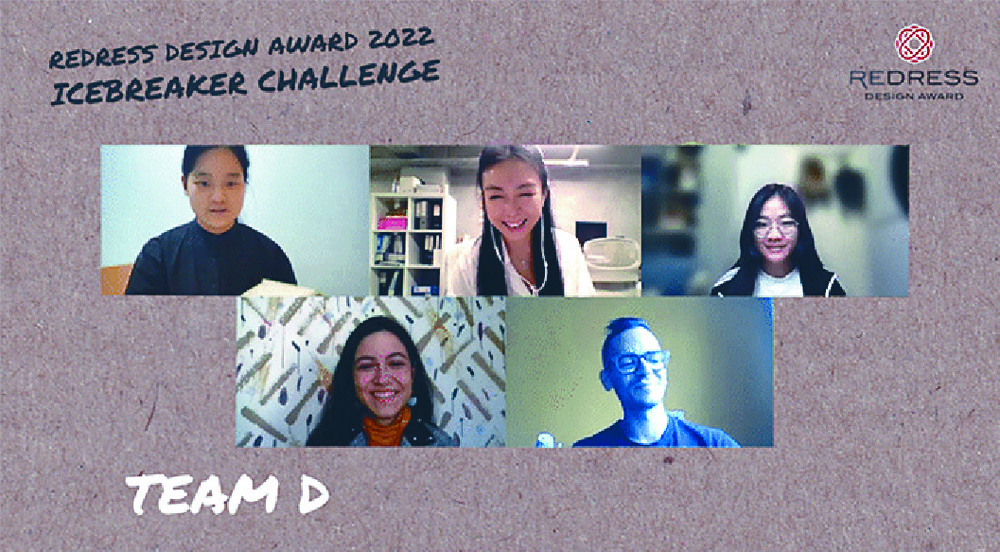
Led by finalists Livia Castro from Brazil and Federico Confalonieri from Italy (who went on to win the overall competition), Team D's proposal stood out with its proposal for outerwear made using textile waste from the combing and carding process.
"The need for sustainable design education has never been more critical," said Redress founder Christina Dean.
"Education is not easy to deliver, yet VF Corp, and The VF Foundation, has supported Redress in delivering education for several years, opening their design studios and experts' calendars for extensive educational support. This speaks of the authentic heart that drives the business.
"We encourage more companies to follow the purpose-driving motto, and, critically, continue to push forward even when the going gets tough."
Raising awareness of circularity in the industry was the big aim of the challenge.
"Creating sustainable circular designs is crucial to VF's mission of bettering both people and the planet," said Sean Cady, VF's vice president for global sustainability and responsibility, who served as a judge for the second year running.
"We want to equip talented next-generation designers with the tools and experience needed to further develop innovative circular solutions,"
Neil Baker, global design director from Icebreaker and a judge, said authentic circularity is an area in fashion sustainability that hasn't been a focus in the past but one that brands and designers should be exploring now.
"It's is not just figuring out how to dispose of waste in a better way," he said. "We should really be thinking about how we can use creativity and strategic thought to actually think of it as a new resource."
Another judging panel member for the challenge, Magnum Lam, an assistant professor at PolyU's School of Fashion and Textile, said a challenge of this kind can provide solid practical advice to students, while sustainability has been one of the key development directions of the school.
"In our curriculum, we incorporate different subjects related to sustainable fashion. In these classes, we introduce concepts like circularity, ESG (environmental, social, and corporate governance) matrix, sustainable development goals and upcycle and recycle design methods," Lam said about the school's take on sustainability in fashion for its undergraduate programs.
Nothing beats hands-on experience, though. "The students learn more about sustainable fashion through participating in a competition or collaboration, especially when it is important for them to collect feedback from industry practitioners."
This year's winner, Confalonieri, will work with VF's Timberland team and collaborate on a sustainable design project.
Since 2018, Redress has partnered with more than 35 local primary and secondary schools and engaged more than 5,000 students in promoting sustainability in fashion.
In Hong Kong, institutions such as PolyU and the Hong Kong Design Institute are partners of Redress that benefited from not only the teaching resources but also workshops and talks.
Free resources on sustainability in fashion are available on Redress' website (www.redress.com.hk) and its Youtube channel at RedressAsia.