Blending corporate insight with scientific leadership, Prof Chee Mun Chong helps bridge advanced solar R&D with industry applications
For Professor Chee Mun Chong, clean energy is as very much about understanding customers as it is about innovating materials.
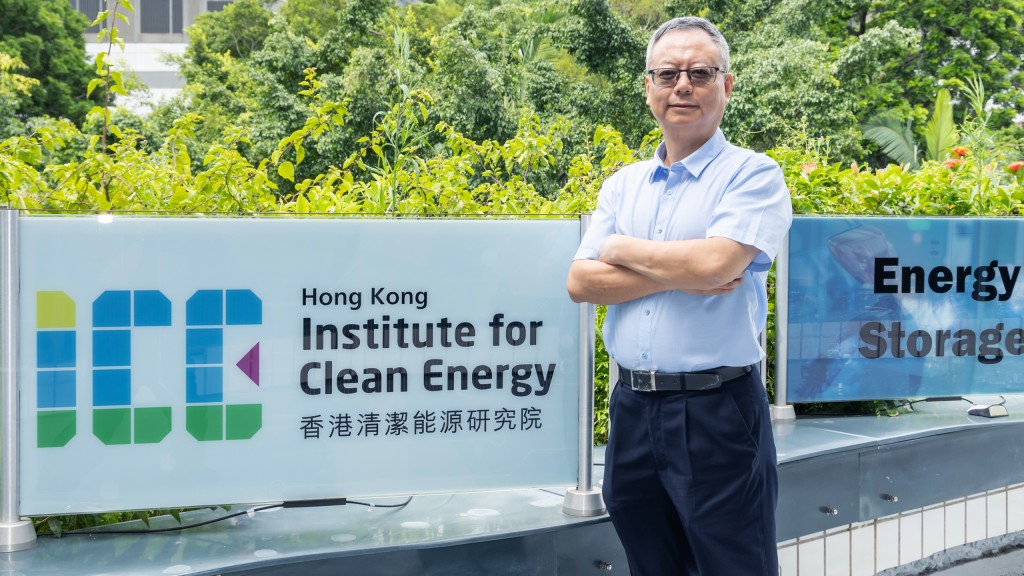
As Deputy Director of HKICE, his leadership is marked by his belief that research must connect with the real world, and that perovskite photovoltaics, in particular, hold the key to making that connection sustainable, scalable and cost-effective.
Building HKICE’s industry-facing Edge
At HKICE, Prof Chong plays a key role in connecting research with the private sector. Drawing from his previous corporate experience at ExxonMobil and PwC before returning to academia, he brings commercial awareness and market realism to the institute’s solar energy initiatives.
“Clean energy solutions don’t happen in a vacuum. You can have the best-performing material in the lab, but if it doesn’t make sense to the people using or installing it, it’s not going to be adopted,” he says.
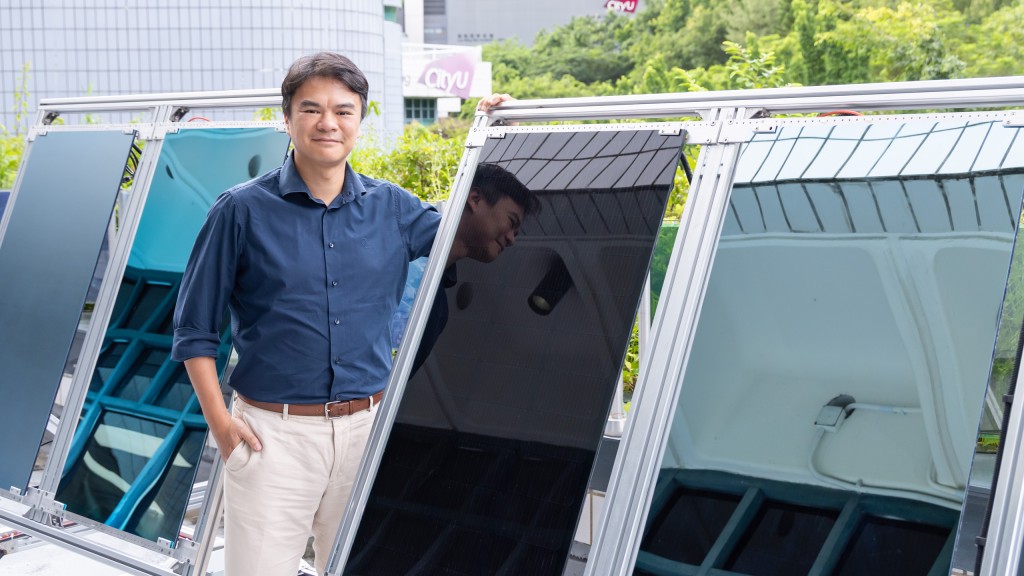
He is an active contributor to HKICE’s strategy for Building Integrated Photovoltaics (BIPV) that focuses on perovskite solar cells that can be seamlessly embedded into urban architecture. And unlike traditional rooftop systems, these lightweight and flexible modules can be placed on building façades, windows and noise barriers, making them ideal for space-constrained cities like Hong Kong.
He explains: “We’re expanding our use cases beyond rooftops. We’re looking at vertical applications like façades, transport infrastructure and other architectural features. That’s where perovskites can thrive.”
He also helped lead a high-level industry engagement session with Jinko Solar, one of the world’s largest PV manufacturers. “In that session, our focus was on listening rather than presenting. The industry is looking for AI-integrated production lines, greater durability, and form factors that make practical sense,” he says.
Speaking of HKICE, he says: “It’s a platform for turning knowledge into systems people can actually use,” adding that his role includes mentoring researchers on how to pitch technologies to investors and anticipate industry challenges during prototyping.
From Research Excellence to Real-world Readiness
Scientifically, Prof Chong is best known for his work in large-area perovskite module development. He co-founded Solar Skin Pty Ltd, an Australian start-up that established the first pilot production line for commercial scale perovskite modules in Australia.
One of his key breakthroughs addressed the long-term degradation of perovskite cells – a notorious challenge. “We’ve gone from 10 to 15 years of useful life to something closer to 30 years. That’s a huge leap if you’re thinking about infrastructure-scale deployment.”
He also believes that system integration and user experience are just as important as efficiency. “We can’t keep chasing record efficiencies in the lab and ignore how people want to use solar in real life. We need to think like designers, not just scientists.”
Currently, Prof Chong is helping lead CityUHK’s efforts to build one of the world’s first tandem solar demonstrators in Hong Kong by merging perovskite and silicon solar layers into a high-efficiency, scalable architecture.
Finding Purpose in the Translation Process
Outside of the lab, Prof Chong’s perspective is shaped by his dedication to public education and innovation culture. He frequently speaks at energy forums and advises entrepreneurs through HK Tech 300, where he mentors early-stage startups in the clean tech space.
He sees research commercialisation as both a scientific challenge and a social responsibility. “The gap between lab and market is cultural, not merely technical,” he explains. “We ought to equip our researchers with storytelling, systems thinking and empathy.”
His view of HKICE is deeply humanistic: “Technology must serve people. Our job is to make that service not only possible but irresistible.”