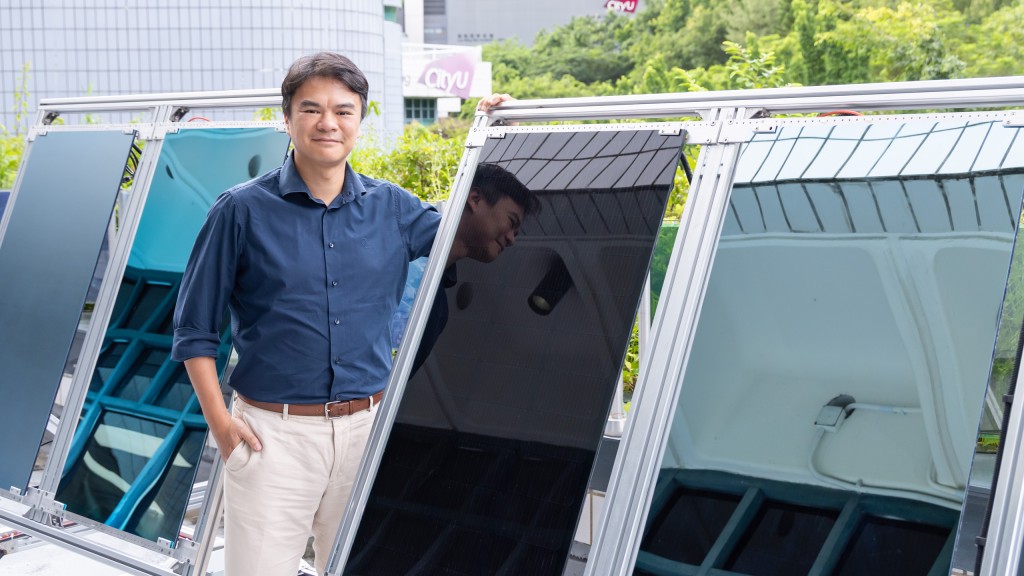
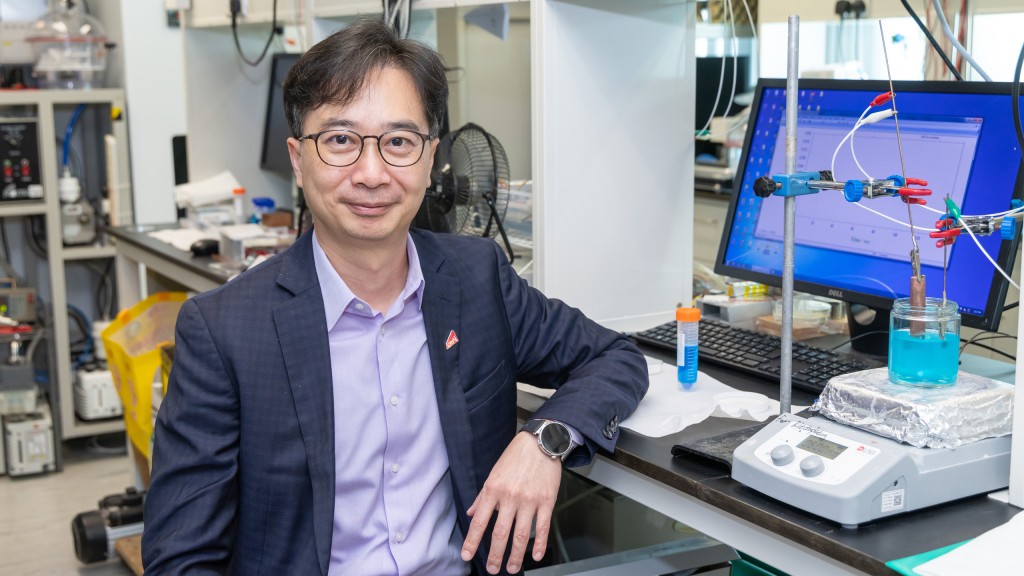
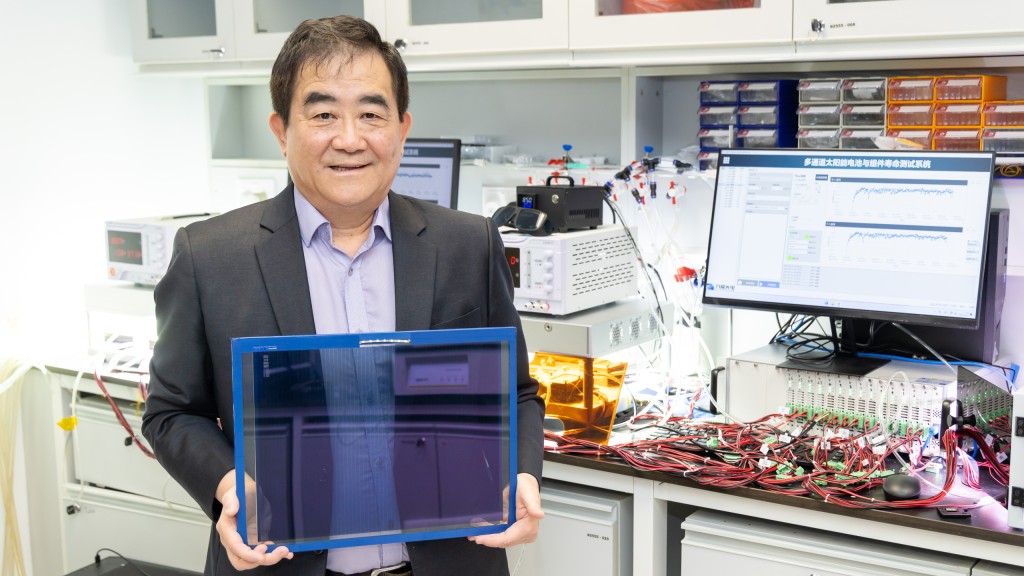
At HKICE, Prof Angus Yip is driving next-generation solar research that aligns with architecture, policy and everyday urban life
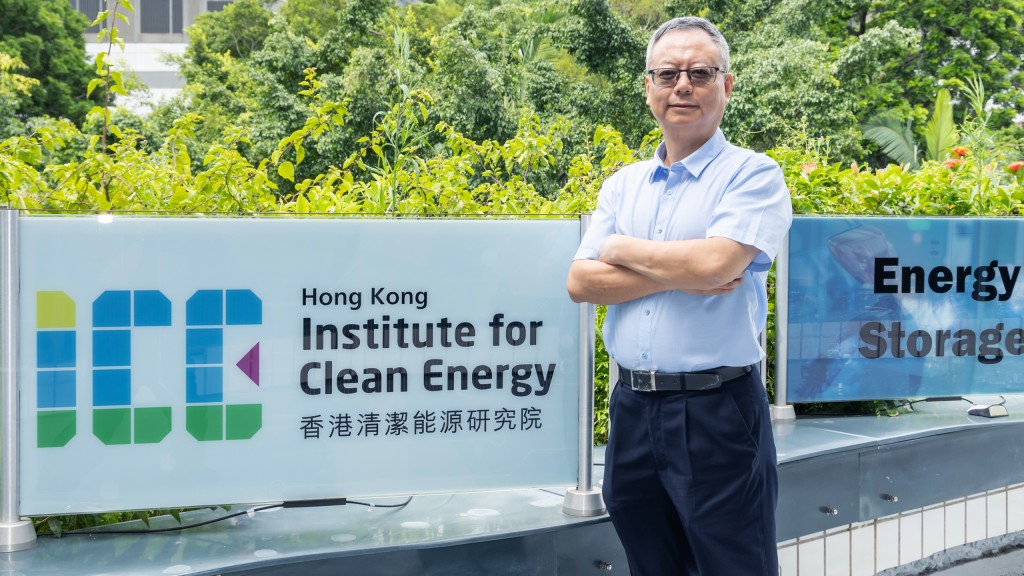
Professor Angus Hin-Lap Yip, Associate Director of HKICE and award-winning photovoltaics researcher, is driven by a mission to make solar energy truly compatible with the built environment.
His expertise in perovskite and organic solar technologies is not just transforming energy science; it’s reshaping how solar power can be deployed in cities like Hong Kong.
Integrating Solar Innovation into HKICE’s Urban Strategy
At HKICE, Prof Yip’s role extends beyond research. He is also shaping the Institute’s focus on urban solar applications, particularly Building Integrated Photovoltaics (BIPV), which refers to solar materials embedded into windows, façades and other building components.
Achieving this in a city where rooftop space is limited and regulations on solar deployment are still developing presents tremendous challenges. “Hong Kong has unique challenges,” he explains, “but also unique opportunities to be a global leader in vertical solar systems.”
He works closely with other HKICE members in materials, design and policy to promote a systems approach to solar adoption. He supports HKICE’s role in co-ordinating with building developers and policymakers to identify and overcome structural, safety and aesthetic constraints of deploying solar in dense urban environments.
“We have to think outside of the box of modules and panels,” he explains. “We’re talking about integrating solar directly into the building’s skin. That requires collaboration with architects, regulators, and investors, not just scientists.”
Prof Yip also believes HKICE can lead a regional knowledge alliance by linking research institutes across Asia to co-develop standards, share testing data and jointly promote green building certification frameworks that incorporate solar power.
Scientific Advances with Global Impact
Prof Yip’s personal research has earned international recognition, including the RGC Senior Research Fellow 2025/26, Hong Kong Engineering Science and Technology Award (2023) and inclusion among the 405 global scientists consistently named as Highly Cited Researchers from 2014 to 2024 by Clarivate for sustained research impact and citation excellence. His breakthroughs in solution-processed perovskite and organic photovoltaics have contributed to record-setting efficiency levels and long-term device stability.
He has recently co-developed a non-volatile additive that improves both performance and lifespan in perovskite solar cells by guiding crystallisation during the fabrication process. He says: “Our latest materials.
are efficient and remain stable under real-world conditions. That’s crucial if we want the public to trust the technology.”
His team is also developing semi-transparent solar cells that can be installed in windows without compromising daylight. “Imagine a high-rise office building that powers itself through its own glass façade. That’s not science fiction. It’s our current design brief.”
His publications are regularly featured in top-tier journals, and he frequently serves on the editorial boards and advisory committees of leading energy science organisations. Still, he remains modest about individual achievement.
“This is never a solo effort. Innovation happens when we build trust and share curiosity across disciplines. It’s about creating a common language between chemistry, materials science, and engineering and real-world application.
Balancing Research, Policy and Public Understanding
As a visible figure in HKICE’s outreach and educational work, Prof Yip often represents the Institute in public conferences and seminars, media interviews and school programmes. He believes that community awareness is essential if clean energy is to become mainstream in Hong Kong.
“We’ve seen how quickly misinformation spreads around solar. That’s why outreach is important, not just to promote our work, but to listen, respond and build public confidence.”
His mission is to translate innovations into adoptable solutions, from urban BIPV to solar-powered sensors for indoor environments. “We have to make clean energy intuitive, beautiful and integrated into daily life.”
HKICE, he adds, is well positioned to do just that. With its mix of scientific expertise and outreach capability, the institute can bridge the gap between lab and legislation, and between prototypes and public infrastructure.
A Life Rooted in Purpose and Practicality
Thoughtful, grounded and committed to mentorship, Prof Yip views teaching and collaboration as central to his identity as a scientist. “Mentoring is about guiding values, integrity and resilience. I want students to understand that being a scientist means being a citizen too.”
Growing up in a compact urban setting gave him a first-hand appreciation for the environmental challenges cities face. That awareness continues to guide his career as a researcher and educator.
“The ultimate success, for me, is seeing solar become part of the urban language, something seamlessly integrated into everyday life.”