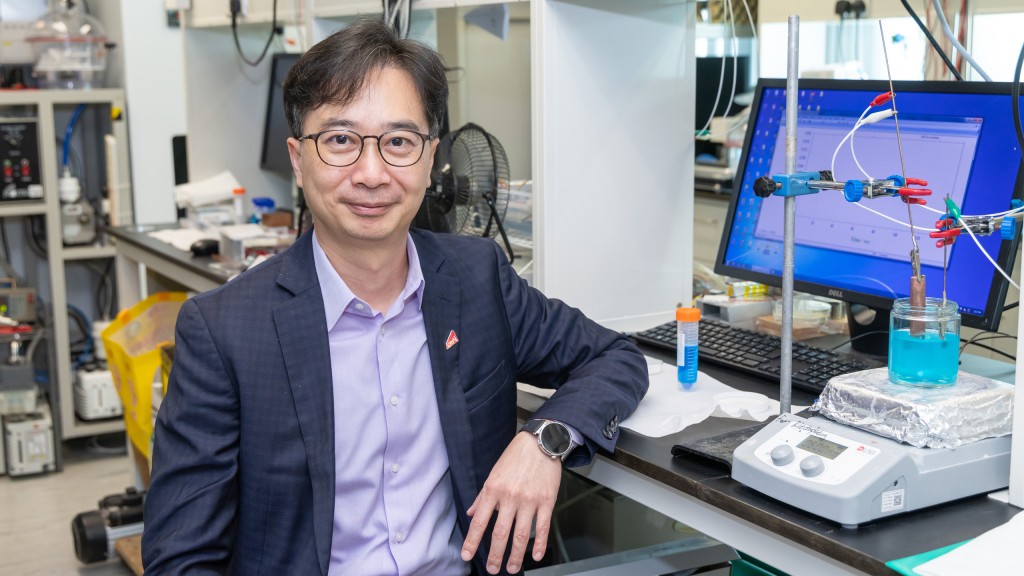
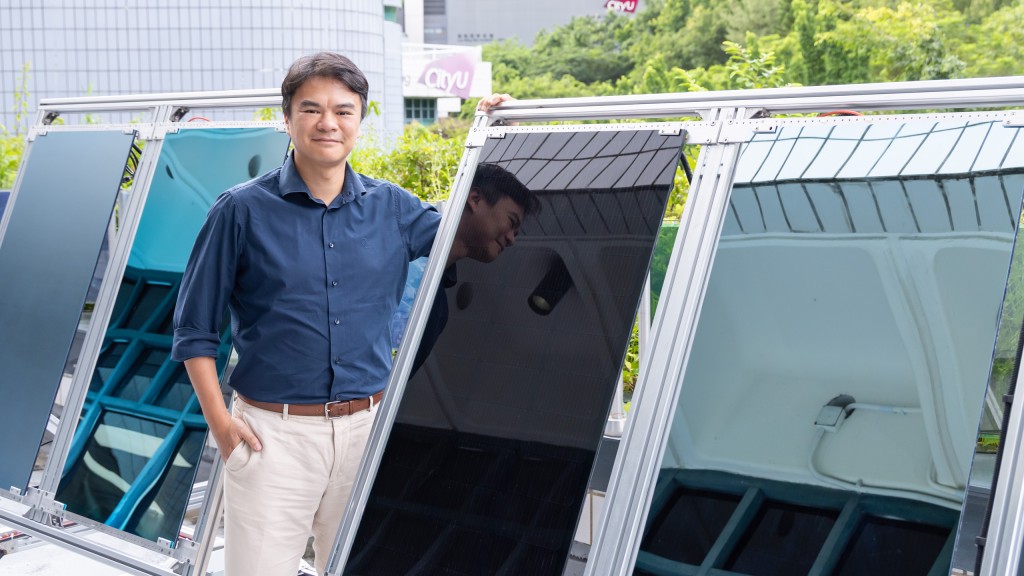
Prof Tony Shien-Ping Feng’s work bridges electrochemical engineering, semiconductor manufacturing technologies and clean energy applications
For Professor Shien-Ping Feng, advancing semiconductor technology means pushing the boundaries of materials innovation at the atomic level.
As a Professor at CityUHK’s Department of Systems Engineering, he leads cutting-edge research in electrochemical fabrication for next-generation chip packaging.
As a RAISe+ principal investigator and founder of Doctech, he stands at the intersection of high-impact science and industrial application.
Copper, Chips and Cleanroom Vision
Prof Feng’s journey began in the heart of the semiconductor industry.
With years of experience at TSMC and postdoctoral training at MIT, he has developed a keen understanding of the production challenges in advanced chip manufacturing. This industrial foundation now fuels his academic mission to solve the problems industry hasn’t cracked yet.
“When I worked at TSMC, I understood how performance was often bottlenecked not by circuits, but by materials. That realisation shaped everything I’ve done since.”
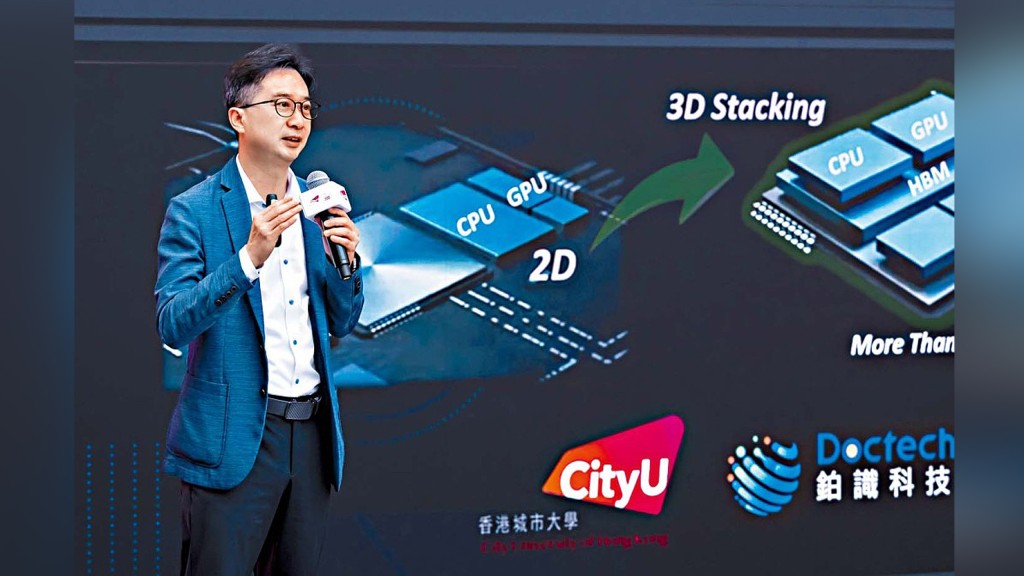
His recent focus is on low-temperature copper-to-copper bonding, a process essential for stacking microchips vertically in 3DIC (3D Integrated Circuit) architectures.
Traditional high-temperature processes risk damaging delicate structures. Prof Feng’s solution uses a nanocrystalline copper formulation that allows bonding at much lower temperatures while maintaining high mechanical strength.
This innovation, published in Nature Communications, addresses a critical bottleneck in chip packaging and opens the door to denser, more energy-efficient devices.
“We’re moving into an era where mechanical bonding and materials integration must be as precise as the circuit design itself,” he notes.
Leading a RAISe+ Project in Electroplating Additives
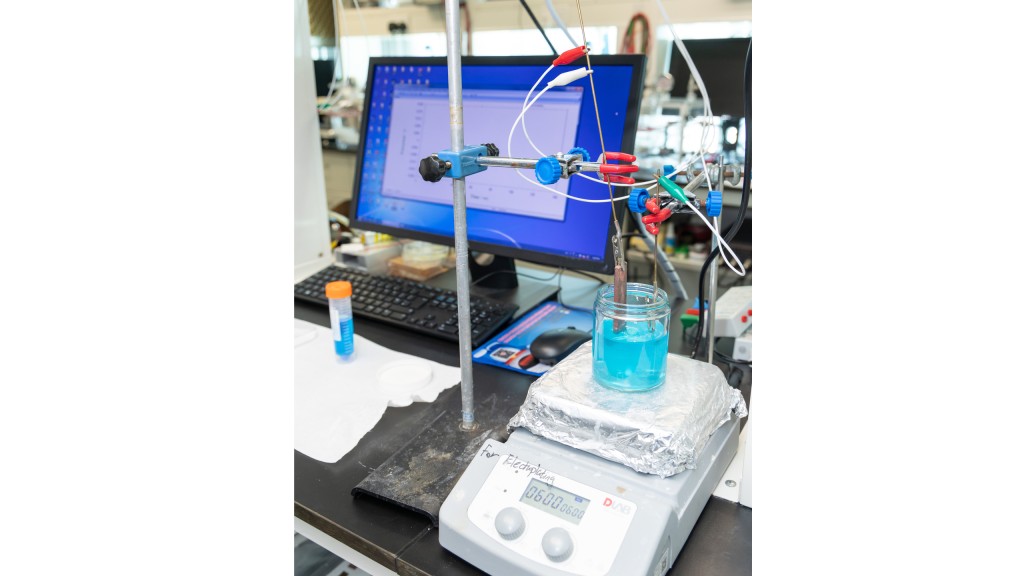
As a lead investigator of a prestigious RAISe+ scheme project, Prof Feng is pioneering chemical additive development to engineer and tailor the microstructure of electroplated copper for advanced electronic packaging applications. These additives control copper’s grain structure, surface smoothness and reliability, which are essential for maintaining device performance as transistors continue to shrink and circuit density increases.
“It may sound like a niche detail, but the difference between a reliable chip and a failed one can come down to a single layer of atoms in the copper.”
His work doesn’t stop at lab results. Through his start-up Doctech, he is scaling these technologies for automated, intelligent manufacturing lines, with a goal to enter mass production by 2026. The company is building local supply chain resilience in response to geopolitical shifts in global semiconductor sourcing.
He views Hong Kong’s proximity to the Greater Bay Area as a major strategic advantage. “This region can become the brain and the muscle of future chip manufacturing,” he says.
Cross-cutting Work with HKICE
Prof Feng plays an integral role in collaborative projects for HKICE, particularly in developing passivation layers for perovskite solar cells in partnership with Prof Angus Yip’s group.
These interdisciplinary ventures reflect HKICE’s core mission of translating materials breakthroughs into real-world energy and electronics solutions.
He’s also a vocal advocate for materials security, urging HKICE and its partners to focus on building alternative supply chains and developing local sources of high-purity metals and chemicals.
“Clean energy and semiconductors are converging. We need chips to run smart grids, sensors, EVs and we need clean ways to make those chips.
Researcher, Entrepreneur, Engineer
Prof Feng is one of the rare academics who moves comfortably between the lab bench and the boardroom. He believes innovation requires more than publishing papers; it also depends on industrial commitment, financial backing and scalable platforms.
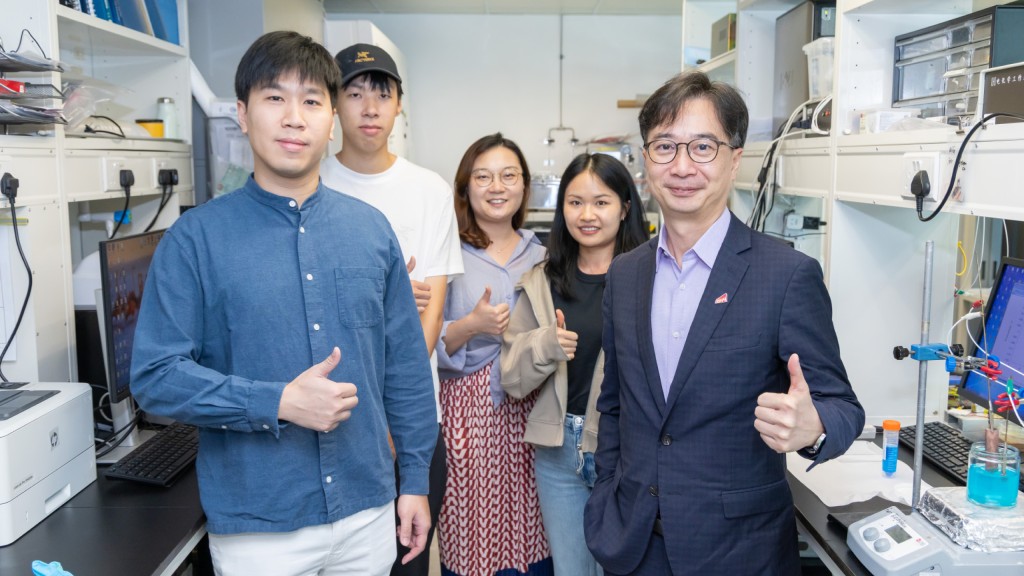
He also believes education and mentorship are vital for developing future talent in the electronics sector. He regularly supervises postgraduate researchers who have gone on to work at leading chip companies or launch startups of their own.
When asked about his motivations, he is straight to the point: “It’s about making things work better and making them real.”
Outside of work, he enjoys cycling and tinkering with tools, staying true to his engineering roots. He sees design as both function and beauty, whether in a mechanical joint or a circuit path.
For Prof Feng, the clean energy transition won’t happen without the chips to control it, and his mission is to ensure those chips are smarter, cooler and built from the bottom up.