Read More




Taxi e-payment ‘3pc fee’ notices spark debate on rollout day
02-04-2026 12:42 HKT
HK braces for natural gas shortage
02-04-2026 08:00 HKT
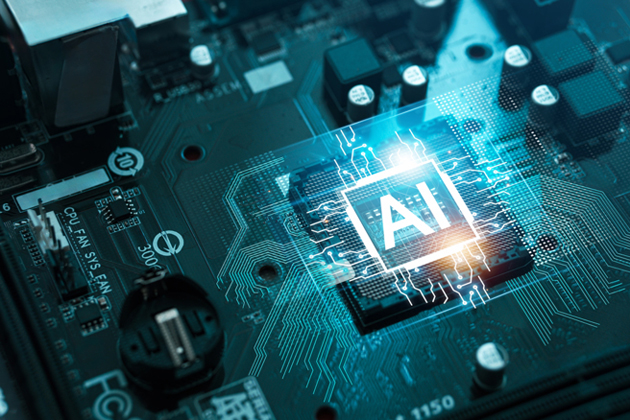
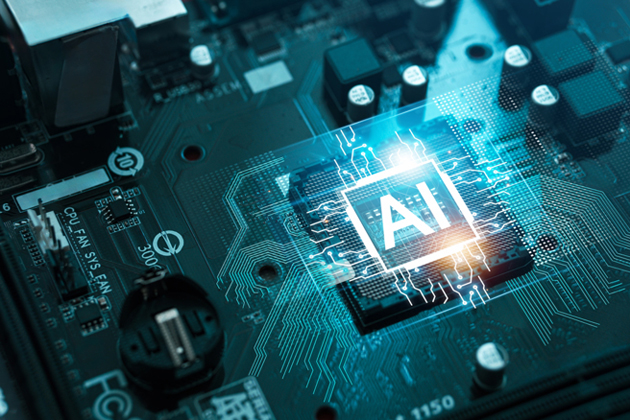
The 2025-26 financial budget has earmarked HK$1 billion to build the Hong Kong AI Research and Development Institute.
It is clear that the SAR is determined to reinvent itself as a technology base but let’s not forget the city produced semiconductors 60 years ago.
The world has been fighting a war over chips, the most critical technology that drives all the tech products, including artificial intelligence.
In fact, Hong Kong made semiconductors as early as the 1960s and 70s. Brands including Fairchild, Ampex and Motorola were dubbed the “Shaolin” academies of the local electronics industry.
But then, the academies vanished gradually after the mainland opened its doors to foreign investments, offering them cheaper land and labor. The outcome was a city being left to transform itself into a financial powerful house.
If the industry were to continue in Hong Kong, the financial transformation thereafter would be another.
There could be another Nvidia or TSMC in Hong Kong.
Fast forward to today, the SAR is planning for a third miracle. Riding on the global trend, Hong Kong has set its eyes on cutting-edge tech -- with a big push into artificial intelligence.
So, can it pull off a technology comeback?
It has a real chance to do so.
First of all, it is not starting from scratch. In addition to the HK$1 billion committed by Financial Secretary Paul Chan Mo-po to putting up the new AI research center, many more billions have already been allocated over the years to hi-tech research and development.
For example, the 2019 budget set aside billions to promote innovation and technology with a focus on AI, robotics and health-related technologies, paving the way for the setting up of new centers in Cyberport and the Hong Kong Science and Technology Parks.
The InnoHK, for instance, leverages the strength of HKSTP to incubate start-ups and help them tap into local and regional markets.
As of today, Cyberport and HKSTP house hundreds of tech companies. At the same time, universities are cooking up inventions such as the University of Hong Kong’s ‘neuromorphic vision’, a kind of robot eyes.
They are clearly not trying to bring back the old factory days.
Sitting next to Shenzhen, Hong Kong may readily team up with the big players over there without having actually to do all the heavy lifting, just using their brains.
Even though it is said that the chance is real, it would be irresponsible to assert that this would be all plain sailing.
Property prices have come down a bit but it still costs to rent large space and recruit the right talents as Shenzhen, for example, can offer all these at a fraction. Shenzhen is a collaborator and also a competitor no less in its demand for the talented minds.
Hong Kong has its people problem. While the city has got talent, the pool is small. Whether policy-makers are willing to admit this or not, many smart minds have left in recent years. Government attempts to replenish them with newcomers is a slow fix.
Let us not forget that there are also politics and trade spats getting in the way.
Hong Kong must identify its niche and stand out, not just to tag along, if it was to pull another rabbit out of the hat.