The record downpour not only plunged Hong Kong deep into troubled waters but also exposed building violations that are both long-standing and commonplace.
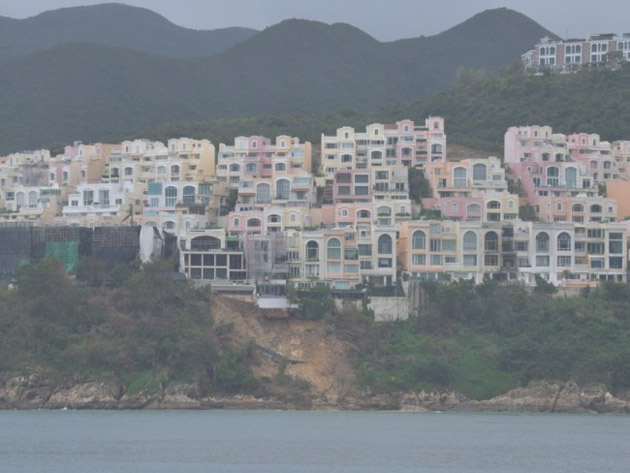
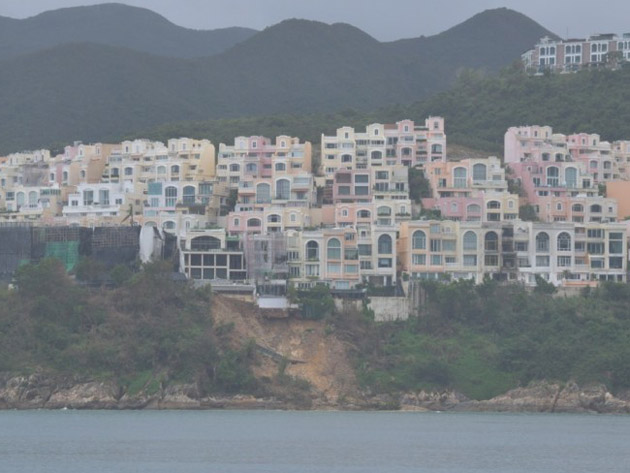
With the massive storm sweeping part of the slope of Redhill Peninsula into the sea, Development Secretary Bernadette Linn Hon-ho need not wait for complaints to be made before law-enforcement action is taken on building regulation breaches.
A breach is a breach, and Linn - as well as Chief Secretary Eric Chan Kwok-ki - pledged firm action after building violations were opened up by this powerful force of nature.
Linn was absolutely right when she assured that her priority was to stabilize the sea-facing slope beneath the Redhill Peninsula development.
People's safety must always be the No1 priority in all circumstances, no matter what.
I have little doubt that the government can readily put together resources to stabilize the slope as Hong Kong has an abundance of geotechnical engineering expertise.
The true drama will unfold quickly once the slope is stabilized and public safety is ascertained - as long as Linn and Chan honor their words.
The issue before them is not limited to the three luxury houses that have dominated news headlines these past days.
A number of others could also be implicated even though they have not been named by the media. It should be easy for officials to compare aerial photos of the actual development against the approved development plan.
If Linn and her colleagues make the comparison, they will readily discover that a number of the sea-facing houses occupy areas extending beyond the permitted boundary of the development plan.
An amazing fact? Not necessarily.
According to real estate insiders interviewed by the media, it is not uncommon to find illegal structures in luxury houses - it's just a question of the extent.
What does the Redhill fiasco infer?
Immediately, the concerned property owners must be blamed. There is a common saying that space is never big enough, and a house with 3,000 square feet of usable area - excluding outdoor green space - may be big, but it is still not big enough for some.
Owners involved in such incidents cannot escape blame.
There also exists a more fundamental concern: the so-called authorized personnel - professionals who are expected by law to make sure that all building works are compliant with the law.
Without them, it would be impossible for property owners to carry out building alterations, whether legal or otherwise.
The incident brought back the memory of a recent incident involving an apartment in The Capitol in Lohas Park, Tseung Kwan O, in which a structural wall had been partly removed to create more living space.
Illegal structures are commonplace. In addition to waiting for complaints for action to be taken in cases besides those already exposed by the force of nature, would it make better sense to start with those so-called authorized personnel?
The situation would have been much better if the required high level of professionalism had been maintained.