
Read More
The 2026 FIFA World Cup has been thrust into unparalleled controversy following a highly publicized executive intervention.
ADVERTISEMENT
SCROLL TO CONTINUE WITH CONTENT
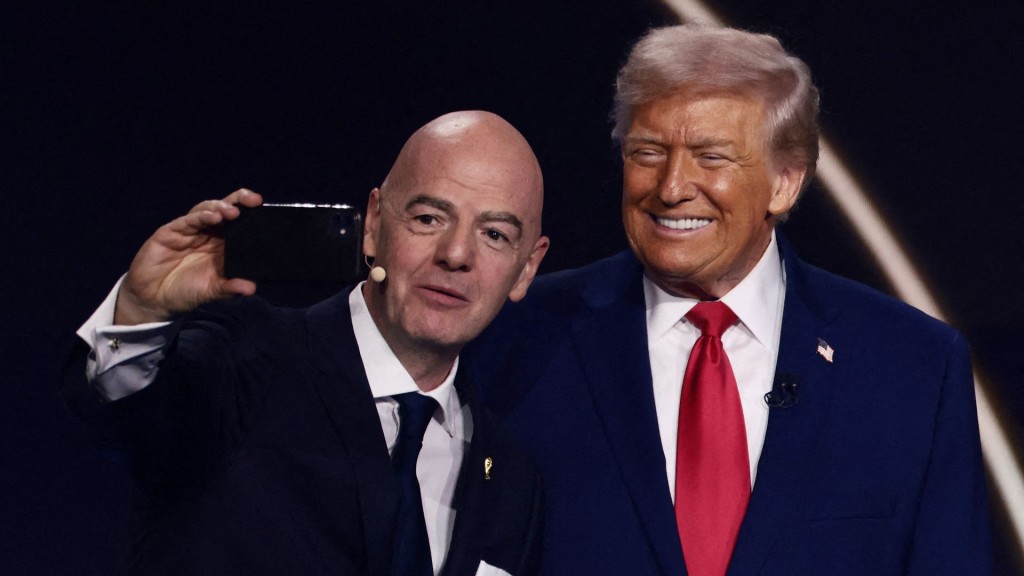
US President Donald Trump directly inserted himself into the tournament’s disciplinary framework by lobbying for the reprieve of US striker Folarin Balogun. Following personal telephone conversations between Trump and FIFA president Gianni Infantino, the FIFA Disciplinary Committee took the extraordinary step of suspending Balogun’s automatic one-match ban. This unprecedented decision downgraded his straight red card to a one-year suspended probation, making him available for the Round of 16 clash against Belgium in Seattle.
Continental divide within FIFA
This regulatory U-turn has ignited an international firestorm, pushing Infantino into a fierce political corner. He is currently facing immense, unprecedented pressure to resign, cascading heavily from European football’s governing body Uefa, as well as various European member associations.
Uefa issued a scathing rebuke, asserting that FIFA had crossed a critical “red line” with an “incomprehensible and unjustifiable decision” that directly compromised the sporting certainty of the rules. The Royal Belgian Football Association echoed this fury, launching formal procedural complaints over the blatant political overreach.
Yet, those expecting this backlash to force Infantino out of office are profoundly miscalculating the geopolitics of modern sports governance. He has already confirmed he will seek re-election, and reporting before this controversy described broad support across FIFA’s membership system, where one-member-one-vote dynamics strongly favor incumbency with wide global backing.
By consistently expanding the World Cup format, securing lucrative commercial partnerships, and reallocating massive financial dividends to member associations across Africa, Asia, and Latin America, Infantino has built an impenetrable voting bloc. Because power within FIFA operates on a “one member, one vote” principle, the arithmetic heavily favors the incumbent.
Consequently, Infantino is not only expected to weather this European storm, but he is highly likely to securely run for – and win – another four-year term, extending his presidency until 2031.
What stays if he stays
Should Infantino secure his position for four more years, the structural impacts on global football will be profound, permanent, and deeply divisive. The Balogun episode has already drawn criticism that FIFA rules were bypassed, and Uefa warned that when rule certainty is no longer guaranteed, competition credibility is undermined.
It could signal to world leaders that international sports rules are flexible commodities. We will see the absolute consolidation of geopolitical transactionalism, where major tournaments – such as the uncontested 2034 World Cup in Saudi Arabia – are locked behind closed-door financial agreements with zero room for open, competitive bidding.
Downgrading Balogun’s red card sets a dangerous, irreversible precedent. It tells powerful heads of state that a direct phone call to Zurich can alter on-pitch discipline, shattering the fundamental illusion that sport operates on a blind, level playing field.
Denied structural reform, elite European clubs and Uefa may actively accelerate plans for breakaway tournaments, pulling away from FIFA’s umbrella and fracturing the global game into competing commercial empires. UEFA’s own reaction shows how deep the institutional rift may become if these precedents continue.
For everyday football fans, FIFA will no longer be viewed as a governing body of a sport, but rather as an elite corporate clearinghouse that prioritizes broadcast packages and political appeasement over the raw integrity of the game. Despite the host United States ultimately being eliminated by Belgium in a definitive 4-1 defeat, the true loser of the tournament is the rulebook itself.