Read More
Hong Kong appears to be close to sealing a deal with Guangdong province that would see PCR tests being dropped and the daily cap limiting border crossings increased or removed entirely.
ADVERTISEMENT
SCROLL TO CONTINUE WITH CONTENT
With an official announcement still pending, it is baffling that it has been such a painstaking task for the SAR to secure an agreement with Guangdong.
Compared to the agreement between Guangdong and Macau, ours is rather late arriving.
That said, the optimism sounded by NPC Standing Committee member Tam Yiu-chung and Chief Secretary Eric Chan Kwok-ki is most welcome since - if agreed and announced - this will greatly normalize travel between Hong Kong and the mainland.
Nonetheless, it will be too late to salvage the Lunar New Year holidays for the local retail sector.
Businesses had been expecting a windfall since Beijing lifted most quarantine restrictions and resumed processing applications for mainlanders to travel overseas again.
Expectation was also boosted by reports that mainland authorities were dealing with a million applications to travel to Hong Kong, Macau and Taiwan.
The long holiday is now over and local retail operators have been left mostly disappointed as the windfall failed to happen after only a rather small number of mainlanders chose to visit Hong Kong.
This could be disturbing because such a scenario had never happened before.
According to entry and departure figures released by the Hong Kong and Macau governments, a rather conspicuous gap appeared between each other's visitor numbers.
According to Macau's tourism body, an average of 64,000 people visited the enclave every day during the LNY period. The number included 37,800 visitors from the mainland, with the remaining mostly Hongkongers.
In contrast, according to immigration figures, some 23,000 visitors came to Hong Kong each day during the holiday period, with mainlanders accounting for just over 11,000 a day.
It was unprecedented and it is essential that the reason for the gap is properly understood.
Even though it is already too late to rescue business lost during the LNY holidays due to the unexpected lack of interest among mainlanders in coming here, it would be useful to fully understand the reasons for the difference.
If the shortfall was purely due to the daily quota that caps the number of daily border crossings or because of the required PCR test, it would not be so concerning since Tam and Chan have both indicated that we may expect the outstanding barriers to be removed fairly soon to enable travel to normalize.
However, if mainlanders' lack of interest in visiting here was not merely due to the inconvenience in crossing the border to Hong Kong and back to the mainland, it would be absolutely necessary for the SAR government to find out why more mainlanders prefer to visit Macau rather than Hong Kong.
Government policies will have to be made on the basis of correct understanding of the factors involved.
If it is found that it was just due to the remaining quarantine inconvenience, then we may look forward to seeing mainlanders visiting here in large number again in the foreseeable future.
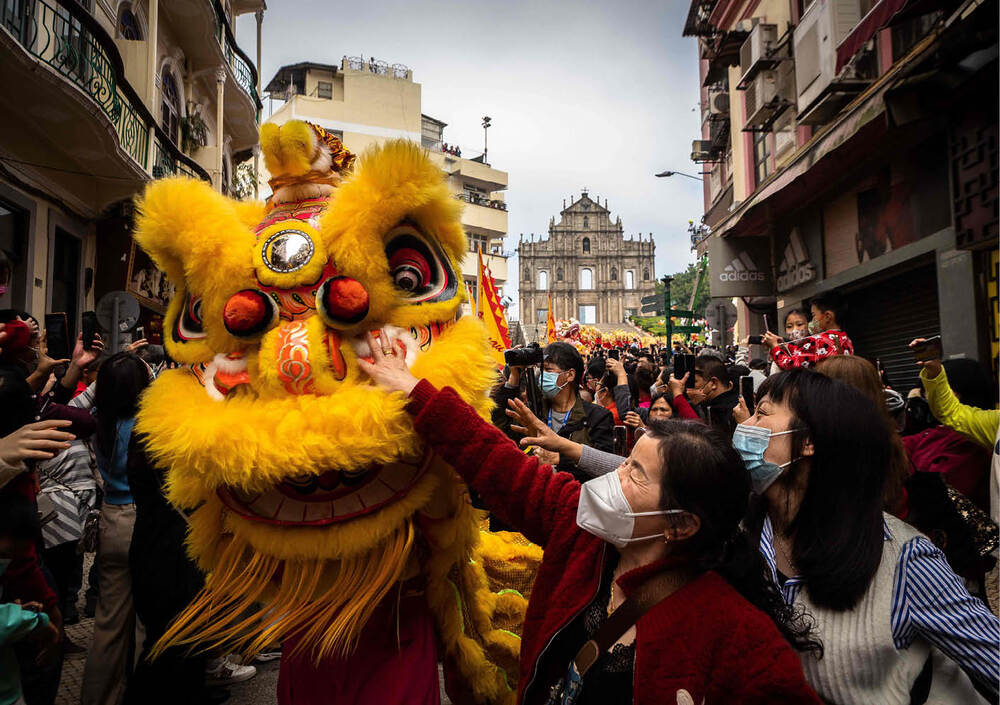
Many more mainlanders flocked to Macau than Hong Kong over the Lunar New Year holiday.