






Read More





Defying the demographic cliff: restoring hope
06-10-2026 04:56 HKT




Tram derails and hits Shau Kei Wan shop
12-10-2026 02:30 HKT


More than a century ago, British geopolitical theorist Halford Mackinder formulated a foundational axiom of global power: Whoever commands the Eurasian "Heartland" controls the Afro-Eurasian "World-Island," and whoever commands the World-Island commands the world. From the British-Russian Great Game to the US-Soviet Cold War, Anglo-American grand strategy operated on the counter-doctrine of maritime primacy, using naval supremacy along the Eurasian rimlands to project power and contain the vast continental interior.
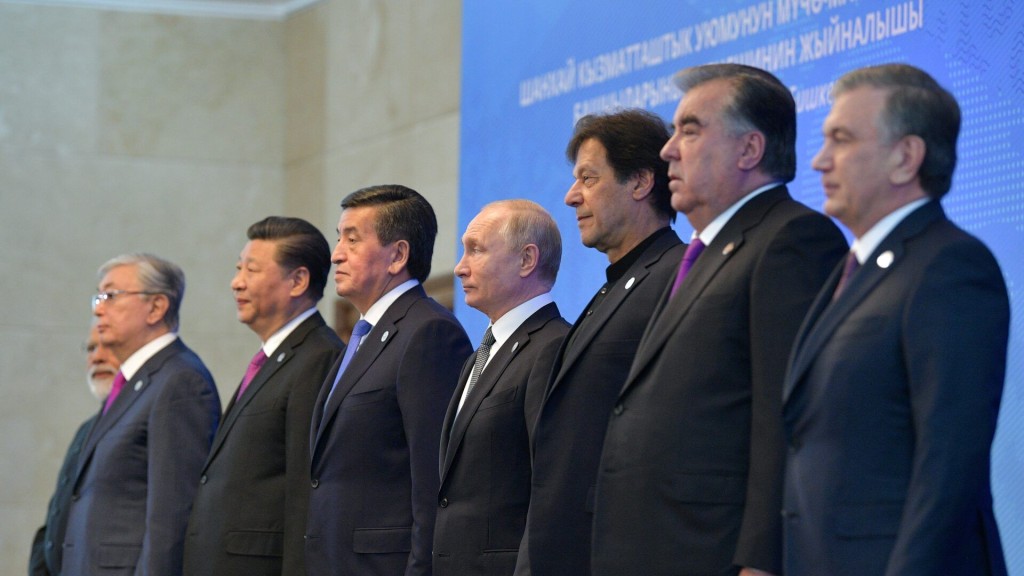
Today, that historic paradigm is undergoing a profound structural inversion. Chinese President Xi Jinping's upcoming state visit to Kyrgyzstan to attend the Shanghai Cooperation Organization – or SCO – summit in Bishkek marks a decisive milestone in this continental awakening.
As maritime trade corridors fracture and US containment strategies intensify, the nations of Eurasia are actively consolidating the Heartland from within, transforming Mackinder's thesis from an academic warning into an operational geo-economic reality.
The immediate catalyst accelerating this continental alignment is the escalating conflict involving Iran and the wider Persian Gulf. For landlocked Central Asian republics such as Uzbekistan, Kazakhstan, and Kyrgyzstan, long-term national development strategies had increasingly relied on establishing southern commercial corridors through Iranian ports like Bandar Abbas and Chabahar.
However, the widening Middle Eastern war, naval interdictions in the Persian Gulf, and sweeping US secondary sanctions have effectively paralyzed these maritime gateways, laying bare the acute vulnerabilities of sea-dependent commerce.
Confronted with the simultaneous disruption of southern maritime outlets and Western sanctions on northern transit routes across Russia, Central Asian capitals have recognized the strategic necessity of continental integration. In response, the SCO – which marks its 25th anniversary as an expanding 10-member bloc uniting China, Russia, Iran, India, Pakistan, Belarus, and Central Asia – has emerged as the indispensable institutional counterbalance to US encirclement. Rather than serving as a passive buffer zone, the organization provides the geopolitical framework needed to coordinate regional energy security, scale local-currency clearing systems, and safeguard supply chains from extraterritorial coercion.
This institutional alignment is cemented on the ground by transformative physical infrastructure designed to break external containment. At the forefront of this overland integration is the construction of the China-Kyrgyzstan-Uzbekistan railway. Spanning over 500 kilometers – from Kashgar in Xinjiang through the high mountain passes of Kyrgyzstan to Andijan in eastern Uzbekistan – this vital artery bypasses volatile maritime chokepoints and congested northern tracks, cutting freight transit times between East Asia, the Middle East, and Southern Europe by nearly a week.
Complemented by expanding China-Central Asia natural gas pipelines, cross-border digital networks, and integrated dry ports, the CKU project aims to turn Central Asia from a landlocked periphery into a thriving continental crossroads. By binding industrial supply chains and energy flows directly across the landmass, Beijing and its regional partners are constructing an integrated economic continuum difficult for maritime containment to sever. As Washington strains its military bandwidth policing fragile sea lanes, the Bishkek summit hopes to shift global geopolitical gravity inward, serving as the ultimate counterweight to external encirclement through the self-sustaining integration of the World-Island itself.