






Read More


Beyond the boardroom: showcasing Hong Kong’s unique charm to the world
21-10-2026 05:30 HKT




Kyle Kennedy, granddaughter of Robert F. Kennedy, dies at 42
22-10-2026 04:11 HKT


Hong Kong’s economy is writing a new narrative, one where a surge in artificial intelligence is redefining the city’s traditional role as a super-connector. The 5.9 percent real GDP growth in the first quarter – the strongest performance in five years – is not merely a statistical blip. This AI trade windfall is a direct dividend of the global technology boom, supercharging the city’s logistics and signaling a permanent structural shift.
While Silicon Valley excels in coding and other global hubs focus on niche tech, this moment reveals why only the Guangdong-HK-Macao Greater Bay Area possesses an unbeatable triad: cutting-edge AI research, a complete high-end manufacturing chain, and an international financial hub. During the 15th Five-Year Plan period, Hong Kong’s strategic destiny lies in leveraging this triple strength to fulfill two critical functions: serving as the international interface for emerging industries and acting as a translation platform between national and international standards.
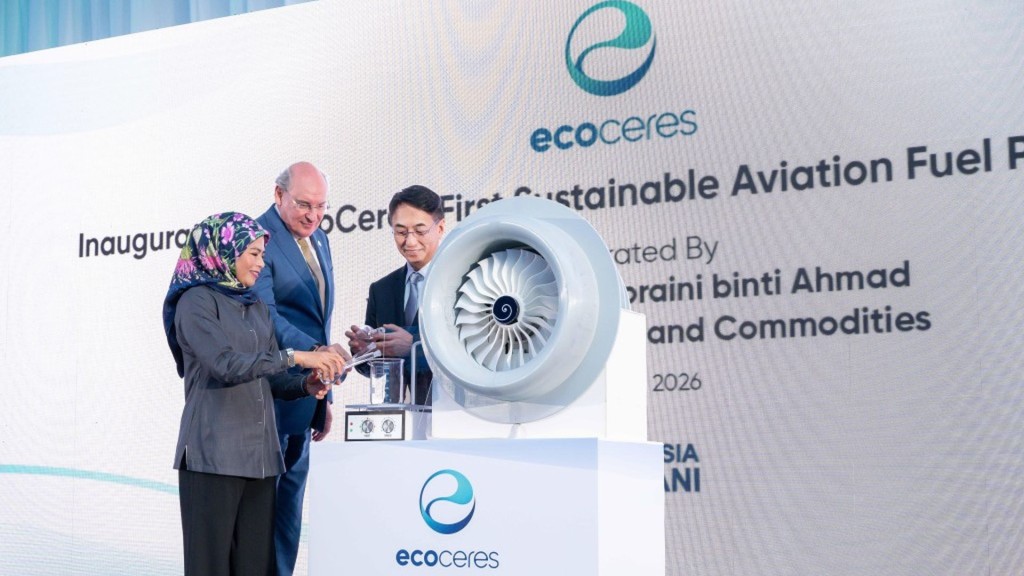
The recent move by EcoCeres, a local sustainable aviation fuel startup, perfectly illustrates this interface. With the backing of the Hong Kong Government and Dongguan municipal authorities, the firm is migrating its front-end research and development to mass production in the mainland. It is a masterclass in utilizing Hong Kong’s green finance certification and research edge, seeding it with the manufacturing might of the GBA, and scaling it for global markets. This is the precise model the government’s “patient capital,” via the Hong Kong Investment Corporation, is designed to foster.
However, seizing the AI moment requires breaking physical and regulatory silos. The accelerated development of the Northern Metropolis, particularly the Hetao Cooperation Zone and San Tin Technopole, must not simply become a real estate project. To truly seize the opportunity, Hong Kong must curate these spaces exclusively for the AI-biology nexus, creating a “wet-lab-to-dry-code” corridor where a biotech startup can prototype a drug-discovery algorithm in Hong Kong and validate it with Shenzhen’s medical data ecosystem on the same day.
This industrial innovation is impossible without a sophisticated financial spine. The “Finance+” strategy outlined in the latest budget aims to nourish a tech enterprise from incubation to initial public offering. Yet, the deep-tech sector often suffers from a “valley of death” at the late-stage angel phase. Hong Kong should proactively utilize the upcoming Shenzhen-Hong Kong Financial Cooperation Committee meeting to engineer a “GBA Deep Tech Co-Investment Facility.” By allowing Hong Kong-registered LP funds to route capital into mainland AI hardware via a streamlined qualified foreign limited partner framework, we can weaponize capital liquidity to build the physical infrastructure AI demands.
The final, and perhaps most profound, opportunity lies outside of code and capital: it lies in standards. This is vividly demonstrated by the first-ever global use of domestic S960 high-strength steel at the Fanling Bypass footbridge. By establishing an “equivalent material” database, local academics translated mainland steel parameters into a language recognized by international engineering regulators. This saved 30 percent in costs and validated a high-end national manufacturing standard under an international common law regime. The success of the Queen Mary Hospital’s chest pain center, which slashed recovery times from 105 minutes to 53 minutes by integrating national certification standards, further proves that standard alignment saves lives.
This blueprint must now be applied to the digital realm. Hong Kong should leverage its role in the 15th Five-Year Plan to pilot a “GBA Data Compass” – a certification mechanism that defines privacy-preserving thresholds, allowing an AI model trained on Hong Kong data to seamlessly derive insights from mainland clinical records. The global AI race is not just about faster chips; it is about whose standards govern their use. Hong Kong’s ultimate contribution to the nation is to be the laboratory where China’s industrial might and international credibility merge. By acting as the interpreter for concrete, code, and capital, Hong Kong will not just ride the AI wave – it will channel it.