Read More








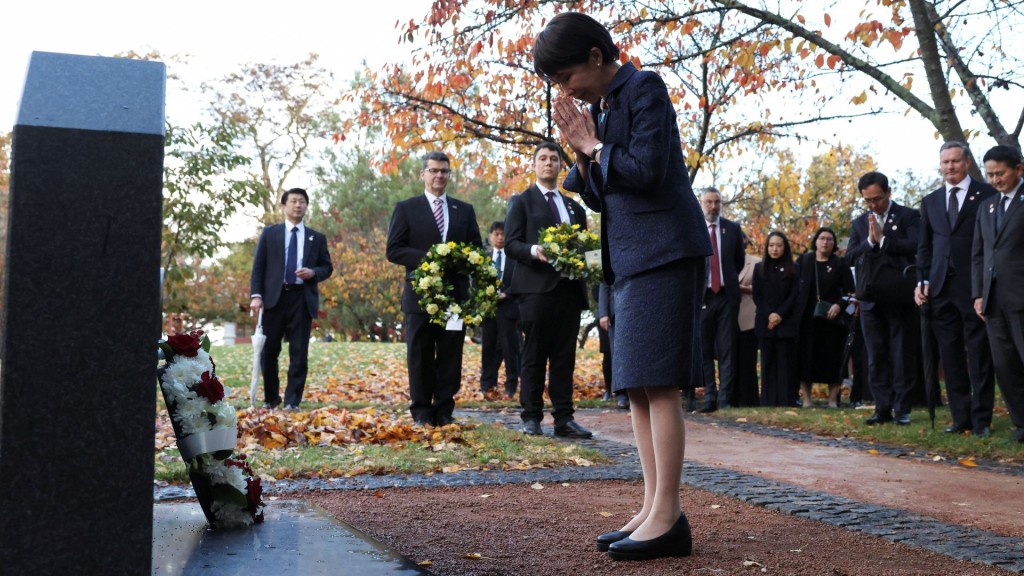
Japanese Prime Minister Sanae Takaichi has sparked strong criticism from the Chinese state media during her recent trip to Australia, during which she knelt on both knees in front of the Tomb of the Unknown Australian Soldier to lay flowers at the Australian War Memorial in Canberra.
A Chinese state-run blog questioned why Takaichi chose to kneel in front of a tomb of a white country, but never knelt in China or Korea, especially in front of the 300,000 victims in the Nanjing Massacre, or Vietnam where Takaichi visited just before she went to Australia.
State-run nationalist newspaper Global Times said Takaichi’s behavior was a “political show designed to please Western allies” and “has offended Japan’s Asian neighboring countries,” accusing the Japanese leader of having “white supremacy complex.”
Tokyo has recently stepped up its diplomatic outreach to its Asia-Pacific neighbors, with Takaichi visiting Vietnam before traveling to Australia and expected to receive Philippine President Ferdinand Marcos Jr in Tokyo later this month.
With its Quad partner Australia, Takaichi pledged to invest in critical mineral projects, including rare earth, to reduce reliance on China, and followed up on the frigate deal in which Canberra would purchase Mogami-class frigates from Tokyo.
Defense Minister Shinjiro Koizumi has also signed a defense pact to strengthen military cooperation with Jakarta during his recent visit in Indonesia, followed by his trip to the Philippines to discuss the potential transfer of a Japanese destroyer and inspect the ongoing Balikatan joint military exercises where Japan participated as a full member for the first time.
Besides its attempt to forge closer security networks with other Asia-Pacific countries externally, the Takaichi administration is also trying to get rid of its post-war status as a pacifist country, by relaxing its defense exports, rewriting its pacifist constitution and flirting with the idea of acquiring nuclear weapons.
Faced with Tokyo’s attempt to fundamentally undercut the post-war international order, Beijing has been strategically highlighting Japan’s history of aggression against its Asia-Pacific neighbors during the Second World War, and conveying the message that Japan has no right to play any security role in Asia without truly reflecting on its past.
Nevertheless, it is also natural for the middle and smaller powers in the region to hedge between China, the US and Japan, as the security landscape in the Asia-Pacific is quickly evolving and becomes increasingly uncertain.
The continued growth of China’s military strength, the US’ attempt to maintain its hegemony in the Western Pacific, and Japan’s endeavors to re-militarize are all the contributing factors to a more volatile Asia-Pacific region.
It becomes more urgent for China and its neighbors to set up a security architecture that addresses all parties’ security concerns, especially with other South China Sea claimants which Japan is strengthening closer security ties with.
Chinese media highlights of Takaichi’s kneeling and Japan’s history of aggression serve not only as a warning to our Asian neighbors and the potential danger of its re-militarization, but also a reminder of the value of peace amid heightened geopolitical tensions and confrontations.
Reuters