





Read More







IT manager sentenced to 22 months for stealing $1.2m in Deloitte laptops
21-08-2026 21:49 HKT


Animal lover Jojo remembered for a life dedicated to saving stray dogs
21-08-2026 13:46 HKT


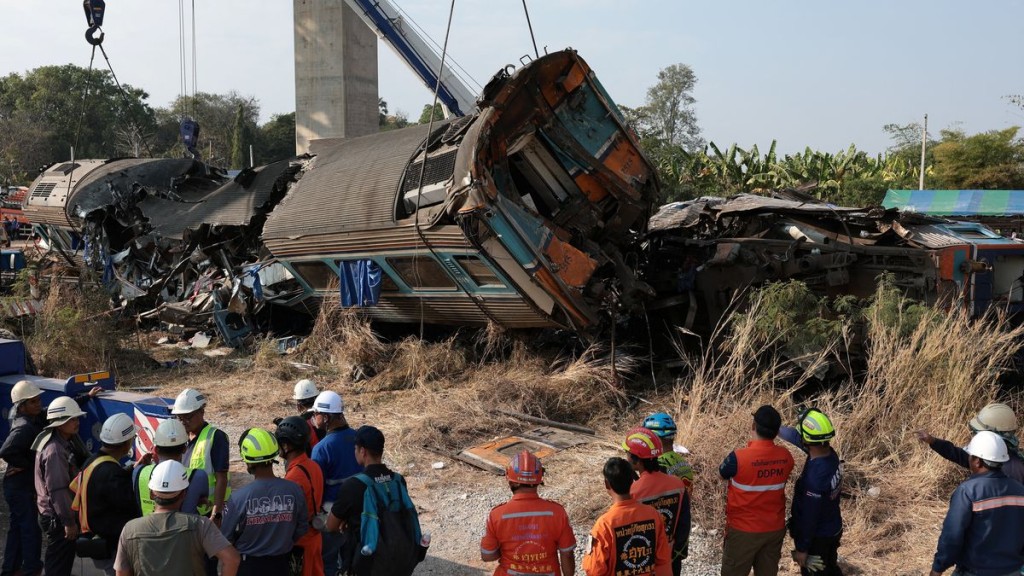
A tragic accident in Thailand has cast a long shadow – one that extends far beyond the immediate wreckage. Yesterday, a catastrophic derailment, caused by a collapsing crane, struck a passenger train, killing at least 32 people. The incident occurred on a critical stretch of railway that is a cornerstone of China’s Belt and Road Initiative, designed to connect Bangkok directly to China through Laos. Although the operation was done by a Thai contractor, the geopolitical ramifications are unavoidable. This tragedy risks becoming a potent symbol for the doubts and anxieties that many nations quietly harbor towards Beijing’s growing influence.
In an era of American aggression, no single nation possesses the strength to directly counter the United States. This reality creates a complex and often contradictory dance for countries worldwide. On one hand, they see a strategic and economic necessity in allying with China, a counterweight to Washington and a source of vital investment. On the other hand, they feel threatened by China’s sheer scale, its assertive foreign policy, and the potential for debt dependency through projects like the BRI. The Thailand accident, however isolated, gave critics an opportunity to attack China and cast doubt on the BRI.
This global ambivalence is playing out in real-time across international capitals. Consider the case of South Korea. Just one week after President Lee Jae-myung was warmly welcomed in Beijing by President Xi Jinping – a significant gesture amid high Sino-Japanese tensions – Lee hosted Japanese Prime Minister Sanae Takaichi. This rapid pivot underscores a delicate balancing act: engaging with China for economic opportunity while maintaining crucial regional security ties, even with historical adversaries, under the American security umbrella.
Similarly, Canada, after years of a sour relationship with Beijing punctuated by diplomatic spats, is attempting to break the ice. Prime Minister Mark Carney’s current visit to Beijing signals a pragmatic recognition that total estrangement from the world’s second-largest economy is not viable. This recalculated approach may also be influenced by a shifting hemisphere. With the recent capture of Venezuelan President Nicolas Maduro, a key regional actor, Canada – a nation sharing an immense border with the US – may feel the strategic landscape shifting, prompting a reassessment of all major relationships, including the one with China.
The tragedy in Thailand is a human disaster first and foremost and it happened at a site under the operation of a Thai contractor. However, for the Belt and Road Initiative, it is also a critical test.
How China and its partners manage the aftermath – the investigation, accountability, and safety enhancements – will be scrutinized worldwide. It presents an opportunity for Beijing to demonstrate that its projects are not just strategic tools but are built to the highest standards of safety and reliability.
For the many nations watching with mixed feelings, the response to this accident will either validate their fears or reassure them that partnership with China is a secure and sustainable path forward. In the delicate architecture of global power, perception is often as consequential as concrete and steel.