
Read More
As China’s artificial intelligence market enters a turbulent new phase – marked by brutal price competition, government intervention, and surging open-source adoption – one question looms: where does Hong Kong fit in?
ADVERTISEMENT
SCROLL TO CONTINUE WITH CONTENT
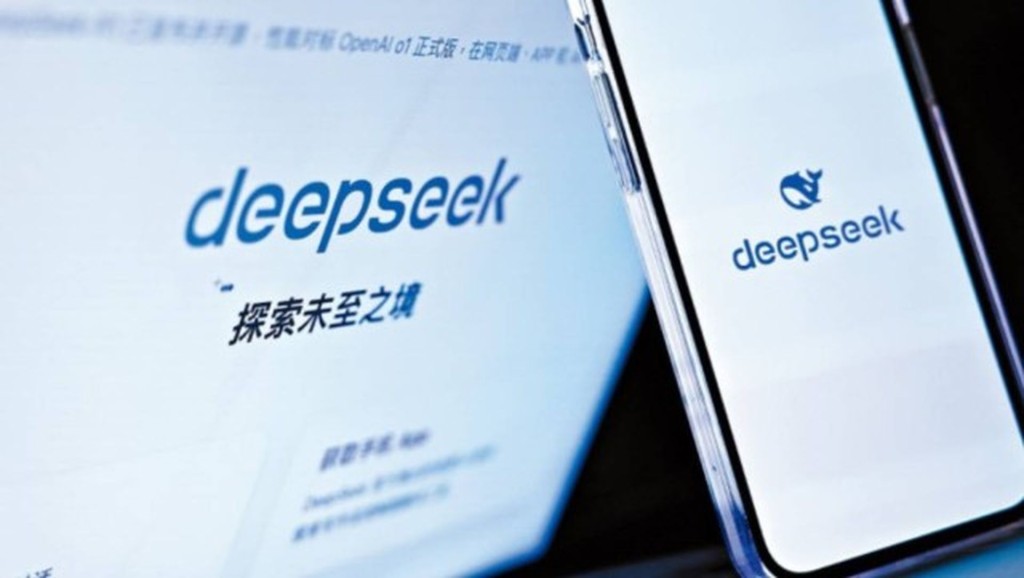
China’s AI market is currently experiencing two opposing dynamics. On one hand, DeepSeek V4 has triggered a price war after slashing API prices, causing share prices of listed AI firms like Zhipu and MiniMax to slump – MiniMax lost 50 percent from its peak. On the other hand, China’s National Development and Reform Commission blocked Meta’s acquisition of AI startup Manus, signaling that core AI assets are off-limits to foreign control.
This paradox – opening through low-cost, open-source models while closing off foreign acquisitions – comes as much of the world remains at a preliminary AI stage, and even the United States struggles with models that carry staggering, yet-to-be-recovered costs.
What the price war reveals about survival
The current upheaval in China’s AI sector offers an early glimpse of what unfolds when open-source models of near-frontier quality become widely and cheaply accessible.
Winners in this environment will not necessarily be those with the most advanced models, but rather the players that have locked themselves into enterprise workflows, possess unique data that others cannot easily replicate, or command enough financial firepower to outlast the pricing battle. For international AI startups thinking about their own strategies, China serves as a real-world laboratory: once model access is cheap and commoditized, profits at the application layer evaporate – unless those applications rest on something that a cheaper underlying model cannot simply replace.
What ultimately defends value are vertical specialization, exclusive data assets, and high switching costs for customers. Relying on model performance alone is no longer a viable moat.
Three strategic roles for Hong Kong
So where does Hong Kong fit in? The city must play three strategic roles.
First, as the capital bridge for AI survivors – with US venture capital restricted from flowing into sensitive Chinese AI startups, Hong Kong’s public markets become the last major liquidity channel for scaling AI companies.
Second, as a neutral testing ground where global enterprises can test integration with Chinese models without fully facing onshore compliance burdens, leveraging Hong Kong’s common law system and international data policies.
Third, as a compute and talent hub – with the Sha Ling Data Centre delivering 180,000 petaFLOPS by 2032, representing a 36-fold increase over Hong Kong’s 2026 capacity, and the Shenzhen-Hong Kong-Guangzhou cluster already ranked first globally in innovation.