Amid a global tech race, a new exhibition at the Hong Kong Museum of Art argues that slowing down to observe nature isn’t just aesthetic – it is a necessary human counterbalance to the machine.
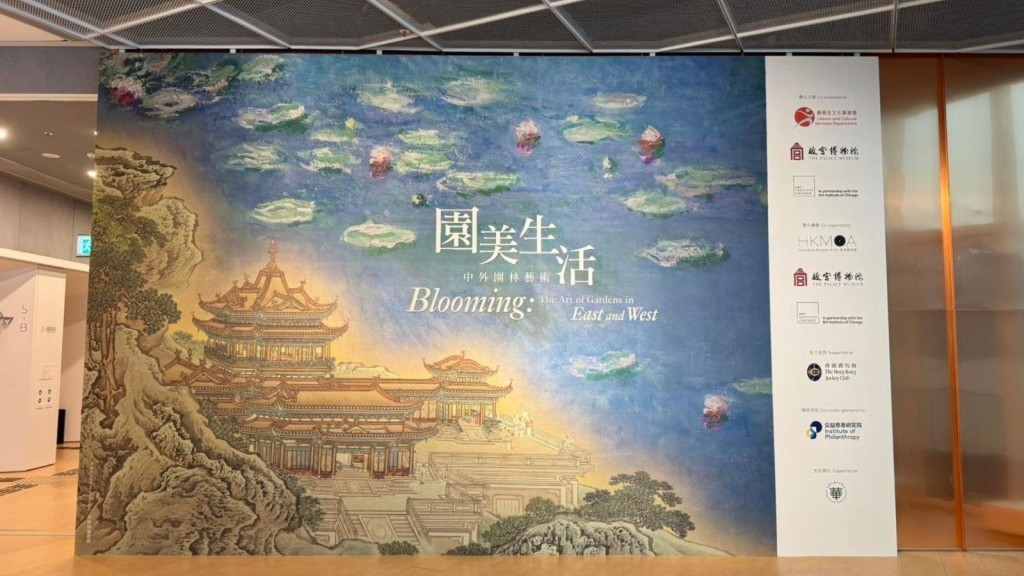
In a season where headlines are dominated by algorithms and the race for artificial intelligence supremacy, the HKMoA has opened a quiet but radical counterpoint. The exhibition is titled “Blooming: The Art of Gardens in East and West,” but its message is priceless: We need to re-learn how to see.
The timing is deliberate. Secretary for Culture, Sports and Tourism Rosanna Law Shuk-pui has noted a pressing need to raise public “connoisseurship” – a deep, slow appreciation of quality and beauty.
In an era where machines generate images in milliseconds, human discernment is more necessary than ever. This comes as recent studies indicate a concerning trend: Hong Kong universities are seeing a downturn in humanities enrollment, with the world’s focus shifting heavily toward STEM at the expense of the liberal arts.
More than just a pretty space
The exhibition curates 106 paintings and artefacts from The Palace Museum, the Art Institute of Chicago, and the Palace of Versailles to argue a profound point: The garden is the original ideal of paradise.
The Persian, the root word for “paradise” is pairidaeza, meaning a walled enclosure. This concept – of an ordered, living heaven on earth – translates across millennia. Unlike static architecture, gardens offer “unexpected and organic growth.”
A landscape is never finished; it breathes, dies, and surprises. It is this biodiversity and unpredictability that fascinates the soul more than cold concrete.
East vs West: different paths to wonder
The exhibition highlights a fascinating stylistic divergence. While Western traditions have moved from the rigid geometry of Versailles to the “serpentine” style of England’s Lancelot “Capability” Brown, the East took another path.
Chinese gardens, particularly the Humble Administrator’s Garden, or Zhuozheng Yuan, in Suzhou – famously designed by the Ming dynasty painter Wen Zhengming – revel in irregularity.
They offer hidden views and surprise turns, a philosophy that later inspired the Zen minimalism of Japanese gardens.
Even within China, the exhibition notes vast differences, contrasting the scholar-rock aesthetics of Suzhou with the tropical, functional designs of Lingnan in Guangdong.
Monet’s brush and the Mughal pond
The West is equally diverse. While Brown popularized the naturalistic English landscape, the exhibition showcases the “picturesque” quality of French artist Claude Monet.
His gardens at Giverny were not just his home but his muse; he painted his Water Lilies there obsessively until his death, capturing light that no algorithm can replicate.
Furthermore, the Mughal gardens of India and the Persian Charbagh reflect the four-square garden, symbolizing the four rivers of life.
A call to look again
Law’s call for connoisseurship does not require an expensive education to heed – it requires time. By stepping into the HKMoA, viewers are encouraged to take a “second look” at a painted leaf or a rock formation. In a world of predictive text and generative art, the ability to find joy in the natural and the authentic is an act of quiet defiance.
Before AI takes over, let us remember that a garden grows without calculation – and that is its greatest power.