Read More




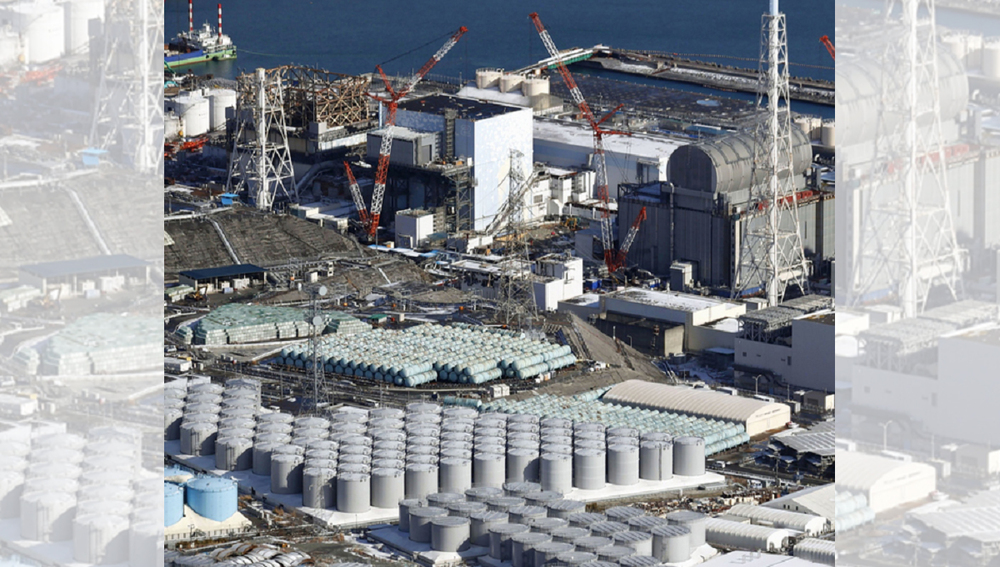
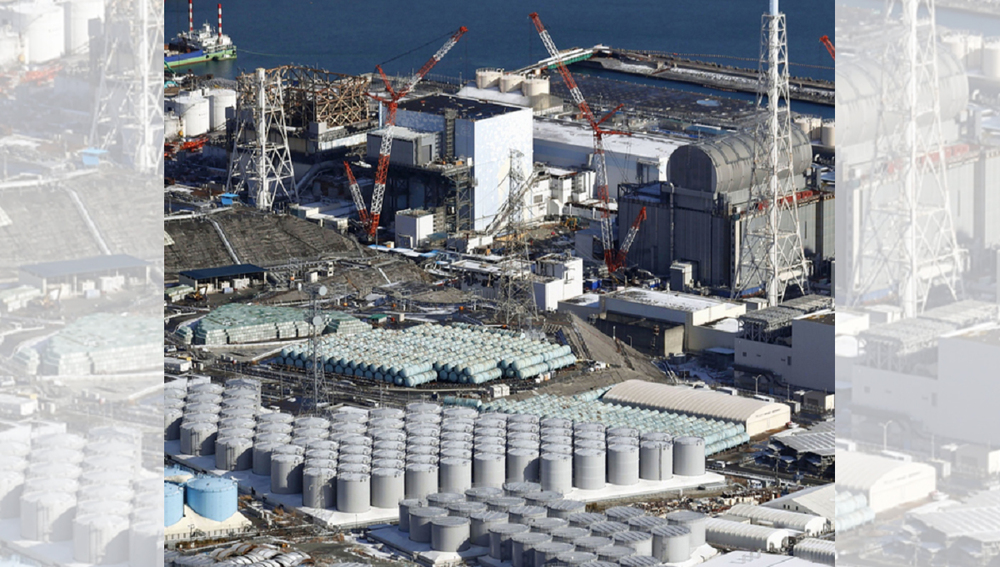
It seems Japanese Prime Minister Yoshihide Suga has already taken the decision to release treated radioactive water from the Fukushima nuclear plant into the ocean despite objections from neighboring countries.
The decision announced yesterday is bound to strain Japan's already stressful relationship with China and South Korea.
Nobody would like to see anyone dump garbage near their back gardens - even worse, when the waste is radioactive - even if the garbage is treated with the most advanced technology to make it as least harmful as possible.
Tokyo says the contaminated water of more than one million tonnes will pose minimal health risks as it will be diluted to a level well within the standards for normal food consumption and will be released into the ocean over the spread of decades.
However, Beijing and Seoul are not impressed by the assurance, protesting that it will threaten them.
The incident has once again raised the stark reality that nature has no boundary and whatever one does on one side of a border will always affect those on the other side.
A dam built upstream to generate electricity for one country is bound to reduce river water flowing through other countries downstream.
What makes the Fukushima radioactive water controversy so extraordinary is also the gap in understanding between scientists and the public over the likely impact of the Japanese government's plan to discharge the contaminated water.
If there is a simile to be drawn for comparison, this would be that of Covid vaccines. Although experts here and on the European continent have been assuring people that it is safe to vaccinate, many remain skeptical and hesitant.
It's interesting to note how one molecular pathology scientist at Imperial College London has differed from the masses in the Fukushima argument.
Interviewed by the media, she responded saying that tritium - a radioactive isotope of hydrogen that cannot yet be removed by filtration technology - would not pose any health risk after dilution was factored in. She considered heavy metals like mercury accumulating in seafood a greater risk to health.
Geraldine Thomas, chairwoman of molecular pathology at ICL, seems to merit a point. The consensus in the scientific world, including peers at the International Atomic Energy Agency, is that tritium is harmful to humans only in very large doses.
Although the ICL scientist is not alone in her view, Suga knows that before him is a political battle that is not just about science - not only does he have to convince China and South Korea but he must also win over powerful fishermen associations at home.
It's a political trap that Suga would doubtless have liked to leave for the next prime minister to handle.
But he is running out of luck because the purpose-built storage will be full next year and the waste water will continue to accumulate regardless unless the plant can be totally decommissioned.
Will this evolve into a political crisis for him?