Read More








Elon Musk unveils Tesla's 'flying' car
8 hours ago

HK unlikely to be hit as Typhoon Champi gathers strength
15-10-2026 17:54 HKT


Man steals gold chain worth $70,000 from Tai Po jewelry store
14-10-2026 17:37 HKT
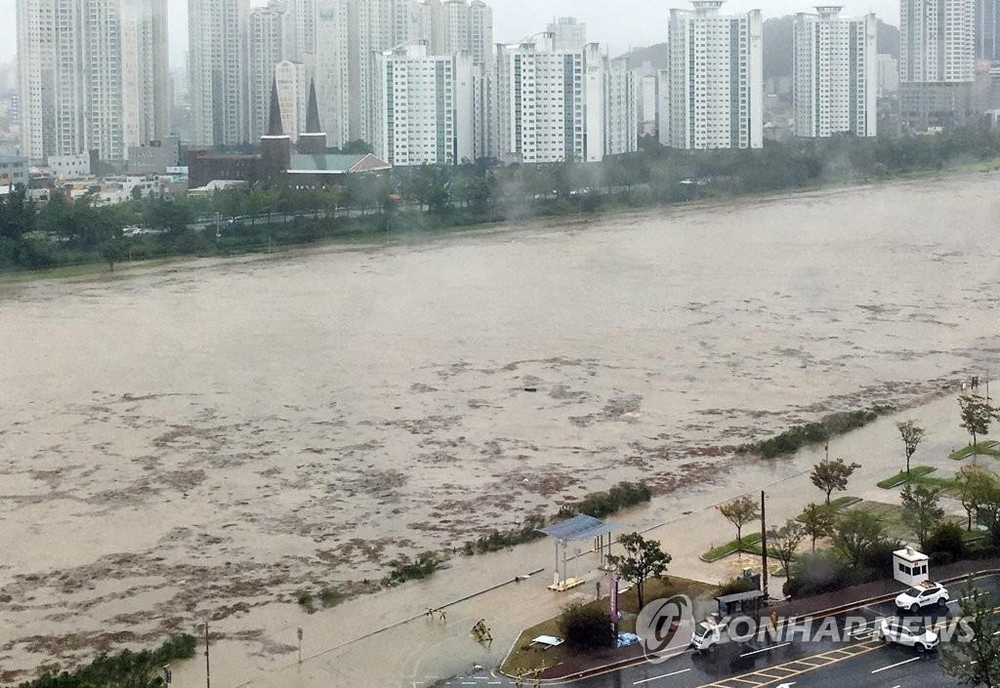
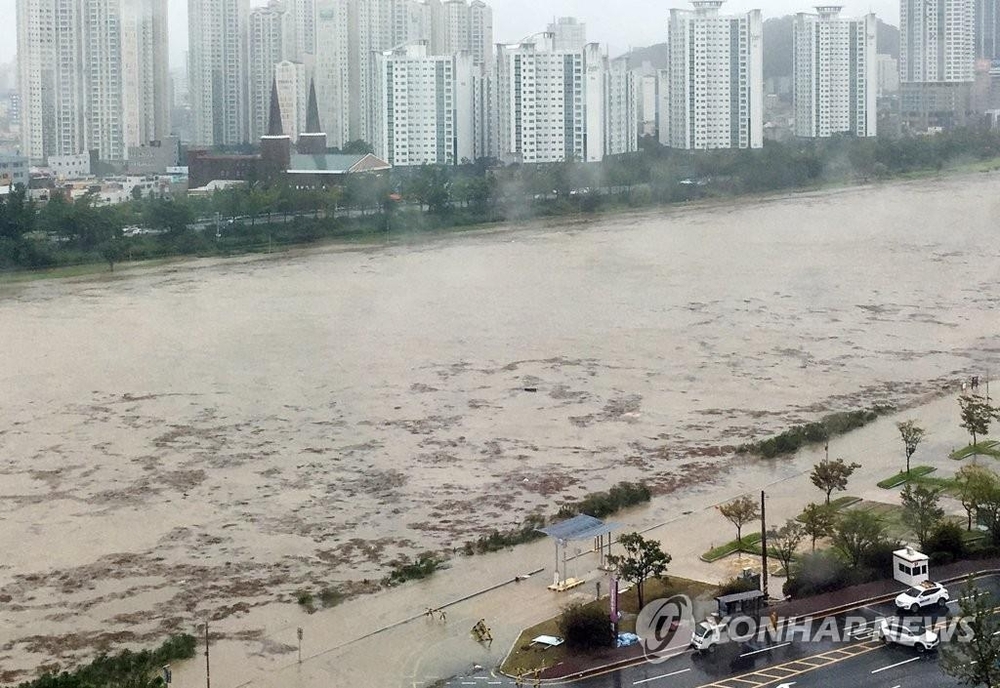
Typhoon Haishen made landfall in Ulsan, north of the major southern port city of Busan in South Korea, as it was traveling northward passing waters near Busan in the morning, bringing the country under its influence with heavy rains and strong winds, the weather agency said.
The Korea Meteorological Administration (KMA) said the season's 10th typhoon arrived some 30 kilometers southwest of Ulsan at around 9:00 a.m., local time, slightly changing its course westward. It was forecast to escape to waters northeast of Gangneung, Gangwon province, at around 2:00 p.m, local time, Yonhap reports.
With its central pressure at 996 hectopascals, the powerful typhoon is packing a maximum wind speed of 35 meters per second, but it is expected to slowly weaken as it moves up.
In Ulsan, the typhoon knocked out power at the assembly lines of Hyundai Motors, South Korea's biggest carmaker by sales, at 8:30 a.m, which produces such models as the Genesis G90 and G80. Repair works were being conducted, but the company expected it would take some time before the factory goes fully operational again. Similar power outages were also reported at a factory of Hyundai Mobis Co., the country's biggest auto parts maker. Some 30,000 houses in the city lost power.
From midnight Sunday to 10:00 a.m. Monday, the city's Ulju county recorded rainfall of 184.5 millimeters. Maximum wind gust of 41.8 meters per second was reported in eastern Ulsan.
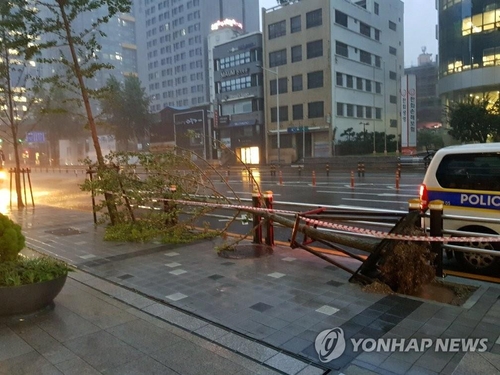
In Busan, the typhoon cut off power, toppled trees and snapped a traffic light in its path. Some 580 houses lost power in southern Busan.
A 57-year-old man in the city was rescued by firefighters early in the morning after an elevator stopped working due to a power outage. A water tank was blown off the top of a house in the western part of the city. No casualties were reported. Another man in his 60s was rescued from his house hit by a landslide. Rescuers took a driver out of his truck to safety, after his vehicle was knocked out by powerful winds on Gwangan Bridge that connects the city's Haeundae and Suyeong wards.
The typhoon unleashed torrential rains and triggered a landslide near a tunnel on the road connecting the city with Changwon. Also, 23 riverside and oceanfront roads have been closed as a safety measure against flooding.
Trains running between Busan and nearby cities have been halted, while subways were operating as usual, with slower speeds on some open air routes.
As of 9 a.m., 298 flights have been grounded nationwide, according to the Korea Airports Corporation. A typhoon alert has been issued for all of the country's airports. For Incheon, Jeju and Ulsan, a wind shear warning was in effect.
Two turbine generators at the Wolsong Nuclear Power Plant, in Gyeongju, North Gyeongsang province, stopped operation, after the typhoon disrupted power supply. No radiation was leaked, according to the Korea Hydro & Nuclear Power Co., Ltd.
The typhoon was forecast to travel along the Korean Peninsula up its eastern coast until it arrives at Chongjin, North Korea, at midnight. It is expected to dissipate there.
"It is highly likely that the typhoon will weaken as it passes by the country due to the southern sea's relatively cool temperature of less than 27 C, coupled with cool air in the upper atmosphere and strong wind," a KMA official said, forecasting it to be downgraded to an extratropical cyclone within 24 hours.
The typhoon is bringing pounding rains and strong winds, especially drenching the eastern regions.
A typhoon alert has been issued for the southern resort island of Jeju, Gyeongsang province, and parts of Gangwon and the central provinces. A typhoon advisory was in effect for the rest of the country as of 8:00 a.m.