Read More



Night Recap - April 3, 2026
49 mins ago







Taxi e-payment ‘3pc fee’ notices spark debate on rollout day
02-04-2026 12:42 HKT
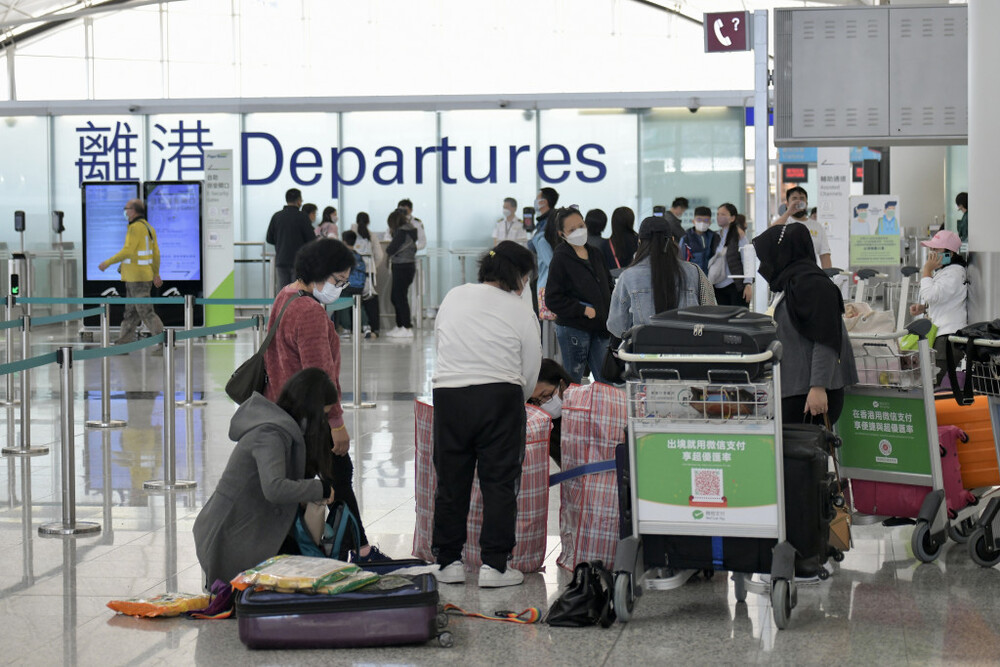
Residents of Hong Kong reacted swiftly to news China will no longer subject inbound travelers to quarantine as of early next year, flooding the internet to search for flights to key mainland cities.
Outbound searches for flights from Hong Kong to the mainland on Trip.com and Ctrip, the two sub-brands of Trip.com Group Ltd., jumped around 521% versus the same time a week ago on Dec. 19.
The top five destinations were Shanghai, Beijing, Hangzhou, Chengdu, and Nanjing, with search traffic up 1,039% and 718% respectively for China’s financial hub and the nation’s capital. Searches for Hangzhou, Chengdu, and Nanjing rose 662%, 399% and 411% respectively.
China’s National Health Commission said that from Jan. 8, people arriving in China will only be required to obtain a negative Covid test result within 48 hours of departure and won’t have to quarantine, doing away with one of the last remaining pandemic prevention measures.
“Travel from abroad to China can only go up,” Mike Arnot, an airline industry commentator and spokesman for aviation analytics company Cirium, said. “Flights to China by the world’s major airlines are down more than 92% in December compared to December 2019.”
Carriers including British Airways Plc, United Airlines Holdings Inc. and Qantas Airways Ltd. stopped flying to China entirely during the pandemic and it “will take some time to rebuild their schedules,” Arnot said.
Those airlines that have restarted services to Hong Kong should benefit from higher load factors on their existing flights to the city, which is a major hub for connections to China, he added.
Currently, there’s a requirement for eight days isolation for travelers into China — five days at a designated quarantine hotel, or central facility, followed by three days at home.
Last week, before the quarantine measures were scrapped, the Civil Aviation Administration of China said it expects daily flight departures to ramp up to 70% of 2019 levels by as early as Jan. 6, then as high as 88% by the end of January.