Read More
Hongkongers who read English information about Covid vaccine are more willing to get vaccinated than those who read the Chinese version, a University of Chicago study found.
ADVERTISEMENT
SCROLL TO CONTINUE WITH CONTENT
Scholars from the University of Chicago Francis and Rose Yuen Campus in Hong Kong conducted a study in 611 bilingual unvaccinated Hongkongers last March and April.
They were randomly assigned to read vaccine information in Chinese or English and asked about their intention to get the jabs, as well as how much they trust the vaccine.
Results showed presenting the information in English reduced vaccine hesitancy, 39.9 percent of respondents said they intend to get vaccinated, comparing with 32.5 percent of those who read the Chinese version.
More than 41 percent of people reading the English material said they are unsure about the inoculation, while almost 49 percent reading in Chinese said so. However the different language did not affect the rate of outright refusal, with 18.9 percent of respondents reading in English and 18.8 percent Chinese said no to the jabs.
“The foreign language English helped turn hesitancy into acceptance,” the report said.
The scholars said the use of a foreign language increased trust in the safety and effectiveness of the vaccine compared to identical information communicated in the native language.
“These findings suggest that feelings of trust when making health decisions depend not only on the content of the health information but also on the nature of the language used to communicate it,” the report said.
“It is possible that when one language of bilinguals has a higher status, people will trust the information provided in it more. In Hong Kong, English does not have higher status than Cantonese, which suggests that the effect we found is not a function of differential language status.”
The scholars said Hong Kong was seen as an ideal case study due to its large bilingual population and relatively low vaccine uptake rate at the time the study was done from March to April 2021.
They cited surveys last spring that Hong Kong had one of the world’s lowest vaccination acceptance, with only 37.2 percent of the city’s 7.5 million population saying they are willing to get a Covid jab.
“Irrespective of what drives the mistrust and negativity towards the vaccine amongst Hong Kong Chinese residents, these attitudes have been developed and reinforced predominantly in their native language context, Chinese,” it said.
“People more readily recall information when shared through the language it was initially encoded, we expected that the mistrust and negativity towards Covid vaccines will loom larger when the vaccine information is provided in the participants’ native Chinese than in their foreign English.”
The team cited previous studies which have proven the use of a foreign language can decrease negativity towards new technologies and products.
“Native Italian speakers judged technologies, such as nanotechnology and biotechnology, overall more positively when these were presented in their foreign English than in their native Italian,” it said.
The scholars suggested using the language associated with more public trust when communicating about key matters such as vaccination.
“We provide evidence for a low cost and actionable language intervention to reduce vaccine hesitancy amongst Hong Kong Chinese residents,” they said.
“Public health campaigns therefore could use such language interventions strategically to boost vaccination uptake and other beneficial preventive behaviors such as cancer screening.”
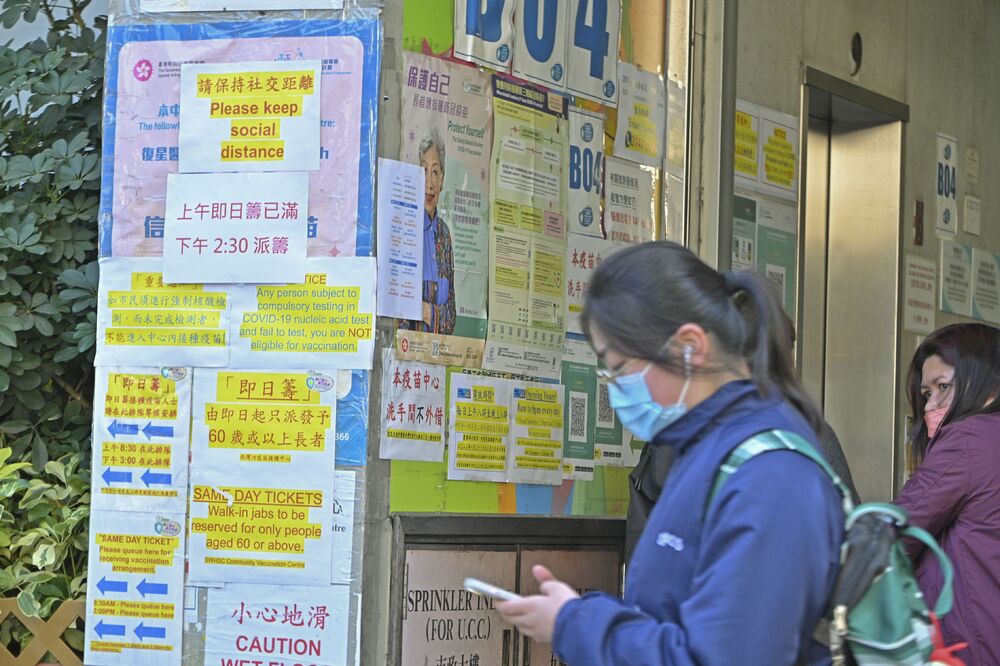
However, at the moment language intervention may not be necessary to push Hong Kong’ vaccine acceptance, as the city has seen people rushing to get the shots and lining up outside community vaccination centers before the no jab, no entry vaccine bubble extends to restaurants and regulated premises next month.
As of Sunday, 5.24 million, or 78 percent of the SAR’s eligible population, have taken at least one jab, including 4.75 million, or 70.5 percent having taken two jabs. More than 790,000, or 11.2 percent, have received booster jabs.
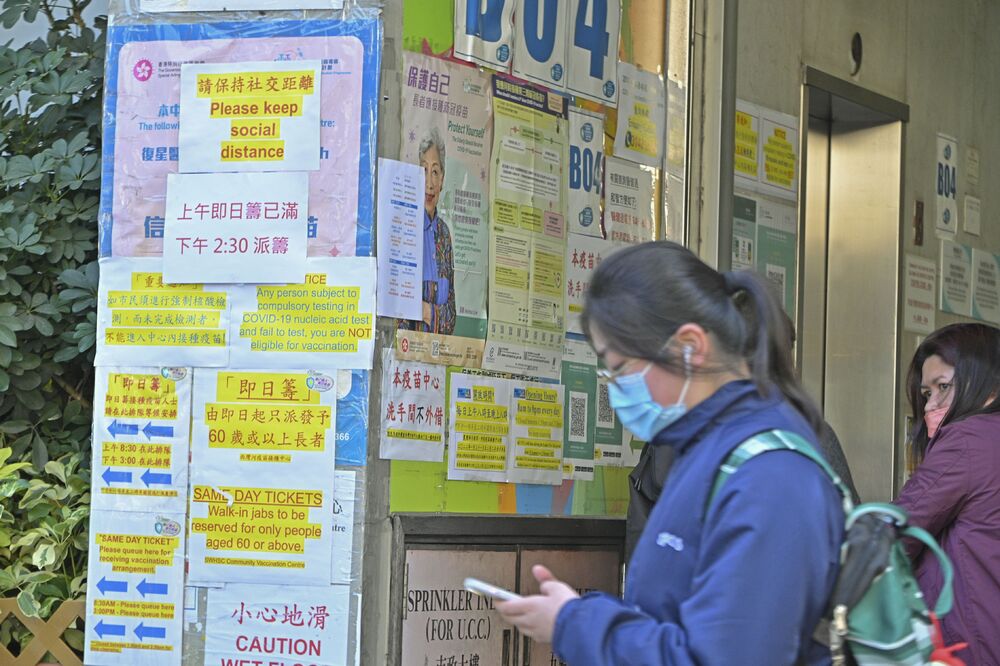
A community vaccination center which offers BioNTech jabs