Read More












Japan is seeing a "coffin-lying" craze, with young local people paying to lie inside coffins for 30 minutes, as reported by East Week magazine, a sister publication of The Standard.
Some participants say that the moment the coffin lid closes, they feel a long-lost sense of security.
Experts analyzing this craze point to the suffocating sense of oppression felt by young people under societal pressures. To escape the stresses of daily life, some people seek out these enclosed spaces where they can enjoy a world of solitary meditation.
For the equivalent of about HK$100, participants can lie quietly inside a coffin for 30 minutes. As the activity has gone viral on social media, it has become nearly impossible to secure a spot during peak times like weekends.
Participants can choose to have the coffin lid closed during the experience, and can have it opened any time if they feel cramped.
Many who have undergone the experience say that the moment the coffin is closed, they feel instantly cut off from the outside world's clamor, experiencing a sense of focus and calm.
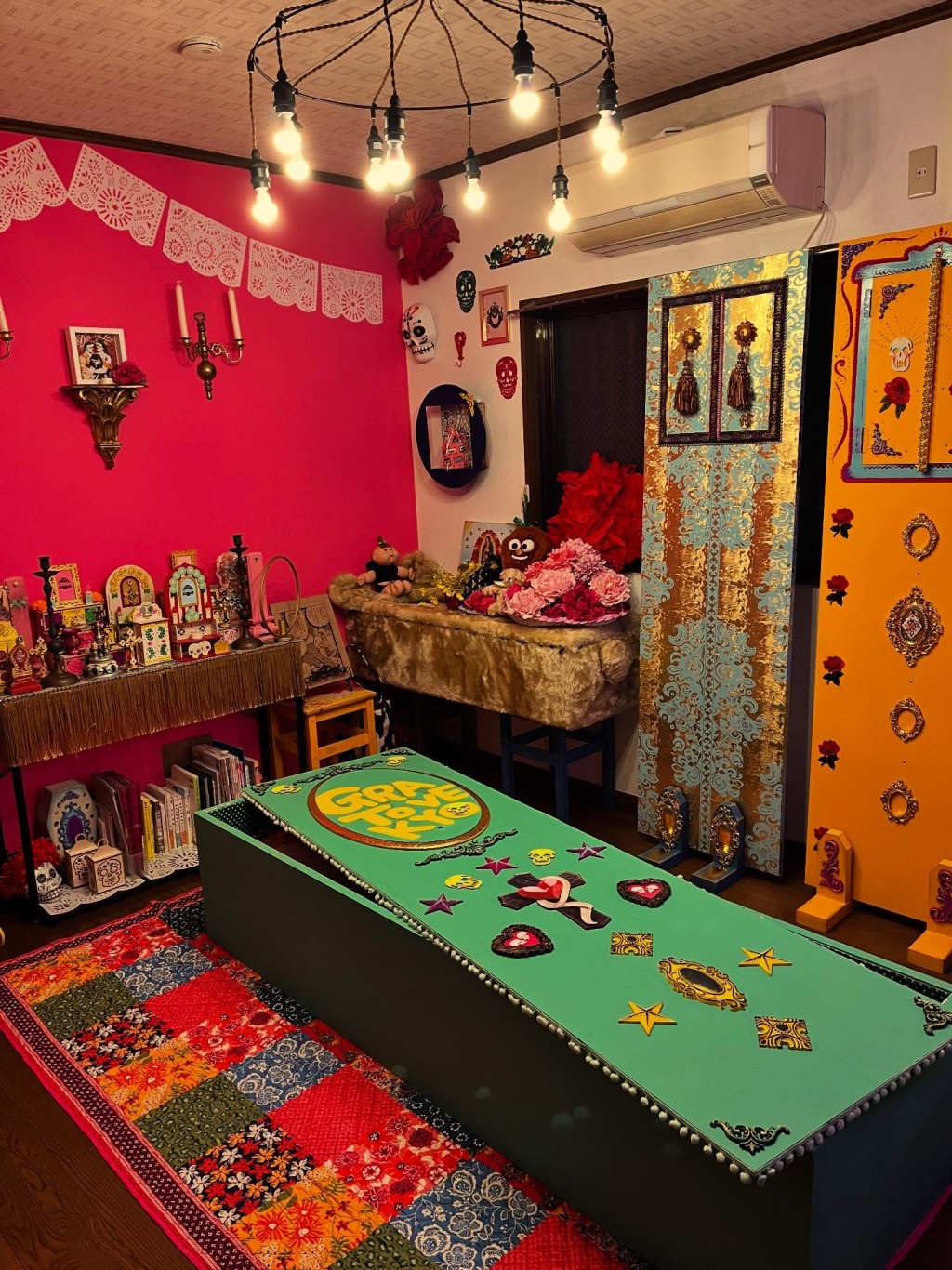
The activity originated from an experiment by a funeral service provider in Chiba prefecture, with the original intent of allowing participants to reflect on life and death – as well as relieve daily stress – by lying still in a coffin.
As the activity gained exposure online, it became a huge hit among young people in other regions of Japan, leading to a surge of similar businesses on the market.
Japan has also turned death and funerals into trendy ways to express individuality.
Several "end-of-life bars" have opened in Tokyo, using psychedelic neon lights and dim lighting to create a death-themed atmosphere.
Besides a coffin experience area, these bars offer unconventional interactive services. At these bars, funeral planners accompany customers as they do things like write wills and go over details of their final arrangements.
Meanwhile, a Tokyo startup offers young people free end-of-life planning services, including allowing users to record personal voice messages, which will be sent to designated family and friends after the user passes away.
According to the latest survey data from a Japanese funeral company, over 26 percent of Japanese people in their 20s are participating in end-of-life services.
Some psychologists point out that by preparing for their own funeral, young people hope to reestablish a sense of security amid the anxiety of being unable to control their own fate.