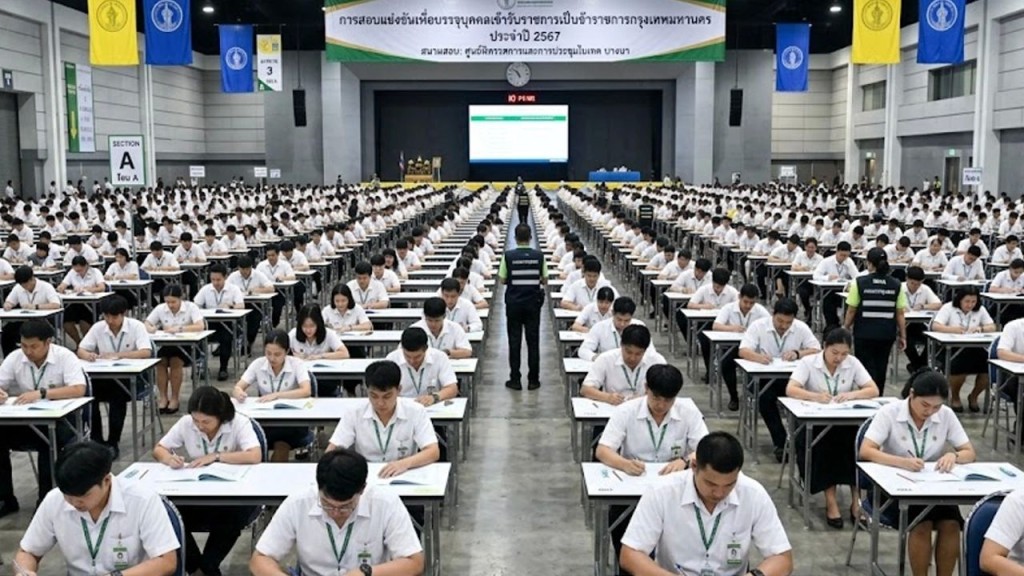
A results-rigging scandal has swept up Thailand’s civil service exams system, with 10 people – most of them civil servants – arrested recently, according to East Week magazine, a sister publication of The Standard.
The uncovering of the fraud has led to strong censure by Prime Minister Anutin Charnvirakul, the disqualification of over 3,600 exam candidates, the dismissal of those who had already been hired, and renewed public attention on Thailand's longstanding problem of exam corruption.
Authorities started investigations when a candidate from last year's civil servants exam made a police report. According to the report, the candidate paid an intermediary a large sum of money to guarantee a passing grade and admission into civil service, but was ultimately let down and denied a refund.
In June, police arrested 10 individuals on suspicion of accepting bribes to rig exam results. It was found that candidates paid up to HK$200,000 to a criminal syndicate which colluded with senior officials – including from the Department of Local Administration of the government and Srinakharinwirot University in Bangkok – to alter their exam papers and secure admission. The relevant funds involved are estimated at around HK$1 billion.
This month, a rechecking of last year's answer sheets revealed that among about 400,000 applicants nationwide, more than 3,600 had their papers tampered with to meet qualification standards.
Ching Mattaya Tueanweeradet, a candidate originally ranked 132nd in last year's exam, came under the spotlight when she was promoted to the nation's top scorer – as the preceding 131 candidates were all disqualified.
Ching Mattaya Tueanweeradet
Fueling this massive network of exam fraud is the civil service's competitive entrance requirements, paired with the attractive benefits it offers. Last year, nearly 400,000 applicants competed for roughly 6,700 positions.
For many, being a civil servant means securing a pension, free medical services for themselves, their spouse, children and parents, as well as access to low-interest, unsecured loans from state-owned banks. Civil servants also enjoy a certain prestige as they are seen as serving the royal family.
The power that civil servants wield over the facilitation of bribes is also a draw for some, critics have suggested, cementing the Thai bureaucracy as a breeding ground of corruption.
Cheating in exams has been commonplace in Thailand, as exemplified by the 2017 Thai film Bad Genius, which details a gifted student gesturing answers to her classmates.
In response, the Thai government has worked to strengthen anti-fraud measures in recent years, including barring cheating candidates from taking the relevant exams for life, dismissing violators and recovering all salaries and benefits received, and introducing electronic exams to minimize risks of human intervention.