
Read More
Many people pursue healthy foods to control blood sugar, but be careful not to fall into the "pseudo-healthy" food trap. Experts warn that 5 seemingly healthy foods hide high glycemic risks – even oatmeal porridge and brown rice porridge are on the list.
Xie Ming-zhe, former Chairman of the Anti-Aging Health Association and a nutrition scholar, posted on his Facebook page that a friend asked him: "My diet is already very healthy, so why are my blood sugar levels still alarmingly high?" He points out that foods we think are healthy may not actually be so. For example, a bowl of black sesame paste for breakfast, a purple rice lunch box, or an afternoon oat milk with dried fruit – these seemingly very healthy combinations are actually high-glycemic traps. He specifically names the following 5 foods that hide high blood sugar risks:
ADVERTISEMENT
SCROLL TO CONTINUE WITH CONTENT
1. Purple Rice (Black Glutinous Rice)
Many assume purple rice is healthier than white rice, but it is actually a type of glutinous rice (high in amylopectin starch). It is digested and broken down very quickly in the digestive tract, causing rapid blood sugar spikes. Its glycemic index is even higher than white rice.
2. Instant Nut and Grain Powders (Black Sesame Paste, Five-Grain Powder)
Grinding whole grains into fine powder greatly increases the surface area exposed to digestive enzymes, speeding up digestion. Additionally, many commercially available instant grain products have maltodextrin or added sugar to improve taste.
3. Oat Milk
Oat milk is essentially a carbohydrate food, with far less protein and calcium than milk or soy milk. Furthermore, some commercial oat milks contain vegetable oils or undergo enzymatic hydrolysis of oat starch during processing, resulting in a higher glycemic index than whole oats.
4. Dried Fruit
During dehydration, water is lost and volume shrinks, but the sugar content becomes highly concentrated. Additionally, many commercially available dried cranberries or raisins have extra sugar added during processing to balance acidity.
5. Brown Rice Porridge and Oatmeal Porridge
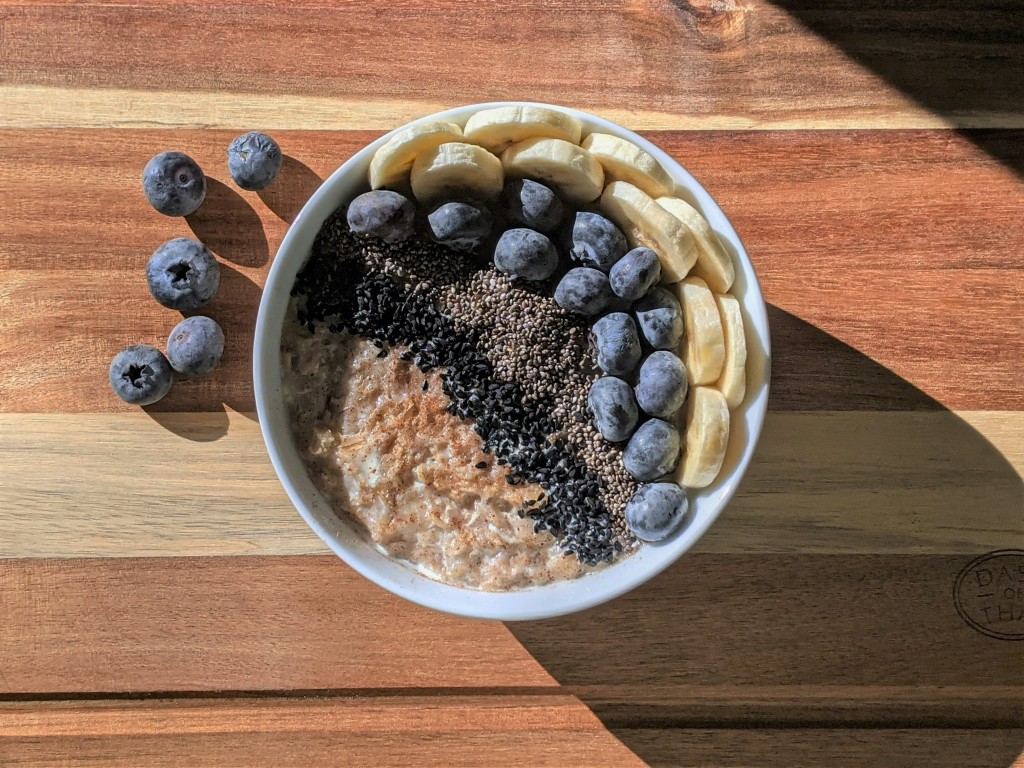
Brown rice and oats themselves are indeed excellent low-GI staple foods. However, when cooked into a soft, sticky porridge, the situation changes completely. Prolonged high-temperature cooking causes gelatinization, breaking down the starch structure and significantly increasing its digestion and absorption rate in the intestines, accelerating blood sugar spikes.
Xie reminds that while the above foods are not absolutely forbidden (they still contain nutrients), they very easily cause significant post-meal blood sugar fluctuations. When choosing foods, aim for whole foods, those requiring more chewing, and those with minimal processing – these are more blood sugar-friendly.
What Blood Sugar Level is Considered Prediabetes? Watch for 8 Early Symptoms
According to the Hong Kong Hospital Authority, diabetes is a chronic metabolic disorder. It occurs when insulin secretion is insufficient, or when the body cannot effectively utilize the insulin it produces, causing blood sugar levels to rise. High blood sugar leads to metabolic disorders of fats and proteins and can, over time, damage multiple body systems and organs, including the cardiovascular system, retina, nerves, and kidneys.
- If fasting blood glucose is ≥5.6 to <7 mmol/L, it is considered impaired fasting glucose.
- If 2-hour post-meal blood glucose is ≥7.8 to <11.1 mmol/L, it is considered impaired glucose tolerance.
Both conditions fall under the category of prediabetes.
Common Early Symptoms of Diabetes:
- Frequent thirst
- Frequent urination
- Feeling hungry
- Weight loss
- Easy fatigue
- Blurred vision
- Slow-healing wounds
- Skin itching (women may experience genital itching)
Sources: Former Chairman of the Anti-Aging Health Association and Nutrition Scholar Xie Ming-zhe, Hospital Authority (Hong Kong)