
Read More
When many people think of squats, they picture the standard gym image: a barbell on the back, a straight spine, and knees aligned with toes. However, that form is specifically designed for loaded training—to protect the body and improve performance when bearing external weight. Daily life squats are a different matter entirely.
ADVERTISEMENT
SCROLL TO CONTINUE WITH CONTENT
Daily Squats vs. Gym Squats: They're Not the Same
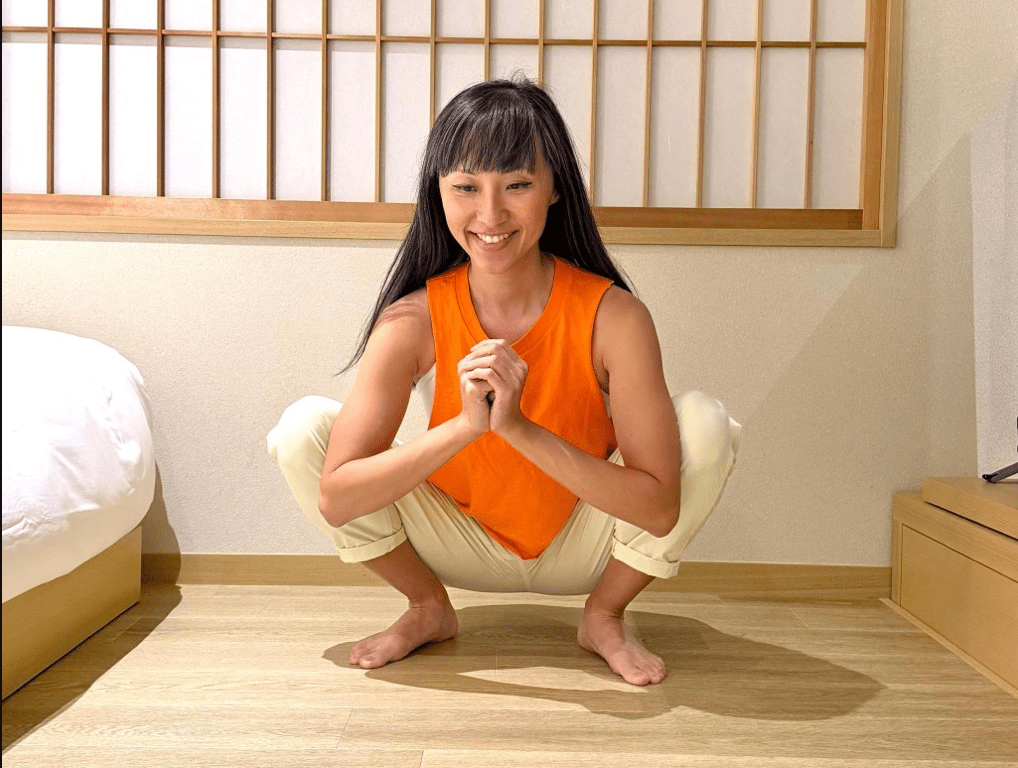
When you squat down to pick something up, play with children, do housework, or even just rest comfortably in a squat, you don't need to conform to a gym's "standard form." Instead, you need to find the center of gravity that works best for your body to perform the movement safely, stably, and effectively. Some people try so hard to keep their "back perfectly straight" that the movement becomes stiff and unnatural. In reality, everyone's bone structure, joint mobility, and body proportions are different, so squats will naturally look different too.
What truly matters is that your feet are firmly planted on the ground, your center of gravity is stable, and the entire movement is under your control. Rather than pursuing a "perfect" posture, it's better to spend time exploring your own body to find what feels most comfortable.
There's No Perfect Squat, Only the Squat That Fits You
Here are 3 fun and practical mobility exercises. Think of them as "games" to play, not "drills" to complete—they'll help you improve your squatting ability, increase joint flexibility and range of motion, and help your body rediscover a natural sense of fluid movement.
This reminds me of a grandmother friend. She never deliberately practiced squats or took any training classes. But because she played on the floor with her grandchildren daily, squatting down and standing back up, her squatting ability naturally improved over time. This shows that the best training is often hidden in everyday life.
3 Mobility Exercises
Exercise 1: Deep Squat Weight Shift
- Focus: Opens the hip joints, ankles, and inner thighs; improves lower body mobility; builds stability, balance, and the ability to shift weight flexibly.
- Fun Aspect: Like a child playing on the ground, naturally shifting left and right, feeling the body find its most comfortable position.
- Steps:
- Stand with feet naturally apart. Squat down to a comfortable depth, keeping soles as flat on the floor as possible.
- Place hands lightly on top of your knees, keeping shoulders and abdomen relaxed.
- Pause for a breath, feeling the connection between your body and the ground.
- Slowly shift your weight to the left, letting your left leg bear more weight while your right leg relaxes naturally.
- Return to center, then shift weight to the right. Keep movements light and fluid.
- Depending on your mobility, gently let one knee approach the ground, then slowly return to the squat position.
- Breathe naturally throughout. No need to force your chest up or chase a fixed posture.
- Shift left and right 5-10 times, feeling your hips, ankles, and glutes gradually become more comfortable.
Exercise 2: Deep Squat Thoracic Rotation
- Focus: Improves thoracic spine rotation; opens hips, shoulders, and chest; makes squats more stable and turning movements more flexible.
- Fun Aspect: Like searching for treasure on the ground, look down first, then slowly lift your gaze to the sky, feeling your body naturally open up.
- Steps:
- Stand with feet naturally apart. Squat down to a comfortable depth, keeping soles flat.
- Press your palms together in front of your chest. Breathe naturally.
- Gently place one forearm on the ground. Place the other hand on your knee. Naturally rotate your body to the same side.
- Inhale, slowly reach the hand on your knee toward the sky, following the movement with your eyes.
- Feel your chest opening, keep your shoulders relaxed. Don't force a maximum rotation.
- Exhale, slowly return your hand to its starting position, returning to a stable squat.
- Repeat on the other side.
- Keep your abdomen relaxed and breathing natural. Do 5 reps per side or hold each side for 3-5 deep breaths.
Exercise 3: Deep Squat Reach & Balance
- Focus: Improves ankle mobility, foot strength, and balance; relaxes the back and hips, making squats easier and more stable.
- Fun Aspect: Like a cat stretching, first reach forward, then gently lift your heels, exploring shifts in your center of gravity.
- Steps:
- Stand with feet naturally apart. Slowly squat down to a comfortable depth.
- Inhale, lengthen your spine, feeling the crown of your head reach slightly upward.
- Exhale, slowly reach both arms forward, relaxing your back naturally. Feel the forward extension.
- Hold for 2-3 natural breaths, feeling the stretch in your glutes, back, and ankles.
- Slowly return to the squat position, keeping your body relaxed.
- Gently shift your weight forward onto the balls of your feet. Slowly lift your heels, maintaining balance.
- Hold for 2-3 natural breaths, then gently lower your heels.
- Repeat 5-8 times, keeping your abdomen relaxed and breathing natural. Feel how your body moves fluidly between stability and motion.
There's no perfect squat, only the squat that suits you. Instead of chasing a fixed standard, spend time exploring your body to find the center of gravity that works best for you. As your body becomes more flexible and stable, you'll find that squatting is no longer a forced exercise, but a natural, easy ability for daily life.
Author: Czon Wong, Stretch Therapy Instructor