The water collected in a dehumidifier's tank may look clear and clean, but is it safe to drink? Recently, a netizen in Taiwan boiled condensate water from a dehumidifier and used it to brew tea. By that same evening, he was rushed to the emergency room. Doctors warn that water from a dehumidifier tank should never be consumed – even after boiling – and explain exactly why.
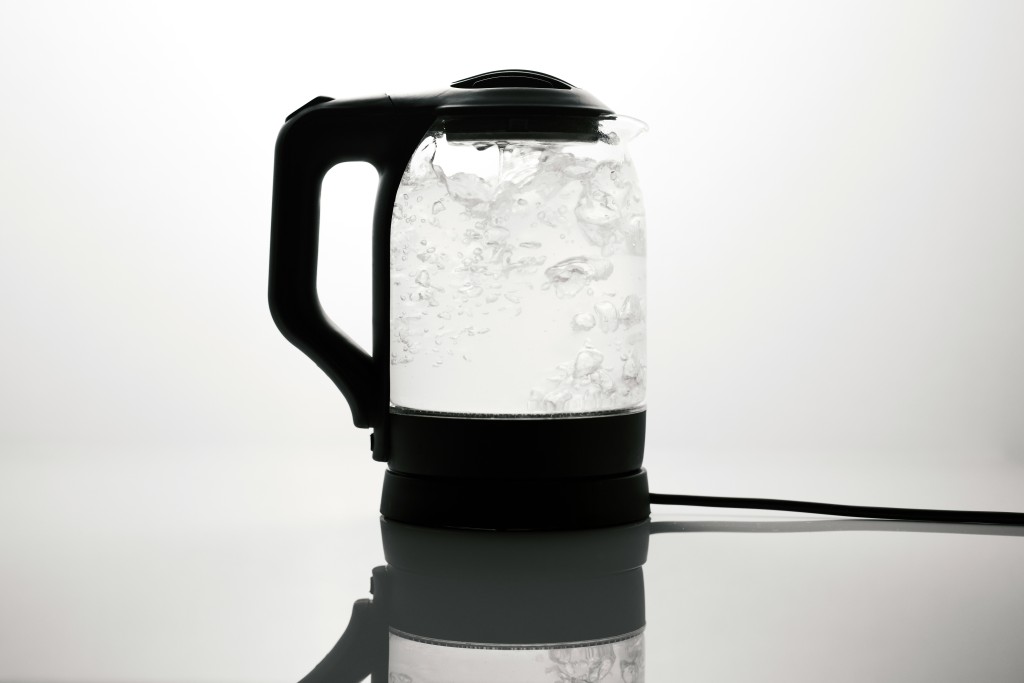
A netizen on the Taiwanese forum PTT shared his story. In middle school, he had learned in physics class that condensate water is a form of "pure water" and assumed it was quite clean. Driven by a spirit of experimentation, he boiled water collected from his home dehumidifier and used it to make tea. That night, he developed severe diarrhea and was eventually taken to the emergency room, where he was diagnosed with acute gastroenteritis.
Many commenters jokingly called him "brave" and "dedicated to science." Others pointed out that dehumidifier water is actually toxic. One wrote, "No matter how much you filter or boil dehumidifier water, I would never drink it." Another added, "The heat exchanger is the main reason for toxicity. It's lucky you didn't end up in even worse condition." A third commented, "If the heat exchanger is made of copper tubing, that's indeed very toxic."
Why Can't You Drink Dehumidifier Water?
So, is dehumidifier water really undrinkable? Dr. Yen Tsung-hai, Director of the Clinical Toxicology Center at Linkou Chang Gung Memorial Hospital in Taiwan, emphasizes that water from a dehumidifier tank should never be consumed. Here's why:
Yen explains that even if dehumidifier water is thoroughly boiled, boiling cannot remove airborne chemical compounds dissolved in the water. The water may also contain microorganisms and pathogens, making it highly unhygienic. High-temperature boiling can kill viruses and bacteria, but it cannot break down chemical compounds present in the air. While it's unclear exactly how much or how long one would need to drink such water to experience adverse effects, the safest choice is simply not to drink it. If you don't want to waste the water, it is perfectly fine to use it for watering plants or mopping floors.
He emphasizes that indoor air quality and the pollutants present vary from home to home. The air may contain substances such as sulfur dioxide and aromatic compounds. Even running an air purifier cannot completely filter out everything. Therefore, dehumidifier water is absolutely not safe for drinking.
Consumer Council Tips: How to Choose and Use a Dehumidifier
As the humid spring season arrives (known as "hui nan tian" in Chinese), homes can become particularly damp. A dehumidifier is a great tool for removing excess moisture. The Consumer Council offers the following tips for selecting and using a dehumidifier.
Dehumidifier Buying Tips
- Do not purchase dehumidifiers from online stores that do not comply with local safety regulations.
- For larger living spaces or more humid environments (e.g., near the sea), choose a model with higher water extraction capacity for faster dehumidification. For smaller or less humid spaces, a lower capacity may suffice.
- When purchasing a compressor-type dehumidifier, refer to the energy label data. Compare energy efficiency ratings, energy efficiency, and water extraction capacity. For the same extraction capacity, higher energy efficiency means greater electricity savings. Higher extraction capacity means faster dehumidification.
- If you choose a dehumidifier that can be equipped with a HEPA filter for air purification, remember that filters need regular replacement. Consider the long-term cost of replacement filters. According to Consumer Council test results, dehumidification performance decreased noticeably when HEPA filters were installed on the two tested models that offered them as optional accessories.
- A larger water tank means less frequent emptying. A tank with a handle makes emptying and carrying more convenient.
- Heavier dehumidifiers often come with casters. Swivel casters that allow 360° movement are more flexible and convenient than fixed casters that only move left and right.
Dehumidifier Usage Tips
- Place the dehumidifier on a stable, level surface to prevent tipping.
- Do not use a dehumidifier in the bathroom.
- When drying clothes, do not cover the air intake or exhaust vents, as this can cause poor ventilation and overheating. Never place still-dripping, un-wrung clothes directly on top of the dehumidifier, as water droplets can flow into the unit and create a hazard.
- If your dehumidifier can be equipped with a HEPA filter, install it according to the instruction manual. Clean and replace the filter regularly; otherwise, purification efficiency will drop significantly. Use a soft brush or vacuum cleaner to remove dust from the filter.
- Regularly clean the water tank and dust filter screen to prevent bacterial growth and dust buildup that can hinder heat dissipation. Allow them to dry completely before reinstalling.
- Avoid leaving the dehumidifier running unattended or while sleeping at night. Turn off the power when not in use. Many models have a timer shut-off function – use it to prevent excessively long operation or forgetting to turn the unit off, saving electricity and improving safety.
- If the dehumidifier shows signs of malfunction, such as unusual noises, strange odors, or overheating, stop using it immediately.