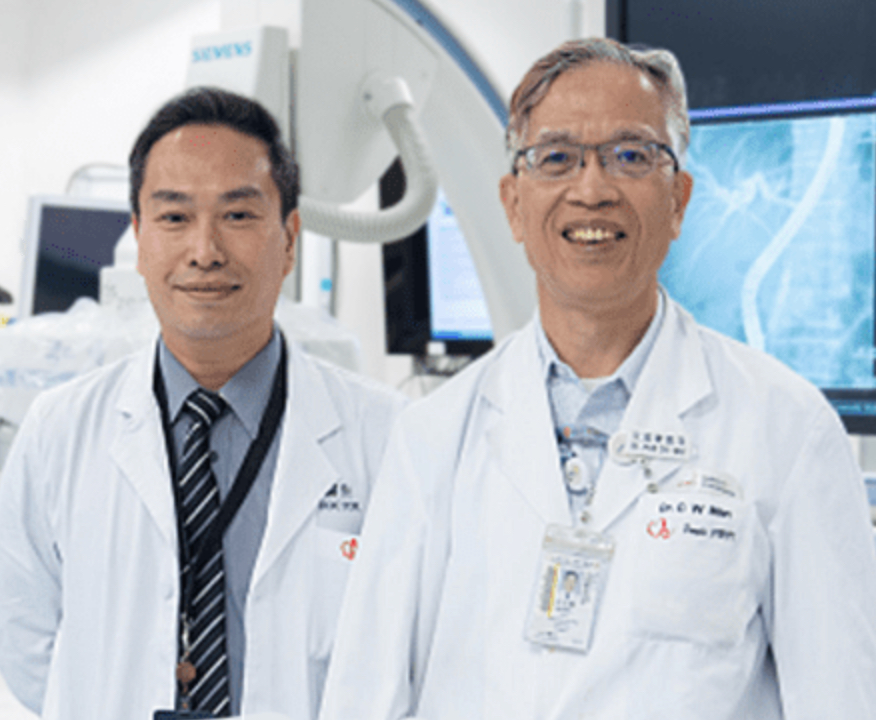
Even after retirement, Dr. Man Chi-wai continues to shuttle between the operating rooms and wards of the Surgical Department at Tuen Mun Hospital. Years ago, Tuen Mun Hospital faced significant criticism regarding its surgical outcomes. Amid the wave of negative publicity at the time, Man did not blame the frontline surgeons' "skills." Instead, he insisted on seeking the truth through data. He led his team through quiet reforms, ultimately building a safer operating room through professionalism and perseverance, continuing to safeguard every patient's life.
According to a recent article in the New Territories West Cluster Newsletter, Man has spent decades in the operating rooms and wards of Tuen Mun Hospital, long regarding the Surgical Department as his home. Even after retiring in 2017, he quietly remained at his post, continuing to serve patients. When asked about the unfair criticisms Tuen Mun Hospital's Surgical Department faced over the years, he showed no anger, instead laughing it off and calmly explaining the background.
In 2010, Man had just taken over as Chief of the Surgical Department. To improve overall surgical quality, the Hospital Authority introduced surgical outcome metrics based on international experience. However, Tuen Mun Hospital's surgical outcomes were rated slightly below average for two consecutive years, sparking widespread negative media coverage. Man admitted, "People now often say 'comparison is the thief of joy,' but back then, it was 'no harm, no news value.'" While he and his colleagues were disheartened, he was convinced the issue was not the surgeons' skills. "I have full confidence in my colleagues. They all trained at the two medical schools and passed the same surgical exams. Their performance cannot be inferior to others."
Approaching the matter with a clear conscience, Man delved into the data. He ultimately discovered that factors such as the surgeons' workload, the number of available operating room sessions, post-operative follow-up support, and intensive care unit availability could all be linked to overall performance. The public criticism unexpectedly spurred unprecedented unity among the hospitals and departments within the cluster. Man expressed special gratitude for the support from multiple departments, including Anaesthesiology, Intensive Care, Radiology, and Clinical Oncology, which facilitated interdisciplinary clinical meetings. This allowed the team to provide more comprehensive pre- and post-operative care. Subsequently, through inter-hospital collaboration, they better utilized the renovated Pok Oi Hospital's operating room resources and successfully advocated for the construction of a new operating theater block at Tuen Mun Hospital, gradually increasing service capacity.
Entering the Operating Room Is Not a Gamble with Life; Teamwork Safeguards Patient Health
These reforms were not achieved overnight. However, "one generation plants the trees, another enjoys the shade." The efforts of those years have now come to fruition. Dr. Wong Ka-fai, the current Deputy Chief of the Surgical Department, is among those quietly "enjoying the harvest." Before Man's retirement, Wong had been assisting in driving various improvement measures. Wong explained, "Before surgery, we already calculate the patient's surgical risk. Surgeons don't just perform operations; we assess post-operative recovery beforehand, and even require patients to undergo 'prehabilitation' before surgery: strengthening cardiopulmonary function, quitting smoking, exercising—to improve surgical outcomes and shorten recovery time."
Wong emphasized that surgical outcomes are not merely about numbers, and entering the operating room is not a gamble with life. After years of continuous refinement, Tuen Mun Hospital not only provides more standardized medical services but also offers personalized treatment plans tailored to patients' needs. All this is achieved through the collaboration of the entire cluster team, including departments like Quality and Safety, Anaesthesiology, and Intensive Care, uniting the surgical team in their commitment to protecting every patient's life and safety.