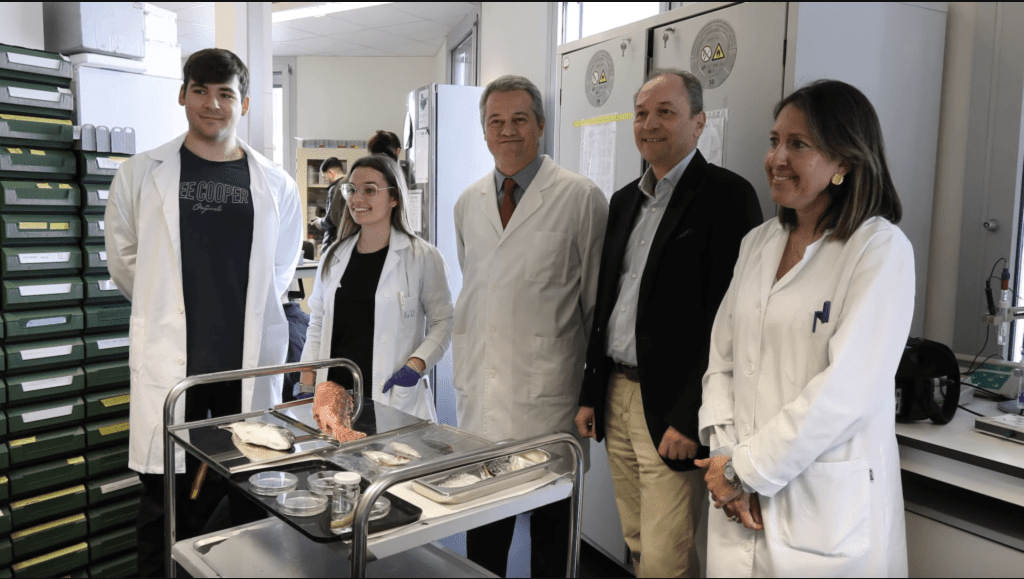
Severe corneal damage is difficult to repair and often requires an organ transplant, a process that can involve lengthy waiting times. Now, a research team in Spain has developed a highly biocompatible artificial cornea using scales from common market fish, offering a potential and more accessible alternative to traditional donor transplants. This new technology not only significantly reduces costs and uses readily available materials but also has the potential to boost the fishing industry.
Corneal Damage Hard to Heal, Traditional Transplants Limited by Donations
The cornea is the transparent tissue at the front of the eye, responsible for protecting the eyeball and focusing light. Because it lacks blood vessels, its regenerative capacity is limited; once severely damaged, it struggles to repair itself. Currently, the main treatment for serious corneal disease is corneal transplant surgery. However, the supply of donor organs is limited, forcing patients into long waiting periods that can mean missing the optimal window for treatment.
Scientists from the Tissue Engineering research team at the University of Granada, along with colleagues at the Institute of Biomedical Research, have announced they successfully extracted high-quality collagen from the scales of common food fish like carp to create an artificial corneal implant.
Advantages of the Artificial Cornea:
- High biocompatibility
- Excellent transparency
- Strong durability
Market Fish Scales Become Life-Saving Material, Potentially Solving Donor Shortage
The research team conducted detailed analysis on the fish scale material, confirming its potential for repairing and regenerating corneal tissue. In subsequent animal studies, subjects implanted with the fish-scale artificial cornea showed good functional recovery. Study co-author Ingrid Garzon, a professor of histology at the University of Granada, noted, "Fish scales are extremely easy to obtain and inexpensive, and this application also holds promise for promoting the local fishing industry."
The team chose scales from fish commonly found in markets, transforming what was previously considered waste into a resource with significant medical value. Fellow histology professor Miguel Alaminos added, "While traditional corneal transplants are effective, reliance on organ donation is always constrained by the waiting list system. There is an urgent need to develop effective regenerative methods that do not depend on donors."
When Will It Be Available for Humans? Clinical Trials Still Needed
The research team stated that laboratory tests and animal studies have shown the fish-scale artificial cornea performs well functionally, with no significant rejection observed in the implanted animals. However, the technology still has a long way to go before being applied to humans. It must first pass rigorous human clinical trials to verify its safety and effectiveness. It's worth noting that as early as 2016, peer-reviewed research published by scientists at the University of Antwerp had already confirmed the biocompatibility of fish-scale-derived corneas with the human body, laying important groundwork for this subsequent research.