Read More

Doctor lists 6 high-risk habits that exposes you to microplastics
30-04-2026 12:00 HKT


Mark Six marks 50th anniversary with exhibition and record $228m draw
30-04-2026 19:04 HKT



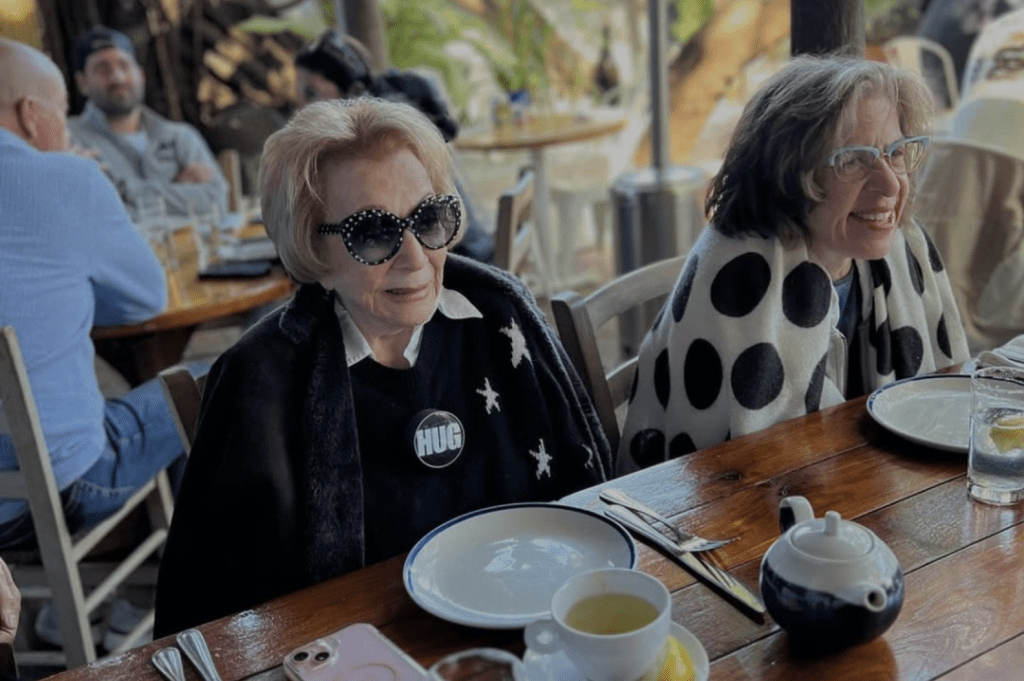
The desire for beauty is universal. While society today has become increasingly accepting of medical aesthetics and "minimally invasive" procedures, talking about "plastic surgery" still carries some stigma and taboo – even more so in the 1990s. Yet 98-year-old American legendary beauty editor Joan Kron has always been open about declaring to the world: "I've had 3 facelifts!" 35 years ago, she pioneered the field, becoming one of the first journalists to write openly about plastic surgery in newspapers and magazines. She even authored books and directed a documentary, using her personal experience to unveil the magical world of medical aesthetics for the public.
In her youth, Joan Kron was a fashion designer and a renowned artist, organizing some of America's earliest Pop Art exhibitions. In 1991, at the age of 63, she joined Allure magazine, the bible of American beauty, as a contributing beauty editor. At a time when plastic surgery was still a deeply private matter, celebrities wouldn't discuss breast implants or filler injections, and newspapers and magazines avoided these topics. Yet she decided to write a report on plastic surgery.
Holding onto the belief that "only by experiencing it yourself can you truly understand it," Joan Kron, who had famously declared in her youth "I'll never get a facelift," scheduled her first consultation at a plastic surgery clinic for the sake of reporting. The doctor talked at length about her flaws. Unexpectedly, after four consultations, she transformed from a mere reporter gathering information into a genuine customer, scheduling a facelift, eye lift, and lip rejuvenation. This decision inevitably drew much opposition. Her husband, stepchildren, and colleagues all disapproved, saying it was unnecessary or "you're already beautiful." But these words never shook her resolve.
After the 3+ hour surgery, her head was wrapped in bandages. She endured a lengthy recovery period – bruised, swollen, almost unrecognizable, in constant pain, needing extra pillows to sleep. During recovery, she photographed herself daily. Within two weeks, the dramatic change in her appearance thrilled her. "I was still myself, but I looked ten years younger."
Over the following decade, as medical aesthetics technology advanced, techniques that minimized scarring emerged. She underwent two smaller-scale facelifts to smooth wrinkles and lift drooping eyebrows. The last time she had surgery, she was nearly 80. "People told me, 'By 60, you won't care,' but I was almost 80 and I did care."
Throughout her subsequent career as a journalist, she continuously reported on topics related to "plastic surgery," using her pen to transform it from a shameful secret into a publicly discussable social phenomenon. She wrote books sharing her facelift experiences and, at 89, produced her first documentary on plastic surgery.
Since her first surgery, she never lied about it, freely admitting to having had facelifts and never regretting it. This attitude encouraged many people considering plastic surgery, giving them confidence. However, she doesn't advocate for everyone to try it, as it's not suitable for all. The decision should be entirely personal. "A facelift won't turn you into your idol. It won't change your personality, and it certainly won't bring back your youth. But it can rejuvenate you, give you back a sense of control, and thereby boost your confidence." Based on her experience and years of interacting with hundreds of women who've had plastic surgery, she found that once you have one procedure, all previous fears disappear. Therefore, one must be careful not to become too cavalier or open to subsequent surgeries. She also disapproves of having surgery in one's 30s, at the first signs of skin sagging. "I'm glad I waited until I truly needed the lift."
"I like to say I'm not 'aging gracefully,' I'm 'aging disgracefully'." Now 98, she admits to accepting the reality of being old, while also feeling fortunate to look less tired than other women her age. She attributes part of her ability to continue directing and writing, working well into her late 90s, to having had facelifts. "I don't need to look at the wrinkles on my face and the sadness in my eyes and recall all the painful experiences of my life."