Read More
Dried tangerine peel is a staple ingredient in many households and is also considered a helpful health aid for children and infants. A Chinese medicine practitioner believes that it has effects such as regulating Qi and strengthening the spleen, as well as drying dampness and transforming phlegm. If you can identify a child's discomfort early, choose the right tangerine peel, and use the correct methods, a few simple food therapies can alleviate many common minor ailments.
ADVERTISEMENT
SCROLL TO CONTINUE WITH CONTENT
Registered Chinese Medicine Practitioner Dr. Kei-Kit Ma shares 3 dried tangerine peel food therapies on his Facebook page, "中醫爸B - 馬琦傑醫師" (CMI Dad - Dr. Ma Kei Kit). He states that even babies as young as 3 months old can consume them. Here are the ingredients and preparation steps:
Dried Tangerine Peel Food Therapy 1: Dried Tangerine Peel Water
- Efficacy: Relieves nasal congestion (caused by drinking milk or wind-cold)
- Steps: Add dried tangerine peel to 3 bowls of water and boil for 15 minutes. Drink warm.
- Ingredients Dosage Guide for Infants/Toddlers:
- 3-6 months: 1/4 piece of peel
- 6-12 months: 1/3 piece of peel
- 12-24 months: 1/2 piece of peel
- 24-36 months: 3/4 piece of peel
- 36+ months: 1 piece of peel
Dried Tangerine Peel Food Therapy 2: Dried Tangerine Peel and Ginger Slice Water
- Efficacy: Soothes clear, runny nasal discharge
- Ingredients: 1 section of dried tangerine peel, 1 slice of ginger
- Steps: Add dried tangerine peel and ginger slice to 2 bowls of water and boil for 15 minutes. Drink warm.
Dried Tangerine Peel Food Therapy 3: Dried Tangerine Peel and Monk Fruit Water
- Efficacy: Soothes white phlegm, cold cough
- Ingredients: 1 section of dried tangerine peel, 1 monk fruit
- Steps: Add dried tangerine peel and monk fruit to 2 bowls of water and boil for 15 minutes. Drink warm.
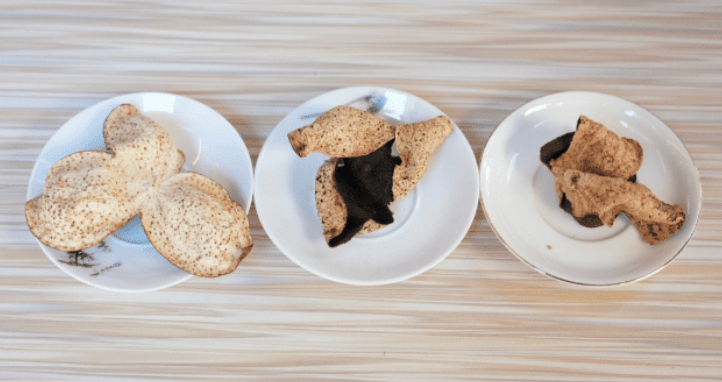
4 Key Tips for Selecting Dried Tangerine Peel
Ma points out that there are 4 key tips for selecting dried tangerine peel to avoid choosing ineffective or even harmful products:
- Choose Red Peel (Hongpei): There are red peels and green peels (Lokpei). You must choose red peel, as it has the effect of regulating Qi and transforming phlegm. Green peel, on the other hand, is for breaking up stagnant Qi and relieving stagnation; its effects are completely different.
- Look for "Oil Chambers" to Select Quality Goods: High-quality dried tangerine peel has countless small, sunken oil dots on its surface, called "oil chambers." The more "oil chambers," the better the health benefits.
- Smell the Aroma to Distinguish Quality: A natural, mellow aroma that is not pungent and has no fresh fruit smell is best. If it smells musty (moldy), it means it has gone bad and should not be used.
- Age Affects Bitterness: Younger dried tangerine peel has a yellowish-white inner pulp and a bitter, astringent taste. dried tangerine peel aged over 10 years has an inner pulp that has aged to a light brown color and has no bitterness at all. Dr. Ma reminds that for younger dried tangerine peel, the white pith on the inside needs to be scraped off; for dried tangerine peel over 10 years old, this is not necessary.
Prevention is Better than Cure: Strengthening the Spleen and Dispelling Dampness is Key
Ma points out that for both adults and children over 1 year old, before getting sick, the most important aspect of daily health maintenance is strengthening the spleen and stomach. He suggests:
- Drinking a cup of "Purple Yam and Water" every morning.
- Boiling a spleen-strengthening tea for children and a dampness-dispelling tea for adults once a week.
- Note: These should not be consumed when showing symptoms of a cold.