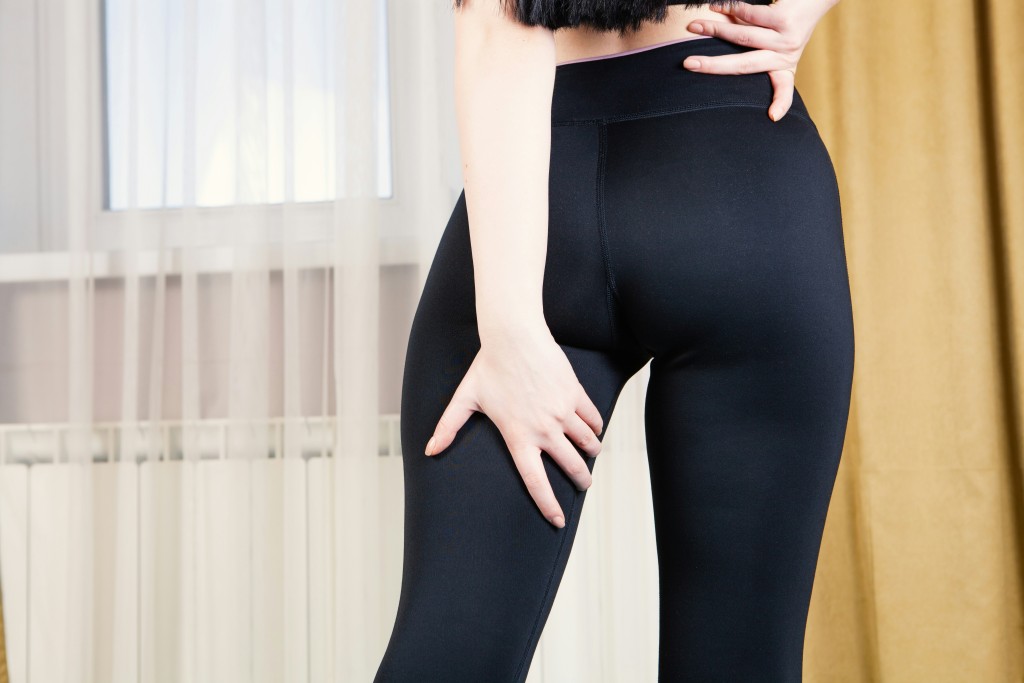
A firm and lifted peach-shaped butt isn't exclusive to celebrities! A nutritionist warns that prolonged sitting can lead to buttocks aging, even resulting in an H-shaped hip. She also explains the causes of 4 major types of aging buttock shapes. If you want to avoid a flat, saggy bottom, you can start with your diet, combined with simple butt-lifting exercises for a double-pronged approach to easily build firm and elastic peach buttocks.
Prolonged Sitting Leads to H-Hips – Decoding 4 Major Types of Buttock Aging
Nutritionist Gao Min-min stated in a Facebook post that long hours of sitting, lack of exercise, and poor posture can all cause the gluteal muscles to gradually relax and the curves to become less defined. There are 4 common types of buttock aging:
- V-Shaped Hips: Common in older individuals. Characteristics include sagging, lack of flesh, loss of elasticity, and a high, wide pelvic ratio, making it difficult to correct the lines.
- A-Shaped Hips: A common hip shape among Asians. The upper part lacks flesh, fat concentrates on the outer sides, leading to a heavy "smile line" and a wide-looking lower body.
- O-Shaped Hips: Common in overweight or obese individuals. Significant fat accumulation makes the buttocks round, wide, and thick, with overall unclear definition.
- H-Shaped Hips: The most common type for those who sit for long periods and lack exercise. Caused by gluteal muscle loss, sagging, and depression of the gluteus medius, resulting in flat overall lines and a loss of three-dimensional shape.
4 Dietary Tips to Build Firm, Lifted Buttocks
Gao emphasized that both diet and consistent exercise are key to reclaiming firm, lifted buttocks. For daily diet, she recommends increasing the following four types of foods to help build muscle and reduce fat.
- Adequate Protein: Includes chicken breast, fish, eggs, and legumes. Protein is the building block for muscle growth, aiding in the formation and development of gluteal muscles.
- Quality Carbohydrates: Include brown rice, oats, and sweet potatoes. They provide stable energy, beneficial for post-workout repair and recovery.
- Eat More Fruits and Vegetables: Such as spinach, bananas, and tomatoes. They are rich in vitamins and antioxidants, which help maintain the elasticity and firmness of the gluteal muscles.
- Healthy Fats: Recommends avocados, salmon, nuts, and olive oil. Supplementing with these healthy fats helps boost metabolism and reduce fat accumulation.
She added that one should also stay well-hydrated daily to maintain body metabolism and balance. Keep your diet as regular and balanced as possible. Adopting the "vegetables first, then protein, followed by carbs" eating sequence can increase satiety while controlling calorie intake. All these are helpful for improving sagging buttocks.
4 Essential Butt-Lifting Exercises to Learn
Gao also shared four sets of butt-lifting exercises. For each exercise, 10 repetitions count as one set, and it's recommended to do two sets of each daily to help build and maintain firm gluteal muscles.
- Side-Lying Leg Lift:
- Focus: Trains the gluteus medius and outer thigh line.
- Lateral Lunge (Side Lunge):
- Focus: Strengthens the abductors and sculpts the hip and leg line.
- Plié Squat (Sumo Squat):
- Focus: Strengthens the inner thighs and gluteal muscles.
- Donkey Kicks:
- Focus: Works the gluteus maximus to create a lifted, rounded buttock.