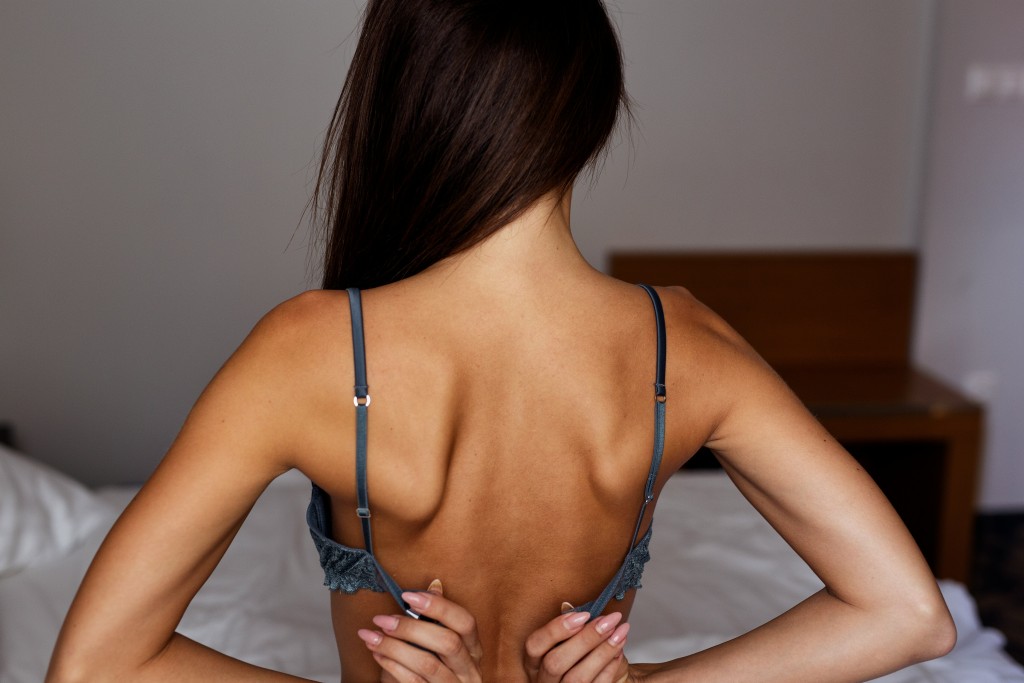
Women sometimes overlook that ill-fitting bras can be a "hidden killer" for spine health in their pursuit of aesthetics. Registered chiropractor Wong Chun-wah shared a case with Sing Tao Headline, revealing that poor posture and incorrect bra selection can lead to "Upper Crossed Syndrome," causing chest pain, breathing difficulties, and even affecting cervical and thoracic spine function.
24-Year-Old Woman with Chest Pain and Breathing Difficulty – Diagnosis Finally Revealed After Multiple Doctors
Registered chiropractor Wong Chun-wah shared the case of a 24-year-old woman, Miss Zheng, who had persistent discomfort in her sternum area along with somewhat labored breathing. After being examined by multiple doctors who could not identify a clear cause, she came to him for treatment. Following a detailed spinal examination, the following issues were found:
- Markedly rounded shoulders and forward head posture (Kyphosis)
- Overly tense chest muscles
- Significantly restricted range of motion in the thoracic and cervical spine joints
Considering that Zheng had a fuller bust, it was suspected that her poor posture or long-term wearing of ill-fitting bras led to "Upper Crossed Syndrome," which in turn affected the normal function of her cervical and thoracic spine.
Subsequently, Zheng switched to a bra with proper support and underwent several weeks of chiropractic adjustments and muscle balance training. After treatment, her chest pain and breathing discomfort completely disappeared, and her posture became taller and more upright, restoring a healthy body shape.
Different Bra Designs Offer Varying Levels of Support
Wong explained that the primary function of a bra is to reduce the extra stress on the spine caused by the weight of the bust. For women with fuller chests, special attention must be paid to whether the shoulder straps and cups provide adequate support. Generally, the more components a bra has, the better the support it typically offers. There are many bra styles on the market, each with pros and cons:
- Wireless Bras:
- Advantages: Simple, seamless, comfortable. Suitable during menstruation, breastfeeding, or breast tenderness caused by hormonal changes like fibrocystic breast changes.
- Disadvantages: Weaker support. Long-term wear can easily lead to Upper Crossed Syndrome.
- Push-up Bras and Sports Bras:
- Disadvantages: Fitter design that compresses the chest; wearing for extended periods may impede blood circulation, leading to sternum pain or breathing difficulty.
- Advice: Adolescents in development should not wear them for prolonged periods to avoid affecting normal growth. Sports bras should ideally be worn only during exercise and changed out of as soon as possible after working out, returning to a daily-wear style with adequate support.
Upper Crossed Syndrome: The "Rounded Back" Trap of Muscle Imbalance
Upper Crossed Syndrome refers to a state where the chest muscles (pectoralis major and minor), the latissimus dorsi in the upper back, and the levator scapulae become excessively tight and shortened. Conversely, the rhomboids, middle and lower trapezius in the lower back, and the sternocleidomastoid and scalenes in the front of the neck become overly lengthened and weak. Wong explains this imbalance of strength between the front and back muscles, forming a crossed pattern, which is commonly known as "hunched back" or "rounded shoulders." Women with fuller busts are particularly prone to this condition, often involving the C5, C6, and C7 vertebrae. Possible symptoms include:
- Numbness and weakness in the hands
- Difficulty breathing
- Scapular (shoulder blade) pain
- Thoracic spine issues such as inflammation near the ribs
Wong cautions that if Upper Crossed Syndrome is caused by improper bra selection, the improvement process may take several months or longer. Treatment methods include:
- Targeted muscle stretching and strengthening exercises to restore front-back muscle balance.
- Spinal joint adjustments if the cervical spine curvature has become flattened and range of motion is limited.
Therefore, women should choose bras with different levels of support during different physiological stages (such as around menstruation or during breastfeeding) to reduce physical strain. When selecting bras, women must try them on personally to ensure they find the style that best suits their body shape and needs. Wong provided five professional recommendations:
Five Professional Recommendations for Choosing a Suitable Bra
- Prioritize bras with underwire or better support.
- Ensure sufficient cup and side fabric to fully contain underarm (axillary) breast tissue and prevent spillage.
- Choose wider, thicker shoulder straps to reduce pressure on the neck and shoulders.
- Avoid overly thick padding that shifts the center of gravity too far forward.
- Choose bras with at least three rows of back hooks for adjustability.