





Read More






Doctor lists 6 high-risk habits that exposes you to microplastics
30-04-2026 12:00 HKT







Mark Six marks 50th anniversary with exhibition and record $228m draw
30-04-2026 19:04 HKT


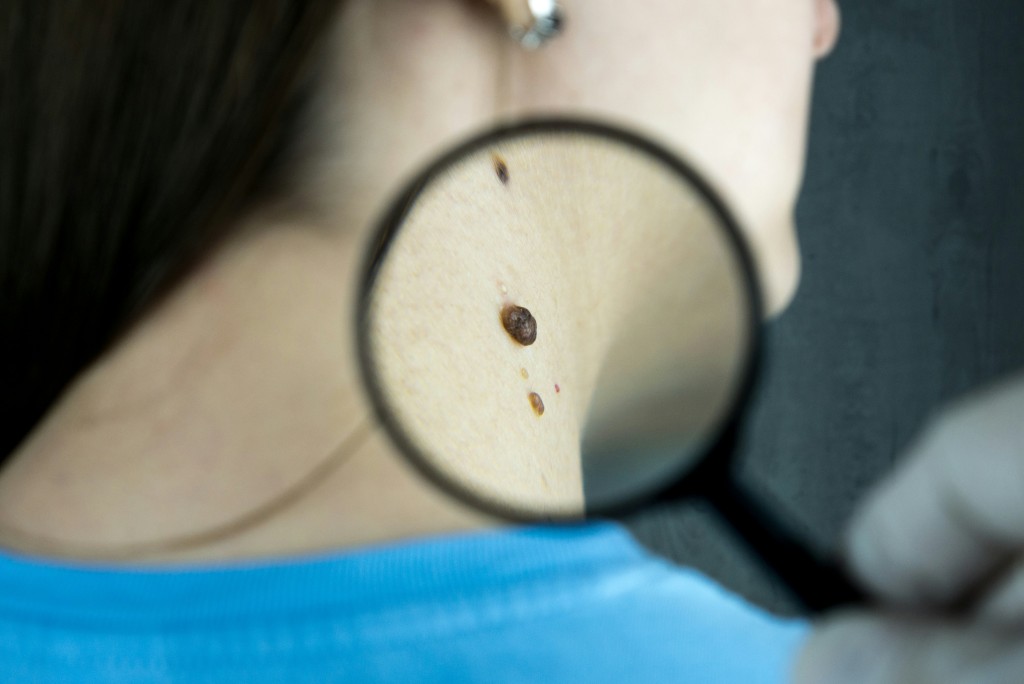
A man thought a pimple on his lip was just a sign of "internal heat." After 8 years of persistent issues, medical examination revealed he had basal cell carcinoma, the most common type of skin cancer. What are the symptoms to self-assess risk? Which areas of the body are commonly affected?
According to a post on social media by Liaobu Hospital in Dongguan City, Guangdong Province, 57-year-old Liu developed a small, soft lump on his lower lip 8 years ago. It looked exactly like an ordinary pimple. Initially, he paid it no attention because it caused no pain or itching; he simply assumed it was a pimple caused by "excessive internal heat." Often, out of habit, he would pick or squeeze it when bored. Day after day, year after year, this pimple did not subside. Instead, over those 8 years, it continued to grow, gradually reaching the size of a thumb. Its surface began to ulcerate and break down, continuously discharging a secretion with an obvious foul odor that resembled saliva. Its appearance was quite alarming. Even as the condition progressed, he still did not take it seriously, always thinking, "It doesn't affect eating or drinking; I can just endure it," and kept postponing medical treatment. It wasn't until a relative accidentally noticed the severe lesion, was shocked, and repeatedly urged him that he finally sought medical attention at the Guangdong Provincial Second People's Hospital Dongguan Hospital (Dongguan Liaobu Hospital). Upon initial consultation, Mr. Liu and his family were still quite relaxed, telling the doctor, "Doctor, it's just a small bump. Just cut it off for us – it's a minor surgery, right?"
However, after careful examination, Dr. Li Lijie from the Plastic and Cosmetic Surgery Department immediately realized the situation was far more serious than imagined. Visible to the naked eye, the lesion had grown to 2.5 cm × 2 cm, and its depth extended into the subcutaneous tissue, highly likely invading deeper layers. Combined with dermoscopy findings, Li issued a stern warning to Liu: "We highly suspect a tumor, and we cannot rule out the possibility of malignancy. This absolutely cannot be simply excised; it requires wide local excision. Post-surgery, there will be a large skin and subcutaneous tissue defect on your face, requiring a complex flap reconstruction surgery." Hearing this, Liu and his family panicked instantly. They never imagined that a seemingly ordinary pimple, left untreated for so long, could become such a serious problem. Fortunately, the final pathological result showed it was a benign "basal cell adenoma." This tumor originated from the deep salivary glands (the glands that secrete saliva inside the mouth) and had penetrated through the full thickness of the skin from inside out. Therefore, wide local excision was necessary to significantly reduce the chance of future recurrence.
During surgery, to completely clear the lesion, intraoperative frozen section pathology guided the margins, revealing the extent of infiltration was quite large. Li ultimately expanded the excision to 3.5 cm × 2.5 cm, reaching deep into the oral mucosa, with even one-third of the lower lip tissue removed. Subsequently, the medical team used A-T flap reconstruction technique, employing precise design, careful dissection, and layered tension-free suturing to solve the challenge of repairing the large defect, maximizing preservation of the function and appearance of Liu's lower lip. Sutures were removed two weeks post-surgery, and the reconstruction result was very good: his lip showed only slight displacement, with a natural appearance, and did not affect normal speech or eating.
According to the Cancer Online Resource Centre and the Hong Kong Anti-Cancer Society, the three most common types of skin cancer are basal cell carcinoma, squamous cell carcinoma (collectively known as non-melanoma skin cancers), and melanoma. Basal cell carcinoma accounts for approximately 60% of all skin cancers and is the most treatable type. Most patients are over 40 years old. Basal cell carcinoma commonly occurs on the outer skin of the head, neck, and upper body, with the nose being a frequent location. Among Hong Kong Chinese, pigmented basal cell carcinoma is the most common type.
Symptoms of Basal Cell Carcinoma:
According to the Hong Kong Hospital Authority, skin cancer is among the most common cancers globally, and its incidence is rising rapidly. Research shows that over 80% of skin cancers are preventable. The most important way to prevent skin cancer is to avoid direct sunlight exposure to the skin, thereby reducing UV damage to the body.
However, some cancers occur in areas not frequently exposed to sunlight, which may be related to genetics. People of any skin color can develop skin cancer. The following 11 categories of people are at higher risk:
Sources: Liaobu Hospital, Dongguan City; Hong Kong Anti-Cancer Society; Hong Kong Cancer Online Resource Centre
𝗗𝗼𝘄𝗻𝗹𝗼𝗮𝗱 𝗧𝗵𝗲 𝗦𝘁𝗮𝗻𝗱𝗮𝗿𝗱 𝗔𝗽𝗽 ↓
