In the city, one in ten individuals aged 70 or older is affected by dementia, with the prevalence rising to one in three among those aged 85 and above. Over the past five years, the number of patients receiving treatment for dementia has surged by approximately 19%. To address this growing challenge, a new initiative offers a free online dementia screening test, enabling residents to assess their risks early and seize critical opportunities for intervention.
Dementia is not merely a byproduct of ageing, but a serious condition caused by brain function decline, impairing memory, thinking, language, and daily functioning. Alzheimer’s disease, the most common form, accounts for roughly 80% of cases. Early symptoms may include forgetting recent events or misplacing items, but as the condition progresses, individuals may experience mood swings, sleep disturbances, or even delusions. These symptoms not only affect patients but also place significant emotional and financial burdens on families.
Public misconceptions about dementia remain widespread. Many view it as an inevitable part of ageing or believe it is untreatable. However, medical research underscores that early diagnosis can significantly slow disease progression and improve quality of life for both patients and their families. Current treatments include medications to alleviate symptoms and slow deterioration, alongside non-pharmacological approaches such as cognitive training, environmental adjustments, and psychological support. These strategies help maintain patients’ independence and dignity. Family education also plays a vital role, equipping caregivers to support loved ones in familiar settings.
Free Screening: A Gateway to Early Intervention
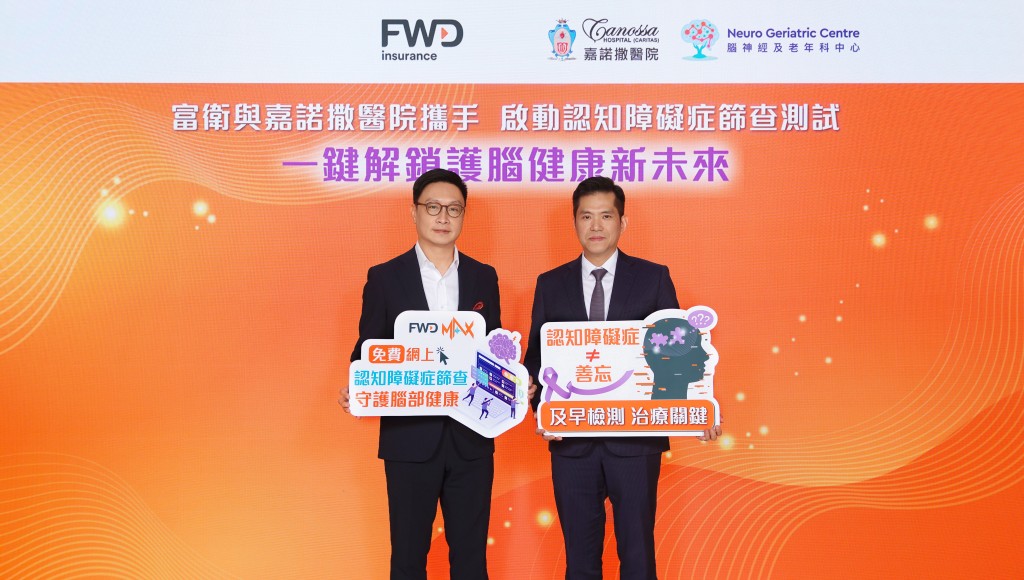
To raise awareness and promote early detection, FWD Hong Kong has partnered with Canossa Hospital (Caritas)'s Neurology and Geriatric Centre to launch a free online dementia screening test via the FWD MAX platform. The test utilises the AD8 (Ascertain Dementia 8-item Questionnaire), which features eight straightforward questions about memory, attention, and daily functioning—such as whether someone frequently forgets appointments or struggles with financial tasks. Completing the test takes just minutes, requires no registration, and is accessible to all age groups, making it especially convenient for those in remote areas or with limited mobility.
If the screening indicates a higher risk, the platform guides users to additional dementia-related resources and encourages consultation with healthcare professionals for comprehensive assessments. Advanced diagnostic tools, such as blood tests detecting amyloid protein buildup in the brain, combined with the Montreal Cognitive Assessment (MoCA), offer over 90% accuracy in identifying risks even before symptoms appear. These tools provide hope by enabling targeted interventions.
Paul Tse, Chief Marketing and Digital Officer of FWD Hong Kong and Macau, emphasised the initiative’s goal to empower people to prioritise brain health and hopes that the free screening tool encourages early action, helping individuals at high risk take proactive steps. Andrew Hui, General Manager and COO of Canossa Hospital (Caritas), added, “Early screening is crucial for improving patients’ quality of life. By combining MoCA and blood tests, we can detect risks before symptoms emerge, offering a critical window for treatment.”