Read More
The Belt and Road Initiative encompasses over 150 countries, yet for many in Hong Kong – a world-leading financial hub – our closest BRI partners in Central Asia remain a mystery.
ADVERTISEMENT
SCROLL TO CONTINUE WITH CONTENT
Hong Kong businesses should explores the immense investment opportunities in Central Asia.
From Silk Road crossroads to modern partners
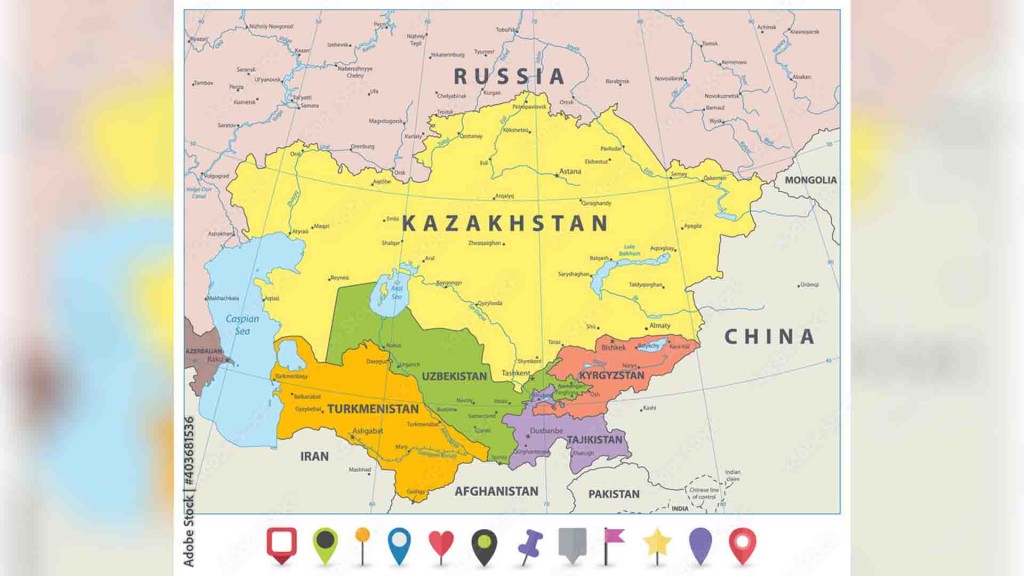
The five Central Asian countries – Kazakhstan, Kyrgyzstan, Tajikistan, Turkmenistan, and Uzbekistan – were once the heart of the Silk Road. Their historical connections to China run deep:
Kazakhstan shares a border with China and the Kazakh people are one of China’s recognized ethnic groups.
The poet Li Bai was born in modern-day Kyrgyzstan.
Ming dynasty admiral Zheng He’s ancestors hailed from Uzbekistan, a key fact that enabled his legendary voyages.
This shared history provides a strong cultural foundation for modern China-Central Asia relations.
Kazakhstan a resource-rich tech frontier
Kazakhstan’s economy is rapidly evolving beyond its vast natural resources.
While it is a top global producer of uranium (crucial for nuclear energy) and other minerals like gold, attracting firms like Chinese company, Jiaxin International Resources, which invests in tungsten mine in Kazakhstan.
The first dual-listed company on the Hong Kong Stock Exchange and the Kazakhstan Stock Exchange is one of the best performed new listings.
Its tech sector is booming, with over 4,000 new IT companies have been registered in two years.
The country made headlines by allowing stablecoins for regulatory payments, a significant step in digital asset adoption. The city of Astana even applied smart technology to its public toilets – a surprising initiative that captured the world’s curiosity and became viral news.
Uzbekistan: cotton, culture and more
Uzbekistan is leveraging its transition to a market economy. Known for its cotton production and historic cities like Samarkand, the country is modernizing rapidly.
This progress is visible in milestones like its national football team’s success. Each player was rewarded a electric vehicles after qualifying for the FIFA World Cup, signaling a modern national identity.
For young Central Asians, learning Chinese is a gateway to greater opportunities in China. Also, many view Hong Kong as their top choice for study, leveraging its unique position as a global bridge to the mainland.
For Hong Kong, Central Asia presents untapped potential. As a super-connector under the Belt and Road Initiative, Hong Kong is perfectly positioned to provide the financial services, legal expertise, and international platform these economies need.
The question is not if but how quickly Hong Kong will embrace its role in building trade with Central Asia. The opportunities are vast, and the time to act is now.