A university student has lost nearly HK$190,000 after falling victim to a new variant of online job scams that use fluent English and professional recruitment tactics to appear legitimate.
The case, highlighted by Sing Tao Probe, a sister publication of The Standard, comes as job-seeking pressure rises during the graduation season and fraudsters step up efforts to target young applicants.
The 19-year-old first-year student applied for multiple internship positions via LinkedIn earlier in March. She was later contacted by a group claiming to be a human resources agency, which told her the “Research Assistant / Project Assistant” role she had applied for was already filled.
She was instead offered a remote part-time job that required only a laptop. Throughout the process, the scammers communicated entirely in fluent English, providing detailed explanations about the company’s background, operations and job duties to build trust.
The student was invited to attend a 40-minute “training session” and was then given access to a purported company website and internal account. She was instructed to transfer money to “purchase products” as part of a task-based system that promised commissions.
To reinforce the illusion, the scammers transferred small sums of “commission” into her account three times, with the highest amount reaching HK$7,000. Convinced the job was genuine, she continued making payments and ultimately lost nearly HK$190,000.
Similar cases have surfaced on social media, with victims noting a shift from earlier scams that used broken Cantonese or Mandarin to more polished English communication aimed at lowering suspicion.
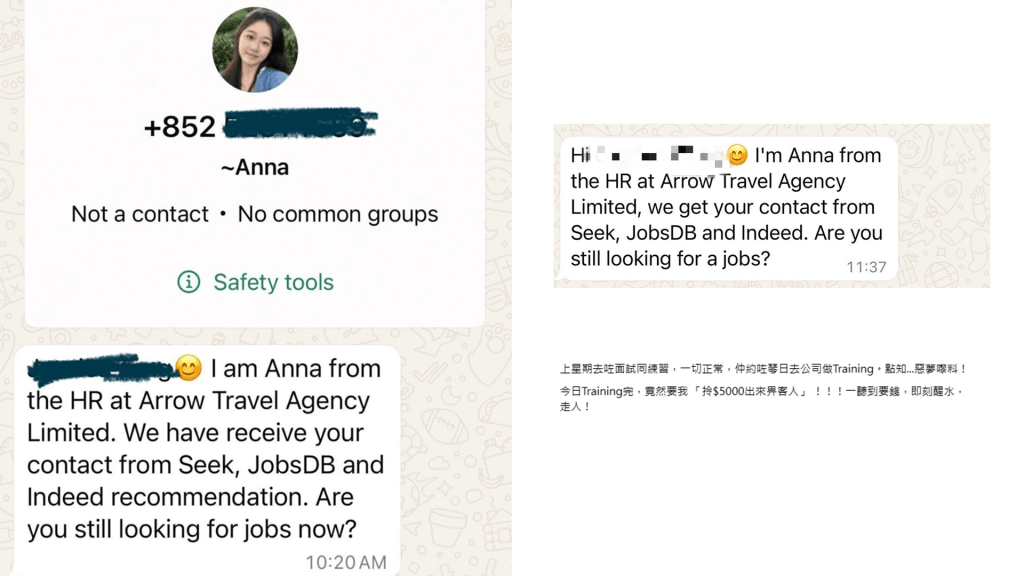
In a separate incident, a job seeker narrowly avoided a scam after being asked to hand over HK$5,000 to a “client” following a training session for a promoter role. The individual refused and left, suspecting fraud. The company involved later denied any such arrangement and said it may have been impersonated.
Police recorded 4,095 cases of online job scams in 2025, with the vast majority involving task-based fraud schemes requiring upfront payments. Total losses amounted to HK$880 million.
Authorities urged job seekers to remain cautious, warning against offers that promise high pay with minimal requirements, and stressing that legitimate employers will not ask candidates to pay upfront fees. They also advised verifying company credentials and avoiding suspicious apps or unofficial platforms.